


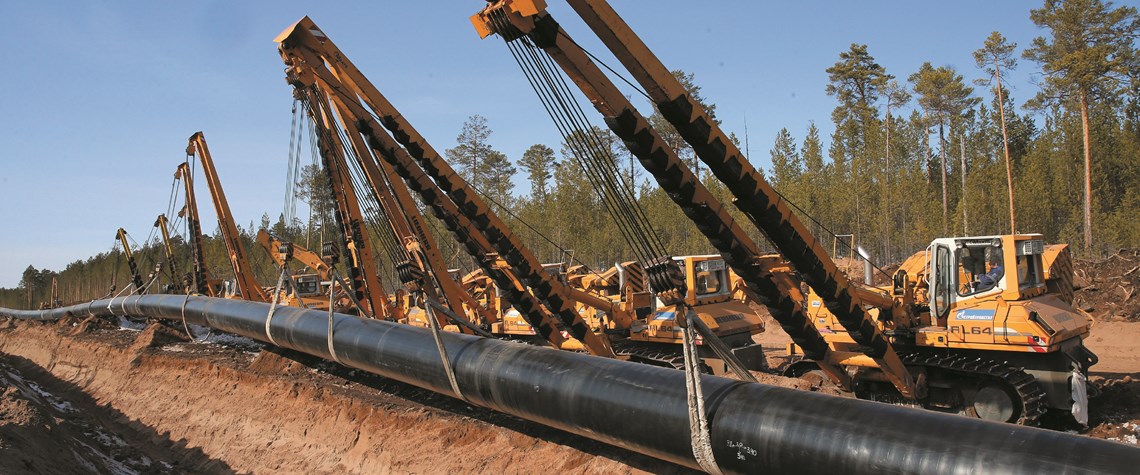
Power of Siberia pipeline under construction in eastern Russia Source: Gazprom
Russian gas pivots east
The newly completed Power of Siberia pipeline may boost Moscow's options, but it is hardly a geopolitical big win
Five years after Russian gas giant Gazprom and Chinese state-owned CNPC signed a $400bn deal on the Power of Siberia gas pipeline (PoS), stretching from the Chayandinskoye and Kovytkinskoye gas fields near the Baikal Lake to the Chinese border, the first phase of the project is finally on the brink of production. While Moscow has tried to frame the project as a successful pivot to the east amid strained tensions with the West, PoS will inevitably increase Russia’s economic dependency on China. The pipeline will supply China’s north-eastern provinces with 4.6bn m³ in the first year and 19bn m³ in 2022—by 2025 it will ramp up to 38bn m³. It will also have a long-term impact on gas market dynam

Also in this section
2 April 2026
Alongside a rapid continued build-out of renewables, China’s latest five-year plan stresses the value of domestic hydrocarbon production for energy security and calls for increased Russian gas imports
2 April 2026
The government is taking important steps to revive domestic production, lift investment and benefit from the geopolitical crisis even if more needs to be done in the longer term
1 April 2026
Golden Pass’s startup offers QatarEnergy a timely boost but may also force a difficult choice between honouring disrupted contracts and capitalising on soaring spot LNG prices
1 April 2026
It is not a case of if or when, but the length and magnitude of economic damage from elevated oil prices


