


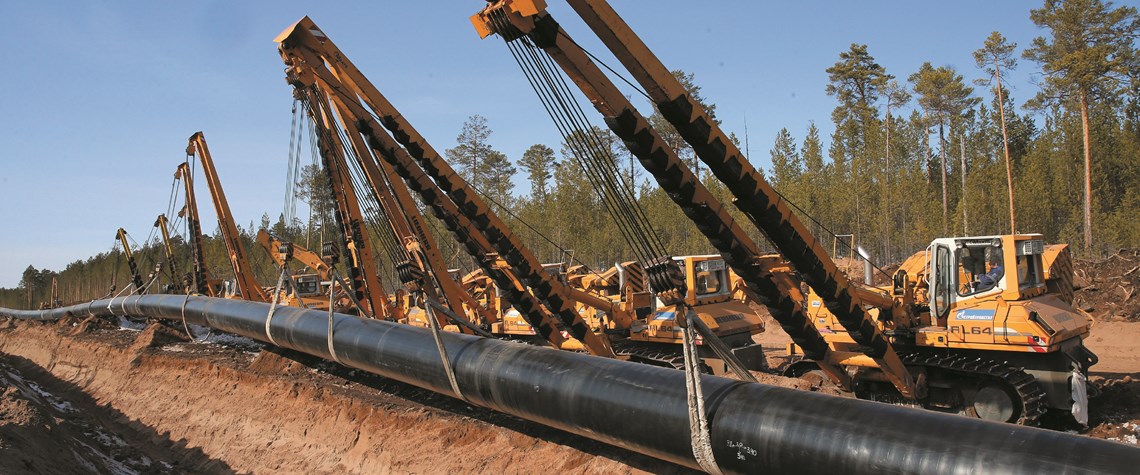
Power of Siberia pipeline under construction in eastern Russia Source: Gazprom
Russian gas pivots east
The newly completed Power of Siberia pipeline may boost Moscow's options, but it is hardly a geopolitical big win
Five years after Russian gas giant Gazprom and Chinese state-owned CNPC signed a $400bn deal on the Power of Siberia gas pipeline (PoS), stretching from the Chayandinskoye and Kovytkinskoye gas fields near the Baikal Lake to the Chinese border, the first phase of the project is finally on the brink of production. While Moscow has tried to frame the project as a successful pivot to the east amid strained tensions with the West, PoS will inevitably increase Russia’s economic dependency on China. The pipeline will supply China’s north-eastern provinces with 4.6bn m³ in the first year and 19bn m³ in 2022—by 2025 it will ramp up to 38bn m³. It will also have a long-term impact on gas market dynam

Also in this section
23 April 2026
The addition of an oil pipeline to the Power of Siberia 2 gas project could ensure deliveries of Russian oil to China, materially shorten logistics lines between West Siberia and final customers, and—amid disruption in the Strait of Hormuz—offer a land-based export route that reduces exposure to maritime chokepoints
23 April 2026
There is a clear push to bolster exports to Asia amid uncertainty around its North American neighbour, but there are limits to the benefits from the energy crisis
23 April 2026
Shell made the play-opening discovery in Namibia’s Orange basin back in 2022, but its next well could decide whether the project can actually be commercialised
22 April 2026
The failure of OMV Petrom’s keenly watched exploration campaign at Bulgaria’s Han Asparuh block highlights the Black Sea’s uneven track record, despite major successes like Neptun Deep and Sakarya


