


Newsletters | Request Trial | Log in | Advertise | Digital Issue   |   Search
  • Upstream
  • Midstream & Downstream
  • Gas & LNG
  • Trading & Markets
  • Corporate & Finance
  • Geopolitics
  • Podcasts
Search
Related Articles
China’s new oil position
OPEC, upstream investors and refiners all face strategic shifts now the Asian behemoth is no longer the main engine of global oil demand growth
Explainer: Inside China’s crude oil stockpiling black box
Energy security continues to evolve as a strategic priority amid growing geopolitical tensions highlighted by increased volumes, a new energy law and persistent secrecy
Outlook 2026: How critical mineral partnerships are shaping ASEAN’s energy transition
The global race for critical minerals has become a defining feature of energy geopolitics, presenting the ASEAN region with both opportunity and risk
Letter from London: Oil’s golden triangle
The interplay between OPEC+, China and the US will define oil markets throughout 2026
The curious case of oil-on-water
The market is facing being drowned in excess crude, but one caveat is that a large chunk is due to buyers reluctant to snap up sanctioned barrels
China’s oil plan comes together
The country’s rapid output growth is an example that other producers could learn from
China seizes oil security opportunity
A combination of geopolitical uncertainty and OPEC+ barrels has driven a renewed focus on building strategic oil stocks despite flagging demand
Arctic LNG comes in from the cold
Beijing now appears prepared to accept discounted Russian LNG, even at the cost of heightened sanctions risk
China’s role as oil buffer stock manager
The country’s intervention in global oil markets to stabilise prices could last well into 2026
Thailand’s upstream revival picks up speed
The Southeast Asian producer has reversed declining output and is pushing on with a deepwater-focused new bidding round
China Cambodia Thailand
James Gavin
13 March 2020
Follow @PetroleumEcon
Forward article link
Share PDF with colleagues

Beijing maintains expansionist tendencies

China has not lost its interest in oil and gas assets around the South China Sea

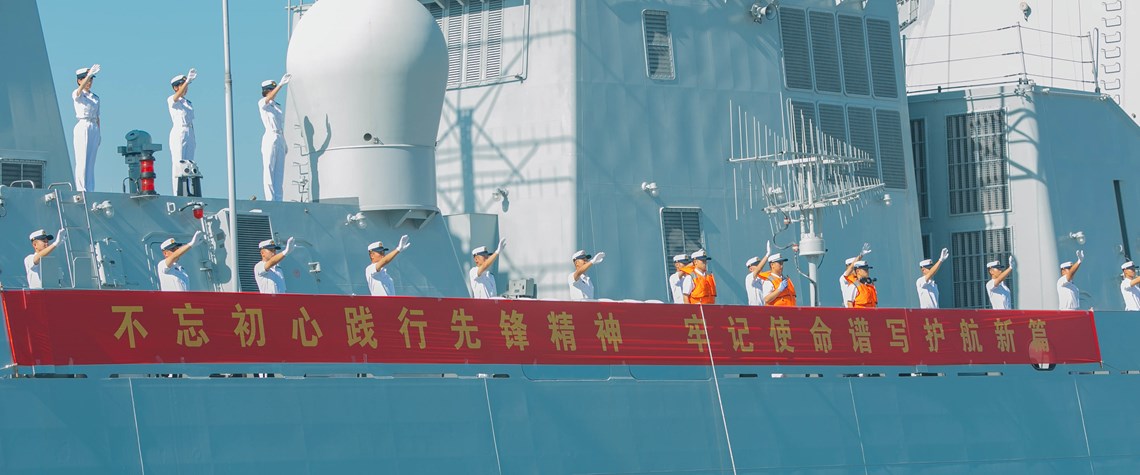
China has not been distracted from its assertive agenda in the South China Sea despite its domestic focus on combating Covid-19. It continues to deploy oil and gas vessels and military muscle to bolster its position in the strategically vital region.   The major focus of China’s obstructive role in the area is where its claims overlap with both Malaysia and Vietnam, neither particularly friendly towards Beijing. Malaysian national oil company (NOC) Petronas is exploring in blocks ND1 and ND2, which are in waters also claimed by the Vietnamese and within China’s so-called nine-dash line boundary.  The Chinese elbowing into the bilateral dispute is described by US-based thinktank the Asia Mari

Also in this section
Middle East oil vulnerabilities have been exposed
3 March 2026
The killing of Iran’s Supreme Leader Ayatollah Khamenei in US–Israeli strikes marks the most serious escalation in the region in decades and a bigger potential threat to the oil market than the start of the Russia-Ukraine crisis
How Hormuz chokehold threatens LNG buyers
2 March 2026
A potential blockade of the Strait of Hormuz following the escalating US-Iran conflict risks disrupting Qatari LNG exports that underpin global gas markets, exposing Asia and other markets to sharp price spikes, cargo shortages and renewed reliance on dirtier fuels
Letter from Asia: The nuanced India-Russia oil picture
Opinion
2 March 2026
The South Asian consumer’s next move could tighten the Middle East oil market overnight
Touchstone advances Central strategy
2 March 2026
Canadian independent’s evolving portfolio in Trinidad and Tobago gives it access to the Atlantic LNG market and a close-up view of developments in neighbouring Venezuela

Share PDF with colleagues

COPYRIGHT NOTICE: PDF sharing is permitted internally for Petroleum Economist Gold Members only. Usage of this PDF is restricted by <%= If(IsLoggedIn, User.CompanyName, "")%>’s agreement with Petroleum Economist – exceeding the terms of your licence by forwarding outside of the company or placing on any external network is considered a breach of copyright. Such instances are punishable by fines of up to US$1,500 per infringement
Send

Forward article Link

Send
Sign Up For Our Newsletter
Project Data
Maps
Podcasts
Social Links
Featured Video
Home
  • About us
  • Subscribe
  • Reaching your audience
  • PE Store
  • Terms and conditions
  • Contact us
  • Privacy statement
  • Cookies
  • Sitemap
All material subject to strictly enforced copyright laws © 2025 The Petroleum Economist Ltd
Cookie Settings
;

Search
