


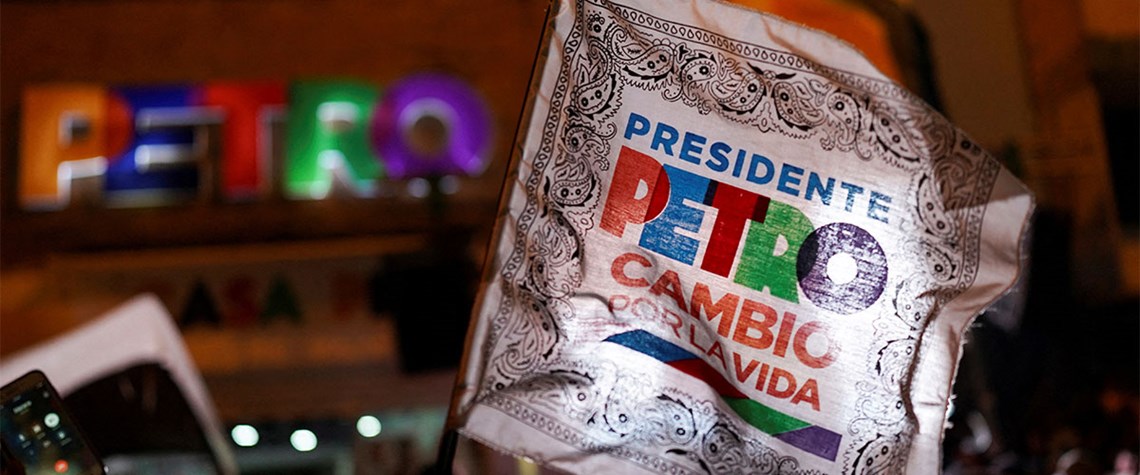
Colombia’s new president, Gustavo Petro, campaigned on a pro-energy transition platform

Letter from South America: Petro plots course for transition
Colombia’s new president has no interest in arresting decline in the country’s oil and gas production
Politics and pragmatism rarely mix, and it seems Colombia’s new president, Gustavo Petro, will be no exception to that rule. However, politicians are renowned for their ability to dream, and in the long term, that may be just as valuable. The fact of the matter is Colombia is already on a path to reducing its economic dependence on oil. The country has gone a long time with no significant increase in proven resources—essentially since 2012. Crude resources totalled 2bn bl in 2021 and production has been steadily declining since 2013, with the nation producing an average of below 750,000bl/d last year, a 6pc drop year on year, with volumes expected to fall again in 2022. Gas production is al

Also in this section
2 April 2026
Alongside a rapid continued build-out of renewables, China’s latest five-year plan stresses the value of domestic hydrocarbon production for energy security and calls for increased Russian gas imports
2 April 2026
The government is taking important steps to revive domestic production, lift investment and benefit from the geopolitical crisis even if more needs to be done in the longer term
1 April 2026
Golden Pass’s startup offers QatarEnergy a timely boost but may also force a difficult choice between honouring disrupted contracts and capitalising on soaring spot LNG prices
1 April 2026
It is not a case of if or when, but the length and magnitude of economic damage from elevated oil prices


