


Newsletters | Request Trial | Log in | Advertise | Digital Issue   |   Search
  • Upstream
  • Midstream & Downstream
  • Gas & LNG
  • Trading & Markets
  • Corporate & Finance
  • Geopolitics
  • Podcasts
Search
Related Articles
Letter from Saudi Arabia: Big oil meets big shovel
As Saudi Arabia pushes mining as a new pillar of its economy, Saudi Aramco is positioning itself at the intersection of hydrocarbons, minerals and industrial policy
Letter from the US: The curse of strong energy exports
Rebuilding industry, energy dominance and lower energy costs are key goals that remain at odds in 2026
Venezuela mismanaged its oil, and US shale benefitted
Chavez’s socialist reforms boosted state control but pushed knowledge and capital out of the sector, opening the way for the US shale revolution
Outlook 2026: From wells to wafers – How MENA is powering the new energy–data nexus
Leading economies in the region are using oil and gas revenues to fund mineral strategies and power hyperscale computing
OPEC’s discipline sets tone for 2026
OPEC+ remains on track as output falls, with only Gabon failing to hit its output targets in December, although Kazakhstan’s compliance was involuntary
Outlook 2026: Grand plan for offshore leasing should give boost to US Gulf
As activity in the US Gulf has stagnated at a lower level, the government is taking steps to encourage fresh exploration and bolster field development work
Outlook 2026: The US energy paradox – Efficiency at home, influence abroad
The US’ domestic energy market may be stagnating, but its role in the global energy system looks set to bloom
Outlook 2026: Trump’s LNG diplomacy will likely run into commercial, regulatory reality
The president is aiming for ‘energy dominance’ via LNG sales, largely to Europe, but supply is set to outstrip demand, and EU regulations remain a stumbling block
Outlook 2026: US onshore holds steady at sluggish rate as shale stagnates
As contradictory as it might seem, US oil output has continued to grow over the last several years, even as drilling in the shale plays has maintained a slow decline. This improbable dichotomy is a testimony to the industry’s technological prowess
OPEC presses pause
The group’s oil production declined in November, our latest analysis finds, amid divided sentiment over market balances and geopolitical jitters
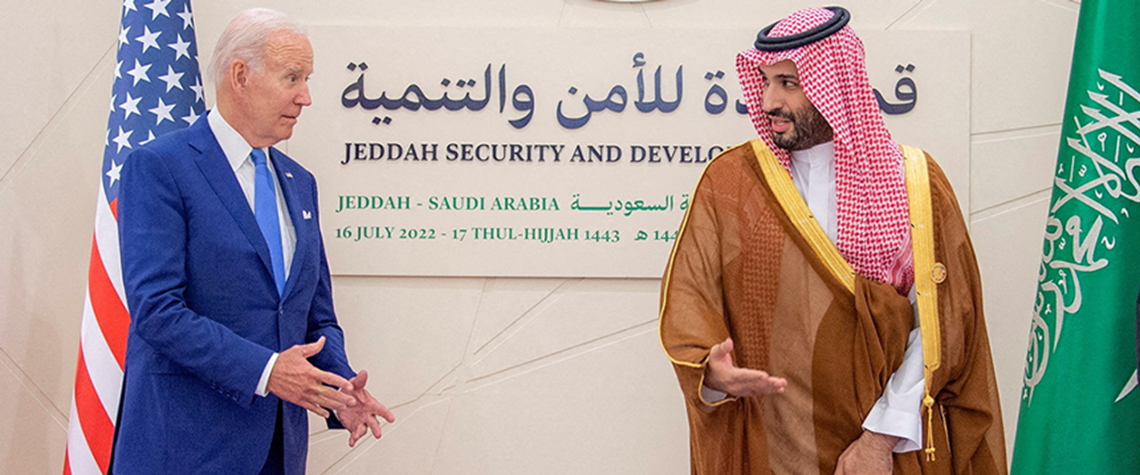
President Biden (left) with Crown Prince Mohammed bin Salman on his trip to Saudi Arabia
Opinion
Opec Russia Saudi Arabia UAE US
Robin M Mills
Dubai
9 August 2022
Follow @PetroleumEcon
Forward article link
Share PDF with colleagues

Letter from the Middle East: Opec balances Russia and the West

The cartel is happy to wait for further developments before committing to more drastic action

US president Joe Biden seems to have come away from his first diplomatic visit to Saudi Arabia in July empty-handed, with the Opec+ alliance in early August swiftly deciding on only a small rise in output targets from September. But the current US administration should not have expected anything different. The announced production increase by Opec+ of 100,000bl/d is so small it seems cosmetic at best and insulting at worst. And the situation is exacerbated by the fact that supply constraints mean the actual physical increment will be more like 50,000-60,000bl/d—even assuming Saudi Arabia, the UAE and Iraq make full use of their extra allowances. In contrast, a briefing by the US’s Middle Eas

Also in this section
Letter from Saudi Arabia: Big oil meets big shovel
Opinion
22 January 2026
As Saudi Arabia pushes mining as a new pillar of its economy, Saudi Aramco is positioning itself at the intersection of hydrocarbons, minerals and industrial policy
Turkey locks in more Azeri gas
22 January 2026
New long-term deal is latest addition to country’s rapidly evolving supply portfolio as it eyes role as regional gas hub
Oil in 2026: Five factors to watch
21 January 2026
Petroleum Economist takes a look at the critical developments that look set to govern the course of the market for this year
Venezuela upends global heavy crude market
20 January 2026
The ripple effects of US refiners switching to Venezuela grades will be felt from Canada to China and everywhere in between

Share PDF with colleagues

COPYRIGHT NOTICE: PDF sharing is permitted internally for Petroleum Economist Gold Members only. Usage of this PDF is restricted by <%= If(IsLoggedIn, User.CompanyName, "")%>’s agreement with Petroleum Economist – exceeding the terms of your licence by forwarding outside of the company or placing on any external network is considered a breach of copyright. Such instances are punishable by fines of up to US$1,500 per infringement
Send

Forward article Link

Send
Sign Up For Our Newsletter
Project Data
Maps
Podcasts
Social Links
Featured Video
Home
  • About us
  • Subscribe
  • Reaching your audience
  • PE Store
  • Terms and conditions
  • Contact us
  • Privacy statement
  • Cookies
  • Sitemap
All material subject to strictly enforced copyright laws © 2025 The Petroleum Economist Ltd
Cookie Settings
;

Search
