


Newsletters | Request Trial | Log in | Advertise | Digital Issue   |   Search
  • Upstream
  • Midstream & Downstream
  • Gas & LNG
  • Trading & Markets
  • Corporate & Finance
  • Geopolitics
  • Podcasts
Search
Related Articles
China’s secure energy transition
Alongside a rapid continued build-out of renewables, China’s latest five-year plan stresses the value of domestic hydrocarbon production for energy security and calls for increased Russian gas imports
India taking pole position on oil demand growth
The country’s rapidly expanding economy is boosting its consumption of oil as demand for the fuel slows elsewhere in the world
Letter from Dubai: A safe haven under fire
Missiles over Dubai and disruption in Hormuz are testing the emirate’s reputation—and shaking the energy hub at the centre of the Gulf economy
Explainer: Fujairah on high alert
With the Strait of Hormuz effectively closed following US-Israel strikes and Iran’s retaliatory escalation, Fujairah has become the region’s critical pressure release valve—and is now under serious threat
Letter from Asia: The nuanced India-Russia oil picture
The South Asian consumer’s next move could tighten the Middle East oil market overnight
China’s new oil position
OPEC, upstream investors and refiners all face strategic shifts now the Asian behemoth is no longer the main engine of global oil demand growth
Explainer: Inside China’s crude oil stockpiling black box
Energy security continues to evolve as a strategic priority amid growing geopolitical tensions highlighted by increased volumes, a new energy law and persistent secrecy
Indian refiners prove their adaptability
A strategic pivot away from Russian crude in recent weeks tees up the possibility of improved US-India trade relations
Outlook 2026: From wells to wafers – How MENA is powering the new energy–data nexus
Leading economies in the region are using oil and gas revenues to fund mineral strategies and power hyperscale computing
India’s refining project strengthens ties to Mongolia
The Central Asian country’s first oil refinery is being funded by a $1.7b line of credit from New Delhi, but routes in and out of the country remain controlled by Russia and China
China India Saudi Aramco UAE Oman
17 December 2018
Follow @PetroleumEcon
Forward article link
Share PDF with colleagues

Refining pivots towards Asia

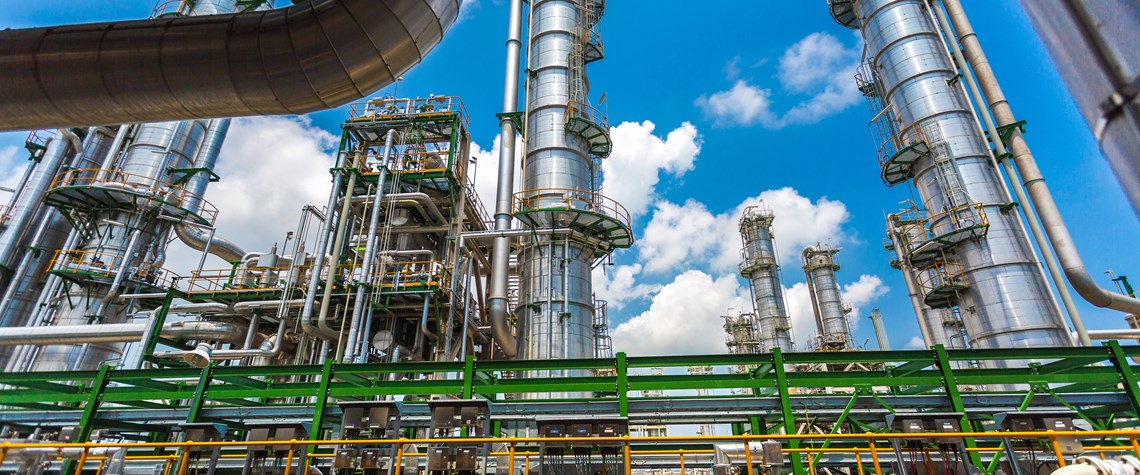
Refining expansions were focused East of Suez, as the likes of China and India ramped up processing capacity and rubber-stamped new projects

The global refining sector saw mixed fortunes in 2018, though for most of the year margins were holding up strongly. While European refineries were generally hampered by their high exposure to a tepid domestic market, in the US, refiners on the Gulf Coast looked better positioned. They still enjoyed privileged access to burgeoning light-tight oil production that meets looming low sulphur requirements. China proved itself to be a major driver of activity, with the authorities encouraging independent refiners to source their own supplies of crude. In May, China's Hengli Petrochemical—based in the Port of Dalian in northern China—leapt into prominence when the commerce ministry gave it the gree

Also in this section
OPEC+’s 11m b/d March production collapse
13 April 2026
Petroleum Economist analysis highlights sharp shift from crude oversupply to market deficit, with Iraq and Kuwait badly affected and key producers Saudi Arabia and the UAE also seeing output sharply lower
Galkynysh goes fourth
13 April 2026
Turkmenistan is moving ahead with a modest expansion of the giant Galkynysh field to sustain gas deliveries abroad, but persistent delays to other key pipeline projects and geopolitical risks continue to constrain its export ambitions
The UK’s problematic power price
13 April 2026
Expensive electricity has forced out swathes of energy-intensive industry and now threatens the country’s ability to attract future investment in datacentres and the digital economy
Letter from the UAE: The GCC and Iran – No easy way out
Opinion
13 April 2026
For GCC producers, the ceasefire may prove more destabilising than the war itself: exports remain constrained, and control over Hormuz has shifted in ways that could endure

Share PDF with colleagues

COPYRIGHT NOTICE: PDF sharing is permitted internally for Petroleum Economist Gold Members only. Usage of this PDF is restricted by <%= If(IsLoggedIn, User.CompanyName, "")%>’s agreement with Petroleum Economist – exceeding the terms of your licence by forwarding outside of the company or placing on any external network is considered a breach of copyright. Such instances are punishable by fines of up to US$1,500 per infringement
Send

Forward article Link

Send
Sign Up For Our Newsletter
Project Data
Maps
Podcasts
Social Links
Featured Video
Home
  • About us
  • Subscribe
  • Reaching your audience
  • PE Store
  • Terms and conditions
  • Contact us
  • Privacy statement
  • Cookies
  • Sitemap
All material subject to strictly enforced copyright laws © 2025 The Petroleum Economist Ltd
Cookie Settings
;

Search
