


Newsletters | Request Trial | Log in | Advertise | Digital Issue   |   Search
  • Upstream
  • Midstream & Downstream
  • Gas & LNG
  • Trading & Markets
  • Corporate & Finance
  • Geopolitics
  • Podcasts
Search
Related Articles
Outlook 2026: From wells to wafers – How MENA is powering the new energy–data nexus
Leading economies in the region are using oil and gas revenues to fund mineral strategies and power hyperscale computing
Sonatrach feels the winds of change
Algeria’s state energy company has new leadership looking to inject fresh momentum into its upstream E&P sector—with majors’ interest piqued by untapped unconventional gas deposits
Accelerating MENA’s gas transformation
Gas has become a pillar of MENA economies and a catalyst for development strategies, fostering cooperation and creating new paths for economic diversification. Continued progress will require substantial investment and adapted regulations
MENA states try to change their gas fortunes
While Syria has gas import plans and Jordan is targeting greater production, Egypt is struggling with declining output and Lebanon with the after-effects of conflict
Algeria’s strategic shift
The North African producer looks to be overhauling its legal and fiscal framework as it seeks to boost oil and gas output
Old hands dominate Algeria’s upstream auction
The country’s latest licensing round attracted bids from IOCs and NOCs in a better showing than its last outreach to bidders
Hydrocarbon Processing Refining Databook 2025: Middle East & Africa
The Middle East is focusing on modernisation and expansion projects, while Africa is seeking to reduce its imports of refined products
MENA NOCs secure influence in low-carbon future
Regional state-owned firms are transforming their strategies and leveraging their resources to position themselves as clean energy powerhouses, and to ensure they maintain influence in a low-carbon world
Alberta’s petrochemicals advantage
Canada’s oil hub looks to the future amid a supportive geological and investment environment
Petchems Report: Middle East makes most of feedstock advantage
Industrialisation and urbanization will drive the region’s petchems production as it makes the most of abundant feedstock, while Africa also looks to expand capacity
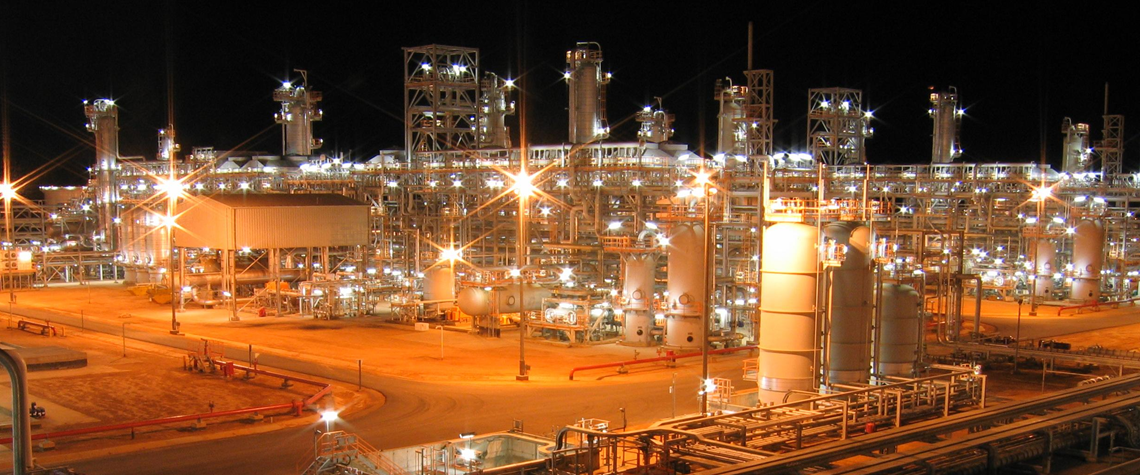
In Amenas gas Plant in Tiguentourine, the largest wet gas plant in Algeria
Algeria Petrochemicals
Clare Dunkley
4 October 2019
Follow @PetroleumEcon
Forward article link
Share PDF with colleagues

Algeria sees petchems progress

A contract award marks a rare sign of movement on Algeria’s stalled downstream development plans

The Step joint venture between Algeria’s state-owned oil-and-gas firm Sonatrach and Total chose in September US congolmerate Honeywell as technology supplier for a propane dehydrogenation and polypropylene (PDH-PP) plant planned at the Arzew downstream hub in western Algeria.  Honeywell’s selection by Step—51pc owned by Sonatrach with Total holding the remaining 49pc—came as no surprise, given the firm’s extensive local and regional experience. But the award was a welcome sign that the project is moving beyond the drawing board. The partners have discussed a petrochemicals venture for more than a decade, while Algeria’s wider plans for downstream expansion over the same period have progresse

Also in this section
Trump’s gasoline price pledge paradox
4 March 2026
The US president has repeatedly promised to lower gasoline prices, but this ambition conflicts with his parallel aim to increase drilling and could be upended by his war against Iran
Explainer: Fujairah on high alert
4 March 2026
With the Strait of Hormuz effectively closed following US-Israel strikes and Iran’s retaliatory escalation, Fujairah has become the region’s critical pressure release valve—and is now under serious threat
Middle East oil vulnerabilities have been exposed
3 March 2026
The killing of Iran’s Supreme Leader Ayatollah Khamenei in US–Israeli strikes marks the most serious escalation in the region in decades and a bigger potential threat to the oil market than the start of the Russia-Ukraine crisis
How Hormuz chokehold threatens LNG buyers
2 March 2026
A potential blockade of the Strait of Hormuz following the escalating US-Iran conflict risks disrupting Qatari LNG exports that underpin global gas markets, exposing Asia and other markets to sharp price spikes, cargo shortages and renewed reliance on dirtier fuels

Share PDF with colleagues

COPYRIGHT NOTICE: PDF sharing is permitted internally for Petroleum Economist Gold Members only. Usage of this PDF is restricted by <%= If(IsLoggedIn, User.CompanyName, "")%>’s agreement with Petroleum Economist – exceeding the terms of your licence by forwarding outside of the company or placing on any external network is considered a breach of copyright. Such instances are punishable by fines of up to US$1,500 per infringement
Send

Forward article Link

Send
Sign Up For Our Newsletter
Project Data
Maps
Podcasts
Social Links
Featured Video
Home
  • About us
  • Subscribe
  • Reaching your audience
  • PE Store
  • Terms and conditions
  • Contact us
  • Privacy statement
  • Cookies
  • Sitemap
All material subject to strictly enforced copyright laws © 2025 The Petroleum Economist Ltd
Cookie Settings
;

Search
