


Newsletters | Request Trial | Log in | Advertise | Digital Issue   |   Search
  • Upstream
  • Midstream & Downstream
  • Gas & LNG
  • Trading & Markets
  • Corporate & Finance
  • Geopolitics
  • Podcasts
Search
Related Articles
China’s oil plan comes together
The country’s rapid output growth is an example that other producers could learn from
China seizes oil security opportunity
A combination of geopolitical uncertainty and OPEC+ barrels has driven a renewed focus on building strategic oil stocks despite flagging demand
Arctic LNG comes in from the cold
Beijing now appears prepared to accept discounted Russian LNG, even at the cost of heightened sanctions risk
China’s role as oil buffer stock manager
The country’s intervention in global oil markets to stabilise prices could last well into 2026
Power of Siberia 2: Deal or no deal?
There is a good strategic case for China to sign a deal for gas supplies via the proposed Power of Siberia 2 pipeline, but Beijing’s concerns around over-dependence on a single supplier and desire to drive down the price make it relatively unlikely a contract will be finalised this year
China creates two-tier oil dynamic
There is a bifurcation in the global oil market as China’s stockpiling contrasts with reduced inventories elsewhere
China’s oil output to scale new heights
New discoveries and stabilisation of legacy fields’ output have helped China reverse the decline and be a top-five producer in recent years
India to help Asia spearhead global refining
Shifting demand patterns leaves most populous nation primed to become downstream leader as China and the West retreat
US, Russia and China circle the Arctic
The strategic importance of vast untapped oil and gas reserves and key shipping routes has come in from the cold
Cheap gas key to unlocking new markets
Weaning poorer regions off coal means gas needs to be abundant and competitive longer term
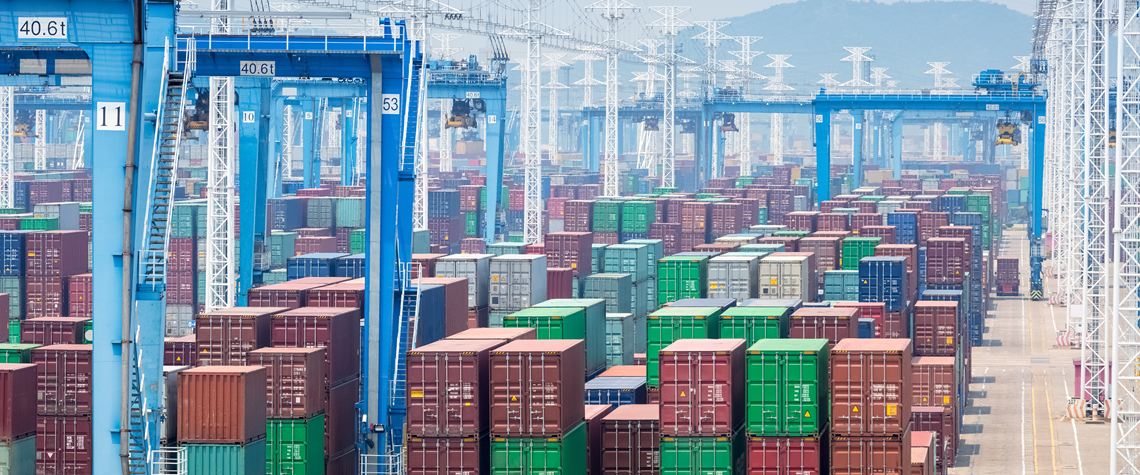
The port of Ningbo-Zhoushan, in Zhejiang province south of Hangzhou Bay
IMO 2020 Singapore China
David Whitehouse
14 January 2020
Follow @PetroleumEcon
Forward article link
Share PDF with colleagues

China targets Singapore bunkering

Chinese tax reform will trigger a gradual shift in the bunker fuel market away from Asia’s dominant hub

The timing of a package of Chinese tax reforms will have a greater impact on the future of the Asian bunker fuel market than the new International Maritime Organization (IMO) rules on sulphur in maritime fuel that came into effect on 1 January. China applies both consumer and value-added taxes to bunker fuels, even for bonded sales. This leads blenders to import about 90pc of the blendstocks, mostly from Singapore and Malaysia. “The tax is the big game changer,” says Dr Michal Meidan, director of the China Energy Programme at Oxford Institute for Energy Studies. Chinese refiners, she says, have been lobbying for tax relief for well over a year. The IMO has banned ships from using fuels with

Also in this section
Gas should fare better than oil under Canada’s new regime
13 November 2025
The new federal government appears far more supportive of oil and gas than former prime minister Justin Trudeau’s climate-focused administration, but the prospects look better for the latter hydrocarbon
Petroleum Economist: November 2025
12 November 2025
The November 2025 issue of Petroleum Economist is out now!
Lukoil loses its growth prospects
10 November 2025
The Russian firm made a significant attempt to expand overseas over the past two decades but is now trying to divest its global operations
OPEC+ nears output targets amid unsolved riddles
10 November 2025
OPEC+ has proven to be astute at bringing back oil production, but mysteries around Chinese buying, missing barrels and oil-on-water have left the group in wait-and-see mode

Share PDF with colleagues

COPYRIGHT NOTICE: PDF sharing is permitted internally for Petroleum Economist Gold Members only. Usage of this PDF is restricted by <%= If(IsLoggedIn, User.CompanyName, "")%>’s agreement with Petroleum Economist – exceeding the terms of your licence by forwarding outside of the company or placing on any external network is considered a breach of copyright. Such instances are punishable by fines of up to US$1,500 per infringement
Send

Forward article Link

Send
Sign Up For Our Newsletter
Project Data
Maps
Podcasts
Social Links
Featured Video
Home
  • About us
  • Subscribe
  • Reaching your audience
  • PE Store
  • Terms and conditions
  • Contact us
  • Privacy statement
  • Cookies
  • Sitemap
All material subject to strictly enforced copyright laws © 2025 The Petroleum Economist Ltd
Cookie Settings
;

Search
