


Newsletters | Request Trial | Log in | Advertise | Digital Issue   |   Search
  • Upstream
  • Midstream & Downstream
  • Gas & LNG
  • Trading & Markets
  • Corporate & Finance
  • Geopolitics
  • Podcasts
Search
Related Articles
China’s new oil position
OPEC, upstream investors and refiners all face strategic shifts now the Asian behemoth is no longer the main engine of global oil demand growth
Explainer: Inside China’s crude oil stockpiling black box
Energy security continues to evolve as a strategic priority amid growing geopolitical tensions highlighted by increased volumes, a new energy law and persistent secrecy
Letter from London: Oil’s golden triangle
The interplay between OPEC+, China and the US will define oil markets throughout 2026
The curious case of oil-on-water
The market is facing being drowned in excess crude, but one caveat is that a large chunk is due to buyers reluctant to snap up sanctioned barrels
China’s oil plan comes together
The country’s rapid output growth is an example that other producers could learn from
China seizes oil security opportunity
A combination of geopolitical uncertainty and OPEC+ barrels has driven a renewed focus on building strategic oil stocks despite flagging demand
Arctic LNG comes in from the cold
Beijing now appears prepared to accept discounted Russian LNG, even at the cost of heightened sanctions risk
China’s role as oil buffer stock manager
The country’s intervention in global oil markets to stabilise prices could last well into 2026
Power of Siberia 2: Deal or no deal?
There is a good strategic case for China to sign a deal for gas supplies via the proposed Power of Siberia 2 pipeline, but Beijing’s concerns around over-dependence on a single supplier and desire to drive down the price make it relatively unlikely a contract will be finalised this year
China creates two-tier oil dynamic
There is a bifurcation in the global oil market as China’s stockpiling contrasts with reduced inventories elsewhere
China Hong Kong
David Whitehouse
21 January 2020
Follow @PetroleumEcon
Forward article link
Share PDF with colleagues

US-China deal to drive HK bunkering role

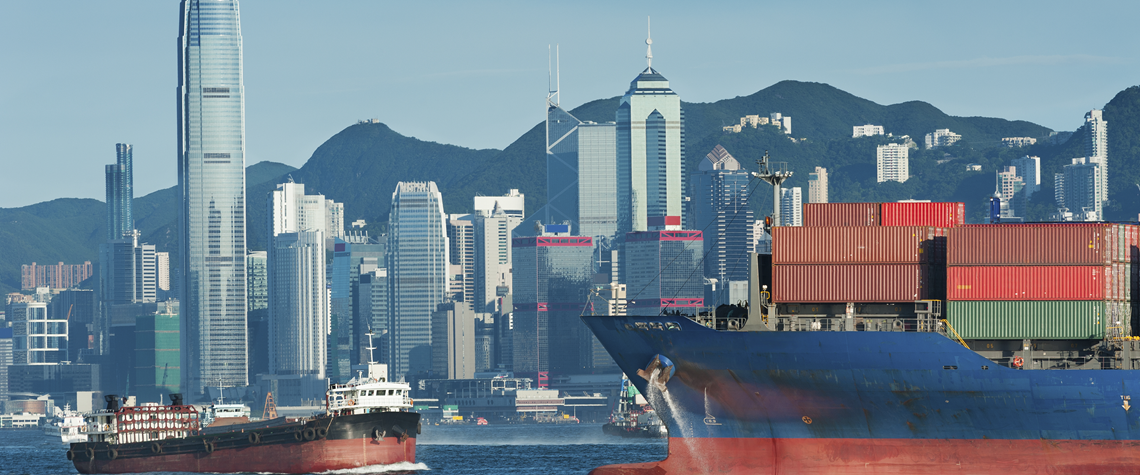
The phase one trade agreement signed between the US and China can revive Hong Kong’s standing as an international trading port, and points to its potential re-emergence as a supplier of bunker fuel

Hong Kong’s civil disturbances and the US-China trade war have led to the city losing ground to rival ports. Yet competition between Hong Kong and Singapore, which has enjoyed a long period of stability and dominates Asian bunker fuel supply, is “not a zero-sum game”, says Lawrence Brennan, a former navy captain who is a professor at Fordham University specialising in maritime law. “Both can and should survive and prosper.”  Hong Kong historically prospered due to its proximity to China; close enough to attract investors seeking to capitalise on the mainland’s development yet beyond the reach of the authoritarian hand of its Communist Party. With the protesters filling the streets accusing C

Also in this section
Energy week in Riyadh to convene global energy leaders across policy, markets and technology
27 February 2026
The 25th WPC Energy Congress to take place in tandem as part of a coordinated week of high-level ministerial, institutional and industry engagements
China’s new oil position
26 February 2026
OPEC, upstream investors and refiners all face strategic shifts now the Asian behemoth is no longer the main engine of global oil demand growth
The AI industry’s coming dominance of oil and gas
25 February 2026
Tech giants rather than oil majors could soon upend hydrocarbon markets, starting with North America
HPI Market Data Book 2026: Global construction – Americas
25 February 2026
Capex is concentrated in gas processing and LNG in the US, while in Canada the reverse is true

Share PDF with colleagues

COPYRIGHT NOTICE: PDF sharing is permitted internally for Petroleum Economist Gold Members only. Usage of this PDF is restricted by <%= If(IsLoggedIn, User.CompanyName, "")%>’s agreement with Petroleum Economist – exceeding the terms of your licence by forwarding outside of the company or placing on any external network is considered a breach of copyright. Such instances are punishable by fines of up to US$1,500 per infringement
Send

Forward article Link

Send
Sign Up For Our Newsletter
Project Data
Maps
Podcasts
Social Links
Featured Video
Home
  • About us
  • Subscribe
  • Reaching your audience
  • PE Store
  • Terms and conditions
  • Contact us
  • Privacy statement
  • Cookies
  • Sitemap
All material subject to strictly enforced copyright laws © 2025 The Petroleum Economist Ltd
Cookie Settings
;

Search
