


Newsletters | Request Trial | Log in | Advertise | Digital Issue   |   Search
  • Upstream
  • Midstream & Downstream
  • Gas & LNG
  • Trading & Markets
  • Corporate & Finance
  • Geopolitics
  • Podcasts
Search
Related Articles
Outlook 2026: Angola’s upstream transformation and the role of independents
The country is focused on boosting output and offers a winning combination of stability, a reforming government, an established industry and vast untapped reserves
Angola's gas breakthrough
While commerciality still needs to be fully confirmed, Azule has hailed the find as a “landmark moment” for gas exploration in the southwest African country—better known for its substantial oil production.
Gabon eyes future post-Bongo
Sovereignty is the watchword for the new government, but there are still upstream opportunities for those willing to work closely with the state
Hydrocarbon Processing Refining Databook 2025: Middle East & Africa
The Middle East is focusing on modernisation and expansion projects, while Africa is seeking to reduce its imports of refined products
Angola eyes upstream revamp
West African producer’s national oil agency considers licensing overhaul for faster rounds
Africa’s new breed of buyers eye production ramp-ups
Domestic companies in Nigeria and other African jurisdictions are buying assets from existing majors they view as more likely to deliver production upside under their stewardship
African divestment deals are back in the frame
After some delay, the much-heralded sale of oil and gas companies’ mature upstream assets in sub-Saharan Africa has gained fresh momentum, with a clutch of deals reaching completion
Sonangol must escape former regime’s shadow to achieve IPO
Angola is unlikely to meet the official timeline for an IPO of state-owned oil giant Sonangol in 2026
Letter on Africa: New African refineries could help break old dependencies
A profound shift is occurring in the global refining sector, one which might help redefine Africa’s place in worldwide trade networks
Moscow’s moves may impede Africa’s energy ambitions
Upstream projects may not benefit from Russia’s involvement, but South Africa might be seeking to become an importer of Russian molecules
Caps is described as a ‘game-changing project’ for Central Africa
Angola Cameroon Chad Congo Equatorial Guinea Gabon
Simon Ferrie
26 September 2022
Follow @PetroleumEcon
Forward article link
Share PDF with colleagues

Central Africa eyes regional pipeline network

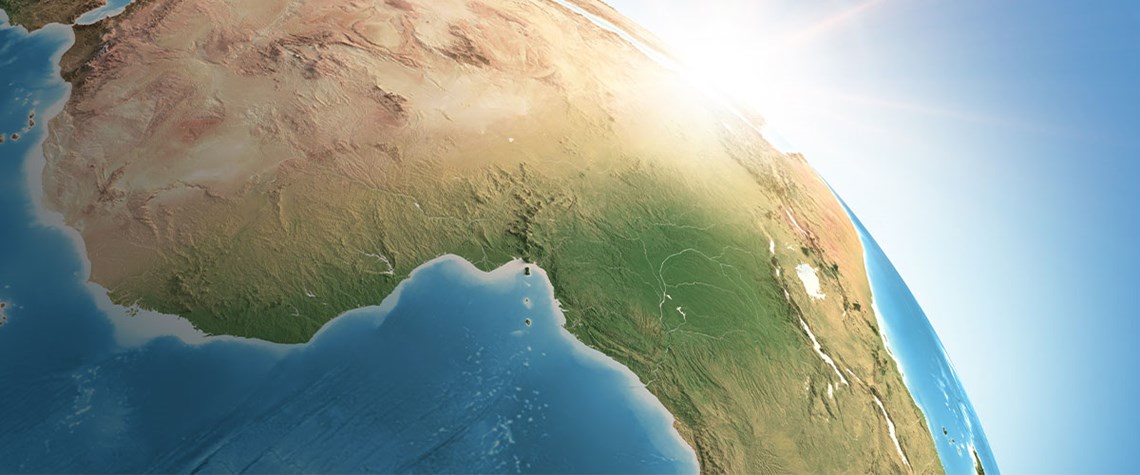
Ambitious plans for a cross-border network of oil and gas pipelines in central Africa have some significant backers but will likely struggle to secure funds from traditional sources

Seven central African nations—Angola, Cameroon, Chad, Congo-Brazzaville, the Democratic Republic of Congo (DRC), Equatorial Guinea and Gabon—signed a memorandum of understanding (MoU) in early September to cooperate on developing the proposed Central African Pipeline System (Caps) for oil and gas transshipment within the region. The African Petroleum Producers’ Organisation (Appo) and the Central Africa Business Forum were also signatories to the MoU, which paves the way for feasibility studies to be carried out. The goal of the project is “to boost energy supply within the region, reduce dependence on imports of refined products, and eradicate energy poverty by 2030”, according to a stateme

Also in this section
Explainer: Iran’s indispensable energy role
16 January 2026
The country’s global energy importance and domestic political fate are interlocked, highlighting its outsized oil and gas powers, and the heightened fallout risk
Oil’s tanker transformation
16 January 2026
The global maritime oil transport sector enters 2026 facing a rare convergence of crude oversupply, record newbuild deliveries and the potential easing of several geopolitical disruptions that have shaped trade flows since 2022
Letter from the US: The curse of strong energy exports
Opinion
15 January 2026
Rebuilding industry, energy dominance and lower energy costs are key goals that remain at odds in 2026
Venezuela mismanaged its oil, and US shale benefitted
14 January 2026
Chavez’s socialist reforms boosted state control but pushed knowledge and capital out of the sector, opening the way for the US shale revolution

Share PDF with colleagues

COPYRIGHT NOTICE: PDF sharing is permitted internally for Petroleum Economist Gold Members only. Usage of this PDF is restricted by <%= If(IsLoggedIn, User.CompanyName, "")%>’s agreement with Petroleum Economist – exceeding the terms of your licence by forwarding outside of the company or placing on any external network is considered a breach of copyright. Such instances are punishable by fines of up to US$1,500 per infringement
Send

Forward article Link

Send
Sign Up For Our Newsletter
Project Data
Maps
Podcasts
Social Links
Featured Video
Home
  • About us
  • Subscribe
  • Reaching your audience
  • PE Store
  • Terms and conditions
  • Contact us
  • Privacy statement
  • Cookies
  • Sitemap
All material subject to strictly enforced copyright laws © 2025 The Petroleum Economist Ltd
Cookie Settings
;

Search
