


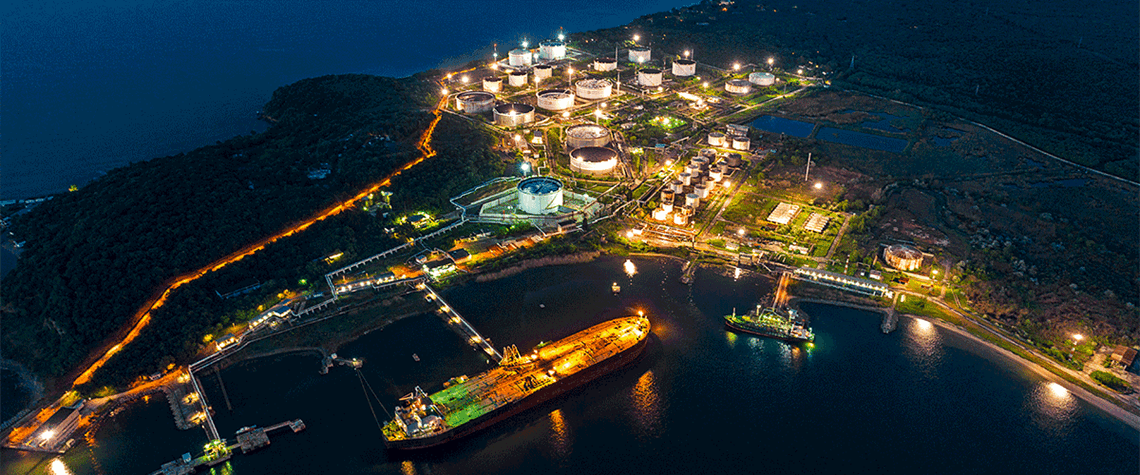
A tanker docks in Burgas, Bulgaria
Beating the Russian products ban
Legal and illegal efforts to skirt the prohibition are likely to intensify—especially in Turkey, the Balkans and Eastern Europe
Smugglers are gearing up for a race against law enforcement officials following the introduction of the EU ban on Russia-sourced refined products on 5 February. Yet experts say that there are enough loopholes in the embargo for the big players, such as the Russian government, not to need to rely excessively on smugglers—at least, for the time being. “We are looking closely at Russian exports, particularly of diesel, to work out how the new world is going to look after 5 February,” says Kevin Wright, senior oil analyst at UK-based data analytics firm Kpler. “Russian exports have hit record highs in the past few months as sellers and traders look to maximise volumes ahead of the EU27 embargo.”

Also in this section
9 April 2026
The April 2026 issue of Petroleum Economist is out now!
9 April 2026
Offshore operators are working through an FID backlog as the rig market consolidates, helped by improving project economics and a renewed security drive
2 April 2026
Alongside a rapid continued build-out of renewables, China’s latest five-year plan stresses the value of domestic hydrocarbon production for energy security and calls for increased Russian gas imports
2 April 2026
The government is taking important steps to revive domestic production, lift investment and benefit from the geopolitical crisis even if more needs to be done in the longer term


