


Newsletters | Request Trial | Log in | Advertise | Digital Issue   |   Search
  • Upstream
  • Midstream & Downstream
  • Gas & LNG
  • Trading & Markets
  • Corporate & Finance
  • Geopolitics
  • Podcasts
Search
Related Articles
Nigeria in upstream charm offensive
The country has opened bidding on 50 blocks in a new licensing round but will face competition for attention and will need to address concerns about security and legislation
OPEC+’s cohesive restraint
The alliance is keeping output on track and the market in balance amid geopolitical tensions and a fragile supply-demand ledger
Dangote: Big ambitions, harsh realities
Nigeria's mega-refinery is still trying to solve many challenges, all while its owner talks up expansion
Outlook 2026: Renewal and growth in Nigeria’s upstream sector
Government reforms are restoring investor confidence in the country’s oil and gas industry
OPEC’s discipline sets tone for 2026
OPEC+ remains on track as output falls, with only Gabon failing to hit its output targets in December, although Kazakhstan’s compliance was involuntary
OPEC presses pause
The group’s oil production declined in November, our latest analysis finds, amid divided sentiment over market balances and geopolitical jitters
Letter from London: Oil’s golden triangle
The interplay between OPEC+, China and the US will define oil markets throughout 2026
OPEC+ nears output targets amid unsolved riddles
OPEC+ has proven to be astute at bringing back oil production, but mysteries around Chinese buying, missing barrels and oil-on-water have left the group in wait-and-see mode
Nigeria aligns independents with NNPC
OPEC governor Ademola Adeyemi-Bero explains Nigeria First policy as the African producer looks to drive production back above 2m b/d and play crucial role in OPEC
Nigeria charts ‘just transition’ course for NOCs
OPEC Governor Ademola Adeyemi Bero argues that only by prioritising oil and gas through partnerships with IOCs and stable OPEC market management can NOCs fulfil their pivotal global role
Nigeria Opec Gabon
Ian Lewis
30 January 2017
Follow @PetroleumEcon
Forward article link
Share PDF with colleagues

How much can Nigeria add?

The country has a chance to lift output - but that doesn't mean it will

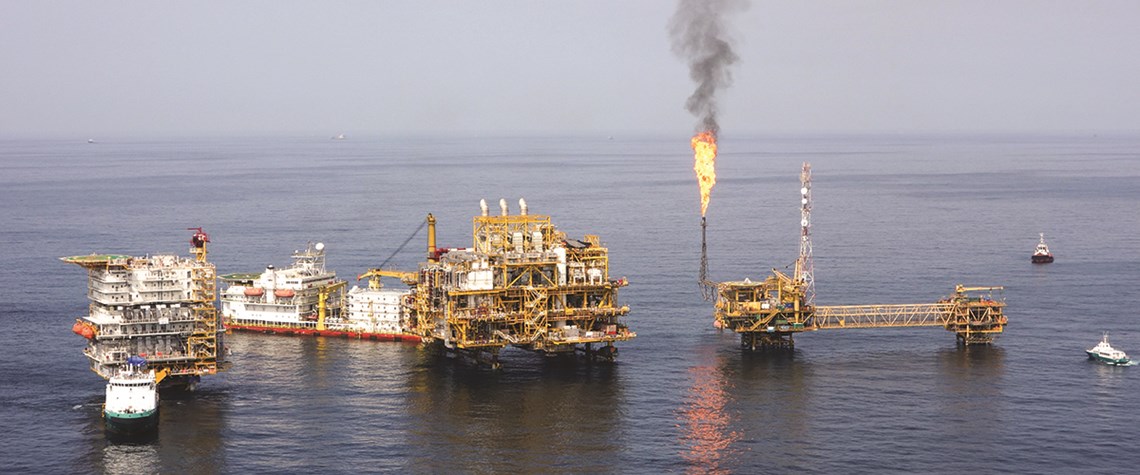
Nigeria was given a pass when Opec agreed to new group-wide cuts in November-unrest in the Delta throughout 2016 had already lopped off much of its supply. Now it needs to make the most of its exemption, by restoring lost production. It won't be easy. President Muhammadu Buhari thinks Nigerian output can reach 2.2m barrels a day in 2017-0.7m b/d more than production in December, but just 100,000 b/d more than the government says it was producing before the Niger Delta troubles resurfaced early in 2016. If it pulled off that kind of output recovery, Nigerian production growth on its own would replace more than half of the barrels the rest of Opec has pledged to remove. None of the core Opec c

Also in this section
LNG buyer strategies in the age of volatility
11 February 2026
Panellists from three LNG buyers at LNG2026 in Doha outlined their evolving procurement strategies as they navigate heightened market volatility
Libya looks to maximise gas opportunity
11 February 2026
North African producer plans to boost output by early 2030, with Europe its number one priority as export destination
LNG shipping needs freedom to evolve
11 February 2026
Maritime leaders at LNG2026 warned of the dangers of over-regulation on competitiveness, sustainability and innovation
Nigeria in upstream charm offensive
10 February 2026
The country has opened bidding on 50 blocks in a new licensing round but will face competition for attention and will need to address concerns about security and legislation

Share PDF with colleagues

COPYRIGHT NOTICE: PDF sharing is permitted internally for Petroleum Economist Gold Members only. Usage of this PDF is restricted by <%= If(IsLoggedIn, User.CompanyName, "")%>’s agreement with Petroleum Economist – exceeding the terms of your licence by forwarding outside of the company or placing on any external network is considered a breach of copyright. Such instances are punishable by fines of up to US$1,500 per infringement
Send

Forward article Link

Send
Sign Up For Our Newsletter
Project Data
Maps
Podcasts
Social Links
Featured Video
Home
  • About us
  • Subscribe
  • Reaching your audience
  • PE Store
  • Terms and conditions
  • Contact us
  • Privacy statement
  • Cookies
  • Sitemap
All material subject to strictly enforced copyright laws © 2025 The Petroleum Economist Ltd
Cookie Settings
;

Search
