


Newsletters | Request Trial | Log in | Advertise | Digital Issue   |   Search
  • Upstream
  • Midstream & Downstream
  • Gas & LNG
  • Trading & Markets
  • Corporate & Finance
  • Geopolitics
  • Podcasts
Search
Related Articles
India’s refining project strengthens ties to Mongolia
The Central Asian country’s first oil refinery is being funded by a $1.7b line of credit from New Delhi, but routes in and out of the country remain controlled by Russia and China
Outlook 2026: Freedom gas, captive buyer
Japan once wrote the book on LNG supply diversification, but it is now looking increasingly reliant on a single major provider
Outlook 2026: LNG markets and the overhang
A third wave of LNG supply is coming, and with it a likely oversupply of the fuel by 2028
Outlook 2026: The geopolitical weaponisation of LNG
Global gas markets are being reshaped by politics as much as by gas prices and fundamentals. From Washington to Doha, Brussels and Beijing, LNG has become a strategic weapon as much as a commodity
Outlook 2026: LNG’s Pacific FID race heats up – Ramp-ups, rejuvenations and restarts
The US Gulf dominated investment decisions this year, but Asian importers’ concerns over supplier diversity mean the focus is shifting
Turkmenistan's pipe dream
Construction of the pipeline in Afghanistan is making tangible progress, but extending it into Pakistan and India remains unrealistic for political reasons
Explainer: How the EU will wean itself off Russian gas
Questions remain about how the phase-out will be implemented and enforced in practice
Mideast states power up their gas priorities
Saudi Arabia, the UAE and Qatar are ploughing resources into gas—with a growing eye on facilitating domestic use in power and value-added sectors
Arctic LNG comes in from the cold
Beijing now appears prepared to accept discounted Russian LNG, even at the cost of heightened sanctions risk
MENA's gas metamorphosis
Across the Middle East and North Africa, gas is taking an enhanced role in helping build out economies that need to diversify away from crude oil dependence
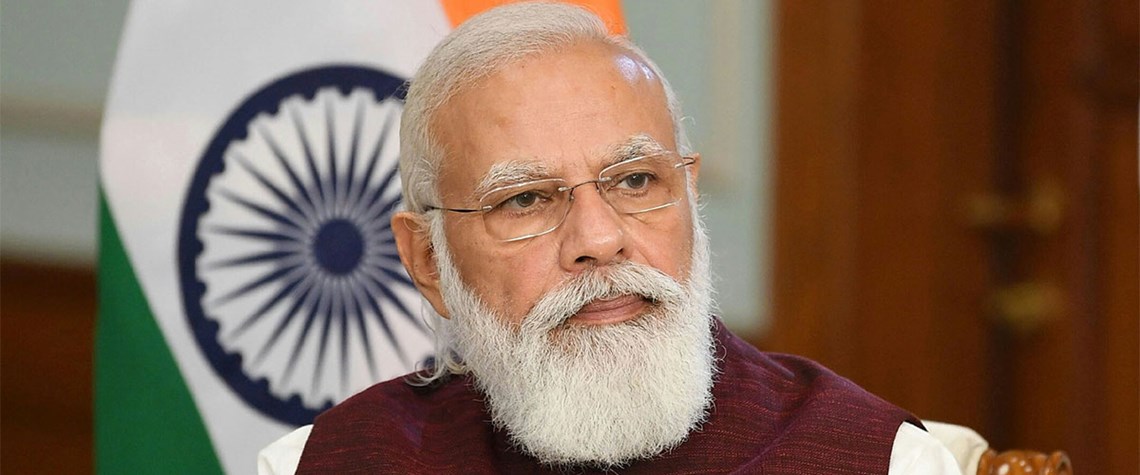
Prime Minister Modi
Opinion
India Oil markets LNG
Yogender Malik
New Delhi
12 September 2022
Follow @PetroleumEcon
Forward article link
Share PDF with colleagues

Letter from India: Cost of import dependence grows

Surging demand, declining domestic output, high prices and a weakening rupee are all pushing up the country’s import bills

Indian prime minister Narendra Modi convened a meeting of oil industry stakeholders back in March 2015, nine months into his first term in office, to discuss increasing domestic hydrocarbons production and reducing import dependence from what was then 77pc to 67pc by 2022, and further to 50pc by 2030. But as we reach the first checkpoint on that journey, hitting targets on reducing his country’s reliance on non-domestic energy looks increasingly unlikely. In fact, the country’s oil imports have risen by 8.6pc since 2015, with imports accounting for 85.6pc of India’s crude demand in the April 2021-March 2022 financial year. India’s dependence on gas imports is less pronounced. But, of a consu

Also in this section
Explainer: Iran’s indispensable energy role
16 January 2026
The country’s global energy importance and domestic political fate are interlocked, highlighting its outsized oil and gas powers, and the heightened fallout risk
Oil’s tanker transformation
16 January 2026
The global maritime oil transport sector enters 2026 facing a rare convergence of crude oversupply, record newbuild deliveries and the potential easing of several geopolitical disruptions that have shaped trade flows since 2022
Letter from the US: The curse of strong energy exports
Opinion
15 January 2026
Rebuilding industry, energy dominance and lower energy costs are key goals that remain at odds in 2026
Venezuela mismanaged its oil, and US shale benefitted
14 January 2026
Chavez’s socialist reforms boosted state control but pushed knowledge and capital out of the sector, opening the way for the US shale revolution

Share PDF with colleagues

COPYRIGHT NOTICE: PDF sharing is permitted internally for Petroleum Economist Gold Members only. Usage of this PDF is restricted by <%= If(IsLoggedIn, User.CompanyName, "")%>’s agreement with Petroleum Economist – exceeding the terms of your licence by forwarding outside of the company or placing on any external network is considered a breach of copyright. Such instances are punishable by fines of up to US$1,500 per infringement
Send

Forward article Link

Send
Sign Up For Our Newsletter
Project Data
Maps
Podcasts
Social Links
Featured Video
Home
  • About us
  • Subscribe
  • Reaching your audience
  • PE Store
  • Terms and conditions
  • Contact us
  • Privacy statement
  • Cookies
  • Sitemap
All material subject to strictly enforced copyright laws © 2025 The Petroleum Economist Ltd
Cookie Settings
;

Search
