


Newsletters | Request Trial | Log in | Advertise | Digital Issue   |   Search
  • Upstream
  • Midstream & Downstream
  • Gas & LNG
  • Trading & Markets
  • Corporate & Finance
  • Geopolitics
  • Podcasts
Search
Related Articles
The shadow fleet is the real chokepoint in 2026
The assumption that oil markets will re-route and work around sanctions is being tested, and it is the physical infrastructure that is acting as the constraint
China’s new oil position
OPEC, upstream investors and refiners all face strategic shifts now the Asian behemoth is no longer the main engine of global oil demand growth
The AI industry’s coming dominance of oil and gas
Tech giants rather than oil majors could soon upend hydrocarbon markets, starting with North America
Canadian producers positioned to ride out the downcycle
The country’s upstream players have demonstrated resilience to low oil prices and are well positioned to prosper despite a volatile market
OPEC+’s cohesive restraint
The alliance is keeping output on track and the market in balance amid geopolitical tensions and a fragile supply-demand ledger
OPEC+ set to strengthen its hand
The alliance looks to bolster market management credibility by bringing greater clarity and unity to output cuts and producer capacity later in 2026
Oil in 2026: Five factors to watch
Petroleum Economist takes a look at the critical developments that look set to govern the course of the market for this year
Venezuela upends global heavy crude market
The ripple effects of US refiners switching to Venezuela grades will be felt from Canada to China and everywhere in between
Oil’s tanker transformation
The global maritime oil transport sector enters 2026 facing a rare convergence of crude oversupply, record newbuild deliveries and the potential easing of several geopolitical disruptions that have shaped trade flows since 2022
Letter from the US: The curse of strong energy exports
Rebuilding industry, energy dominance and lower energy costs are key goals that remain at odds in 2026
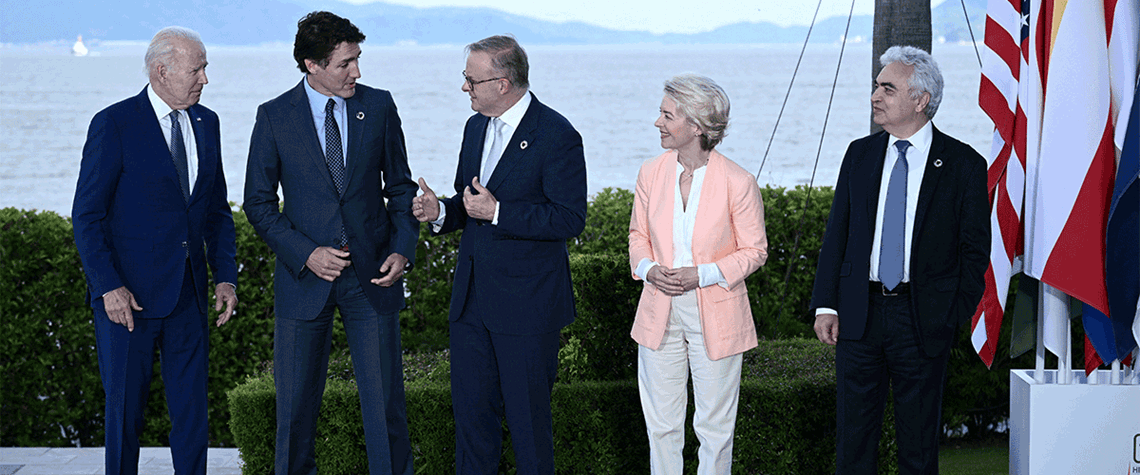
IEA executive director Fatih Birol, far right, at the G7 meeting in May with, from left, US president Joe Biden, Canadian prime minister Justin Trudeau, Australian prime minister Anthony Albanese, and European Commission president Ursula von der Leyen
Markets
Neil Atkinson
2 June 2023
Follow @PetroleumEcon
Forward article link
Share PDF with colleagues

IEA highlights energy divergence as milestone 50th nears

Energy body punches above its weight as it provides direction amid crossroads

The IEA will celebrate its 50th birthday in late 2024. The agency was born out of the energy crisis caused by the October 1973 Yom Kippur War, which led leading oil producers to suspend sales to major consumers. This, plus price increases announced by Opec, ushered in a period of stagflation and economic turmoil. In 1972, the price of Dubai crude (Brent had not been invented back then) averaged $1.90/bl. In 1974, it averaged $10.41/bl. In the ten years before the Yom Kippur War, global inflation averaged 3.6pc/yr; in the ten years afterwards—which included another major price spike in the aftermath of the Iranian Revolution and the Iran-Iraq war—it averaged 11.6pc. Industrialised countries,

Also in this section
New Zealand embraces LNG
27 February 2026
LNG would serve as a backup supply source as domestic gas declines and the country’s energy system comes under stress during periods of low hydropower output and high energy demand
The shadow fleet is the real chokepoint in 2026
27 February 2026
The assumption that oil markets will re-route and work around sanctions is being tested, and it is the physical infrastructure that is acting as the constraint
Energy week in Riyadh to convene energy leaders across policy, markets and technology
27 February 2026
The 25th WPC Energy Congress to take place in tandem as part of a coordinated week of high-level ministerial, institutional and industry engagements
Upstream looks to deepwater rescue
27 February 2026
The deepwater sector must be brave by fast-tracking projects and making progress to seize huge offshore opportunities and not become bogged down by capacity constraints and consolidation

Share PDF with colleagues

COPYRIGHT NOTICE: PDF sharing is permitted internally for Petroleum Economist Gold Members only. Usage of this PDF is restricted by <%= If(IsLoggedIn, User.CompanyName, "")%>’s agreement with Petroleum Economist – exceeding the terms of your licence by forwarding outside of the company or placing on any external network is considered a breach of copyright. Such instances are punishable by fines of up to US$1,500 per infringement
Send

Forward article Link

Send
Sign Up For Our Newsletter
Project Data
Maps
Podcasts
Social Links
Featured Video
Home
  • About us
  • Subscribe
  • Reaching your audience
  • PE Store
  • Terms and conditions
  • Contact us
  • Privacy statement
  • Cookies
  • Sitemap
All material subject to strictly enforced copyright laws © 2025 The Petroleum Economist Ltd
Cookie Settings
;

Search
