


Newsletters | Request Trial | Log in | Advertise | Digital Issue   |   Search
  • Upstream
  • Midstream & Downstream
  • Gas & LNG
  • Trading & Markets
  • Corporate & Finance
  • Geopolitics
  • Podcasts
Search
Related Articles
Outlook 2026: LNG markets and the overhang
A third wave of LNG supply is coming, and with it a likely oversupply of the fuel by 2028
Outlook 2026: The next oil shock – From peak demand mirage to structural tightness
Oil prices look set to come under pressure next year as oversupply hits, but longer-term the risk is underinvestment as demand continues to grow past 2030
OPEC presses pause
The group’s oil production declined in November, our latest analysis finds, amid divided sentiment over market balances and geopolitical jitters
Learning from oil’s supercycle miss
Mistaken assumptions around an oil bull run that never happened are a warning over the talk of a supply glut
Explainer: What do Russia’s oil giants own overseas?
Time is running out for Lukoil and Rosneft to divest international assets that will be mostly rendered useless to them when the US sanctions deadline arrives in mid-December
Letter from London: Oil’s golden triangle
The interplay between OPEC+, China and the US will define oil markets throughout 2026
The complex crude glut picture
The swelling crude supply story involves the key plot twists of reluctant buyers, limited oil stocks and refiners playing the long game
Alberta’s energy hub sees silver lining
US tariffs bolster Alberta’s Industrial Heartland exports to Asia
Tax policy will shape Russia’s oil future
The consensus among market observers is that the country’s oil output will fall in the long term. Yet few recognise how Moscow’s shifting tax regime is designed to keep the next barrel commercially viable
The curious case of oil-on-water
The market is facing being drowned in excess crude, but one caveat is that a large chunk is due to buyers reluctant to snap up sanctioned barrels
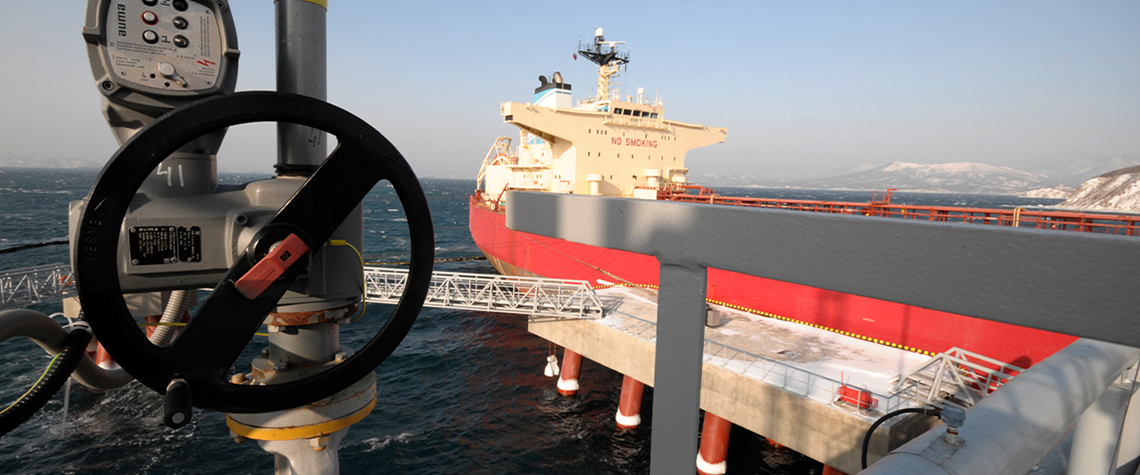
Loading oil at the Russian port of Kozmino

Russia Markets
Adi Imsirovic
17 October 2023
Follow @PetroleumEcon
Forward article link
Share PDF with colleagues

The Russian price cap myth

It is time to stop pretending that there is a ‘price cap’ on Russian petroleum exports

The Russian oil price cap was always unlikely to work in practice. Since oil trade is normally concluded weeks before oil is shipped, and priced against one of the benchmarks (such as Brent and Dubai in case of crude), it is impossible to tell whether the contracted price (for example, Brent Dated minus $10/bl for crude oil, or gas oil futures settlement minus $10/t for diesel) is below or above the price cap. The cap is set at $60/bl for crude oil, $100/bl for high-value products such as diesel and gasoline, and $45/bl for lower-value products such as fuel oil. As a result, the trade in Russian oil and products has continued in ways typical of commerce carried out under partial prohibition—

Also in this section
Outlook 2026: Grand plan for offshore leasing should give boost to US Gulf
24 December 2025
As activity in the US Gulf has stagnated at a lower level, the government is taking steps to encourage fresh exploration and bolster field development work
Outlook 2026: Revitalising Syria’s oil and gas sector – A new chapter
Outlook 2026
23 December 2025
The new government has brought stability and security to the country, with the door now open to international investment
Outlook 2026: LNG markets and the overhang
Outlook 2026
23 December 2025
A third wave of LNG supply is coming, and with it a likely oversupply of the fuel by 2028
Outlook 2026: Energy realism regains the initiative from energy idealism
Outlook 2026
22 December 2025
Weakening climate resolve in the developed world and rapidly growing demand in developing countries means peak oil is still a long way away

Share PDF with colleagues

COPYRIGHT NOTICE: PDF sharing is permitted internally for Petroleum Economist Gold Members only. Usage of this PDF is restricted by <%= If(IsLoggedIn, User.CompanyName, "")%>’s agreement with Petroleum Economist – exceeding the terms of your licence by forwarding outside of the company or placing on any external network is considered a breach of copyright. Such instances are punishable by fines of up to US$1,500 per infringement
Send

Forward article Link

Send
Sign Up For Our Newsletter
Project Data
Maps
Podcasts
Social Links
Featured Video
Home
  • About us
  • Subscribe
  • Reaching your audience
  • PE Store
  • Terms and conditions
  • Contact us
  • Privacy statement
  • Cookies
  • Sitemap
All material subject to strictly enforced copyright laws © 2025 The Petroleum Economist Ltd
Cookie Settings
;

Search
