


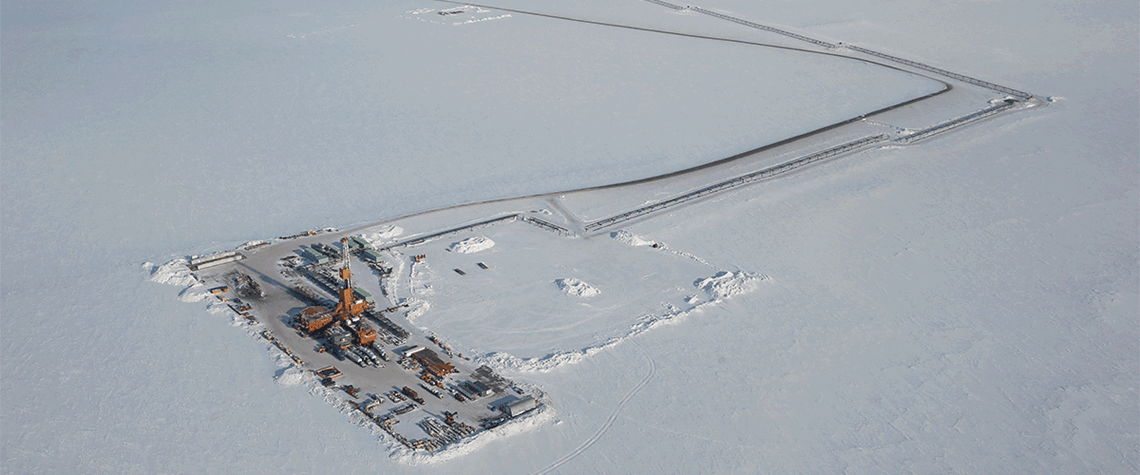
ConocoPhillips’ Alaskan Alpine project
Willow approval may be turning point that fails to turn
Development expected to produce equivalent of up to 40pc of Alaskan daily production but is unlikely to herald a new age of megaprojects
The US government’s approval of superindie ConocoPhillips’ Willow project in March marked the most consequential—and controversial—oil-related decision of the Biden administration. Willow, a 68,000 acre development in the National Petroleum Reserve-Alaska (NPR-A), is anticipated to produce 600mn bl of oil—equivalent to 180,000bl/d, or 40pc of current daily Alaskan output. It is forecast to create 2,500 construction jobs and 300 full-time jobs, and to generate $17bn in revenue for federal, state and local governments. A key factor in Biden’s approval was the widespread support Willow enjoyed from lawmakers of both parties, labour unions and Alaskan Indigenous groups. The project was originall

Also in this section
14 April 2026
The GECF has warned it may revise its projections for demand this year downwards in light of conflict in the Middle East, although it maintains its forecasts for 2027 and onwards
13 April 2026
Petroleum Economist analysis highlights sharp shift from crude oversupply to market deficit, with Iraq and Kuwait badly affected and key producers Saudi Arabia and the UAE also seeing output sharply lower
13 April 2026
Turkmenistan is moving ahead with a modest expansion of the giant Galkynysh field to sustain gas deliveries abroad, but persistent delays to other key pipeline projects and geopolitical risks continue to constrain its export ambitions
13 April 2026
Expensive electricity has forced out swathes of energy-intensive industry and now threatens the country’s ability to attract future investment in datacentres and the digital economy


