


Newsletters | Request Trial | Log in | Advertise | Digital Issue   |   Search
  • Upstream
  • Midstream & Downstream
  • Gas & LNG
  • Trading & Markets
  • Corporate & Finance
  • Geopolitics
  • Podcasts
Search
Related Articles
Petronas presses ahead with Sabah LNG
The project is another sign of the industry’s growing adoption of floating liquefaction technology
Adnoc and Petronas sign exploration deal
The Middle Eastern NOC is tapping Malaysian expertise to help it develop an unconventional resource
Australian indie expands Gambian interests
Far is seeking new partners to advance developments
Letter from Mexico: Deepwater ambitions drowning in debt
Mexico must harness the vast resources in the Gulf to meet the government’s goal of energy autonomy
Hibiscus blossoms in Southeast Asia
The Malaysian independent sees the region as an increasingly important part of the world’s energy system, says managing director Kenneth Pereira
Neptune targets Indonesian growth
The company is focused on increasing throughput at its Jangkrik FPU but is keen to consider fresh opportunities
Southeast Asian NOCs plot divergent transition strategies
The three most prominent NOCs in Southeast Asia will play to their individual strengths as they seek to decarbonise, with each company looking to capitalise on opportunities in their local markets
Perenco buys out Glencore in Chad
Anglo-French independent has bought all of the trading house’s assets in the central African country
Indonesia struggles to reverse upstream fortunes
Slow progress at flagship LNG projects and a lack of foreign interest in oil prospects are hampering the country’s production goals
Pttep and Chevron increase Myanmar field stakes
The gap left by TotalEnergies’ withdrawal from the Yadana gas project is being filled by its former partners
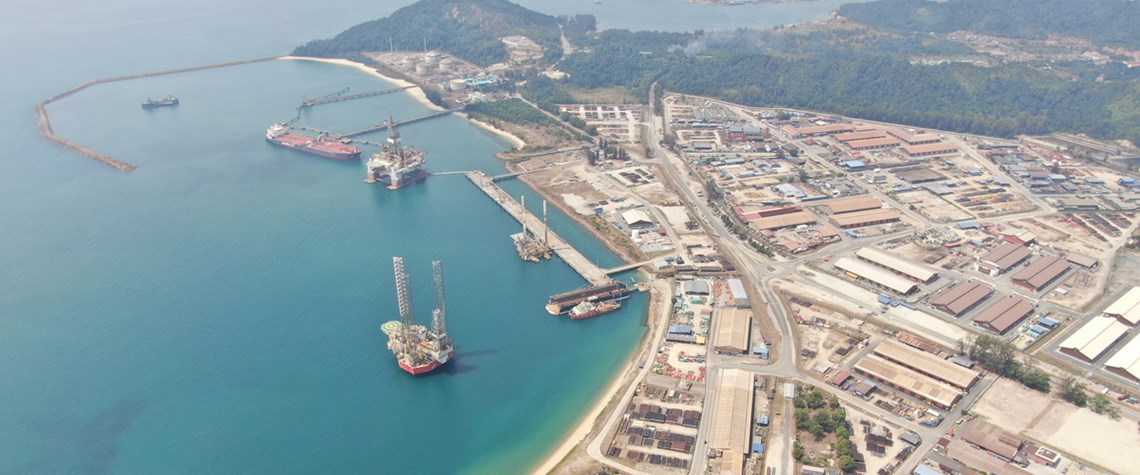
Oil and gas terminal at Kemaman, Malaysia
Petronas Pertamina PTTEP
David Whitehouse
23 April 2020
Follow @PetroleumEcon
Forward article link
Share PDF with colleagues

Southeast Asian project plans scale back

Only developments with both low breakeven costs and favourable locations are likely to proceed for the foreseeable future

The prospect of a sustained low oil price environment raises questions over whether a range of development projects in Southeast Asia will proceed. Producers in the region have not distinguished themselves in terms of cost efficiency, creating a degree of vulnerability, says Sittidath Prasertrungruang, head of research at investment firm Country Group in Bangkok. Greater proximity to Asian demand centres than competing supply options in the Mid-East Gulf has made it feasible to operate projects with oil at around $30/bl, he says. But prospect of prices lingering below that level have “changed the whole scenario”.  Complex problems Projects awaiting FID that are, in Prasertrungruang’s view, l

Also in this section
Rethinking the Middle East oil topography
19 March 2026
The regional crisis highlights the undervalued role of fixed pipelines in the age of tanker flexibility
Do not fear runaway Henry Hub prices
18 March 2026
Rising LNG exports and AI-driven power demand have raised concerns that US gas prices could climb sharply, but analysts say abundant shale supply and continued productivity gains should keep Henry Hub within a range that preserves the competitiveness of US LNG
Will policymakers panic before the oil market?
18 March 2026
Risks of shortages in oil products may cause world leaders to panic and make mistakes instead of letting the market do what it does best
Letter from the Middle East: LNG – the weak link the Gulf crisis just exposed
Opinion
17 March 2026
The crisis in the Middle East has put LNG’s ability to offer security and flexibility under uncomfortable scrutiny

Share PDF with colleagues

COPYRIGHT NOTICE: PDF sharing is permitted internally for Petroleum Economist Gold Members only. Usage of this PDF is restricted by <%= If(IsLoggedIn, User.CompanyName, "")%>’s agreement with Petroleum Economist – exceeding the terms of your licence by forwarding outside of the company or placing on any external network is considered a breach of copyright. Such instances are punishable by fines of up to US$1,500 per infringement
Send

Forward article Link

Send
Sign Up For Our Newsletter
Project Data
Maps
Podcasts
Social Links
Featured Video
Home
  • About us
  • Subscribe
  • Reaching your audience
  • PE Store
  • Terms and conditions
  • Contact us
  • Privacy statement
  • Cookies
  • Sitemap
All material subject to strictly enforced copyright laws © 2025 The Petroleum Economist Ltd
Cookie Settings
;

Search
