


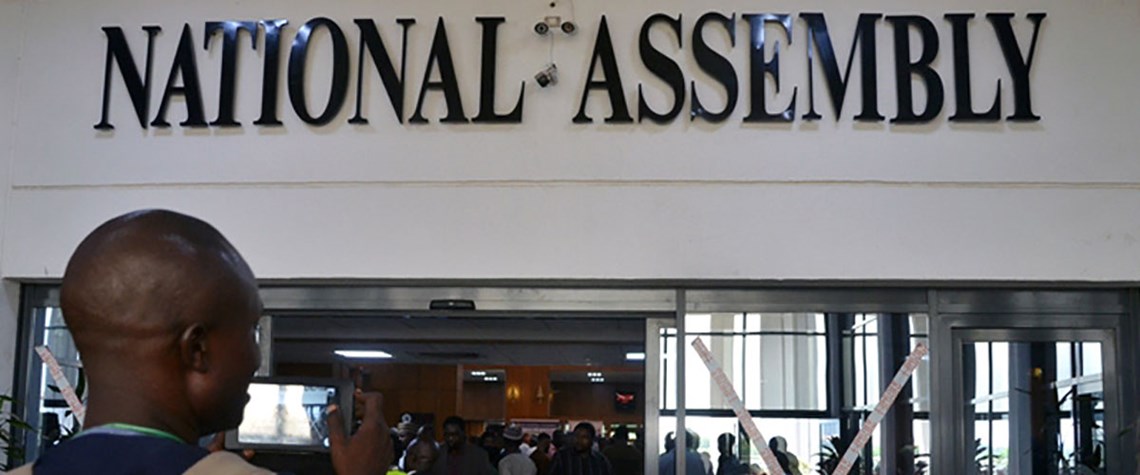
A man stands at the entrance of the National Assembly in Abuja
Nigeria’s PIB inches towards law
The Petroleum Industry Bill reached an important milestone at the start of July
Nigeria's National Assembly has finally passed the country’s long-delayed Petroleum Industry Bill (PIB), but the body’s two legislative chambers each approved different—but mostly overlapping—versions, amid controversy over the allocation of royalties to local communities. The House of Representatives backs a 5pc allocation, and the Senate 3pc. The two different versions of the PIB now must be reconciled before the finalised bill can be sent to President Buhari for approval and signing into law, and it is unclear how long that process might take. “This year might, after all, be the year that the PIB becomes law”—Mansur Mohammed, Wood Mackenzie The National Assembly breaks for the su

Also in this section
2 April 2026
Alongside a rapid continued build-out of renewables, China’s latest five-year plan stresses the value of domestic hydrocarbon production for energy security and calls for increased Russian gas imports
2 April 2026
The government is taking important steps to revive domestic production, lift investment and benefit from the geopolitical crisis even if more needs to be done in the longer term
1 April 2026
Golden Pass’s startup offers QatarEnergy a timely boost but may also force a difficult choice between honouring disrupted contracts and capitalising on soaring spot LNG prices
1 April 2026
It is not a case of if or when, but the length and magnitude of economic damage from elevated oil prices


