


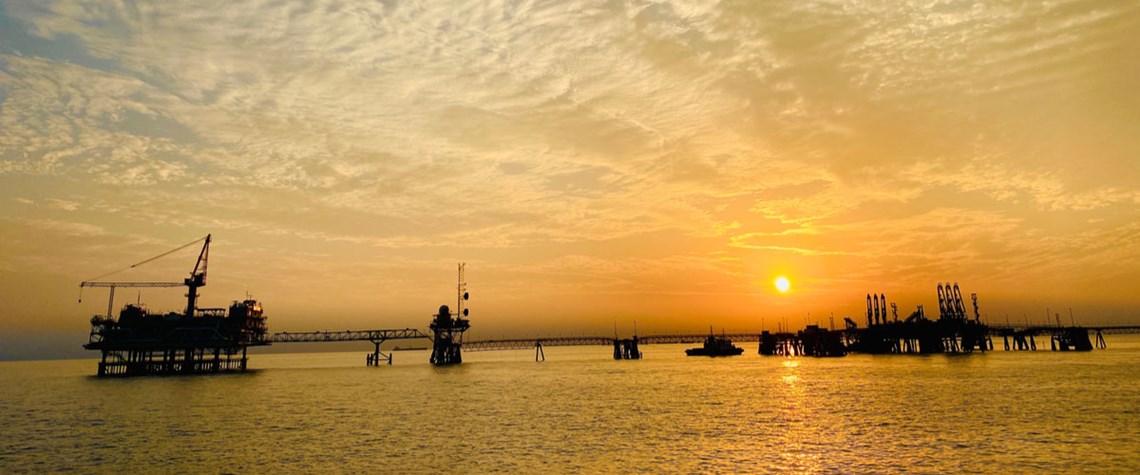
A jetty at the Basra terminal
Iraq’s oil cash bonanza masks deeper problems
Soaring oil prices are spurring renewed IOC investment but exposing infrastructure gaps
Iraq’s oil export revenues hit an eight-year high in February as prices surged, while the completion of an expansion project at one of the country’s largest fields supports ambitions that high prices might spur renewed IOC investment. However, as Opec eases production limits, underlying constraints to growth are re-emerging. The commissioning of a 50,000bl/d expansion at the giant West Qurna-2 field—raising capacity to 450,000bl/d—is cause for celebration but also demonstrates how expectations for Iraq’s oil sector have been downgraded. The contract signed with Russia’s Lukoil at the turn of the last decade envisioned production from the 14bn bl asset reaching 1.8mn bl/d five years ago. And

Also in this section
2 April 2026
Alongside a rapid continued build-out of renewables, China’s latest five-year plan stresses the value of domestic hydrocarbon production for energy security and calls for increased Russian gas imports
2 April 2026
The government is taking important steps to revive domestic production, lift investment and benefit from the geopolitical crisis even if more needs to be done in the longer term
1 April 2026
Golden Pass’s startup offers QatarEnergy a timely boost but may also force a difficult choice between honouring disrupted contracts and capitalising on soaring spot LNG prices
1 April 2026
It is not a case of if or when, but the length and magnitude of economic damage from elevated oil prices


