


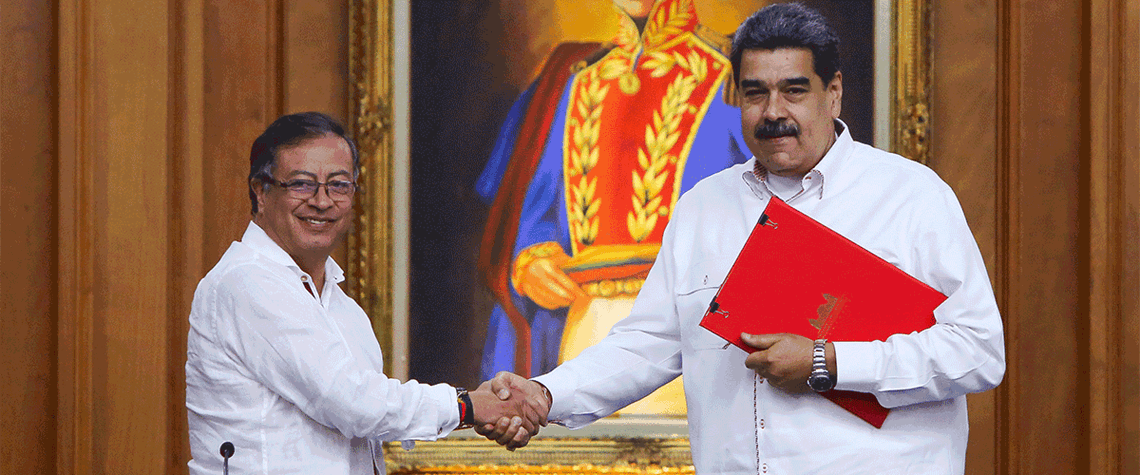
Venezuelan President Nicolas Maduro and Colombian President Gustavo Petro at the Miraflores Palace in Caracas, November 2022
Colombia’s upstream set for decline
Political decision-making casts doubt on the Latin American country’s ability to sustain energy self-sufficiency in the long term
The Colombian government’s decision to shut the door on new exploration contracts at the start of President Gustavo Petro’s tenure is set to impact domestic oil and gas production in 2024, as well as test the country’s long-term energy security and ability to plug lost fiscal revenues. Ending Colombia’s reliance on hydrocarbons exports has been at the centre of Petro‘s policymaking since taking office and reflects a strategic shift in favour of the energy transition, influenced by global trends and environmental concerns. “A complete transition away from fossil fuels seems unlikely during [Petro’s] presidency” Hiornes, Dragonfly “[Petro] appears intent on building his image as a glo

Also in this section
2 April 2026
Alongside a rapid continued build-out of renewables, China’s latest five-year plan stresses the value of domestic hydrocarbon production for energy security and calls for increased Russian gas imports
2 April 2026
The government is taking important steps to revive domestic production, lift investment and benefit from the geopolitical crisis even if more needs to be done in the longer term
1 April 2026
Golden Pass’s startup offers QatarEnergy a timely boost but may also force a difficult choice between honouring disrupted contracts and capitalising on soaring spot LNG prices
1 April 2026
It is not a case of if or when, but the length and magnitude of economic damage from elevated oil prices


