


Newsletters | Request Trial | Log in | Advertise | Digital Issue   |   Search
  • Upstream
  • Midstream & Downstream
  • Gas & LNG
  • Trading & Markets
  • Corporate & Finance
  • Geopolitics
  • Podcasts
Search
Related Articles
Outlook 2026: LNG markets and the overhang
A third wave of LNG supply is coming, and with it a likely oversupply of the fuel by 2028
Outlook 2026: The geopolitical weaponisation of LNG
Global gas markets are being reshaped by politics as much as by gas prices and fundamentals. From Washington to Doha, Brussels and Beijing, LNG has become a strategic weapon as much as a commodity
Outlook 2026: LNG’s Pacific FID race heats up – Ramp-ups, rejuvenations and restarts
The US Gulf dominated investment decisions this year, but Asian importers’ concerns over supplier diversity mean the focus is shifting
Letter from London: Oil’s golden triangle
The interplay between OPEC+, China and the US will define oil markets throughout 2026
The curious case of oil-on-water
The market is facing being drowned in excess crude, but one caveat is that a large chunk is due to buyers reluctant to snap up sanctioned barrels
Explainer: How the EU will wean itself off Russian gas
Questions remain about how the phase-out will be implemented and enforced in practice
China’s oil plan comes together
The country’s rapid output growth is an example that other producers could learn from
China seizes oil security opportunity
A combination of geopolitical uncertainty and OPEC+ barrels has driven a renewed focus on building strategic oil stocks despite flagging demand
Mideast states power up their gas priorities
Saudi Arabia, the UAE and Qatar are ploughing resources into gas—with a growing eye on facilitating domestic use in power and value-added sectors
Arctic LNG comes in from the cold
Beijing now appears prepared to accept discounted Russian LNG, even at the cost of heightened sanctions risk
LNG China
Craig Guthrie
Shanghai
4 April 2019
Follow @PetroleumEcon
Forward article link
Share PDF with colleagues

LNG projects face new financing and pricing risks

Changes in LNG pricing structures and contract length could shift some risk from buyers to sellers

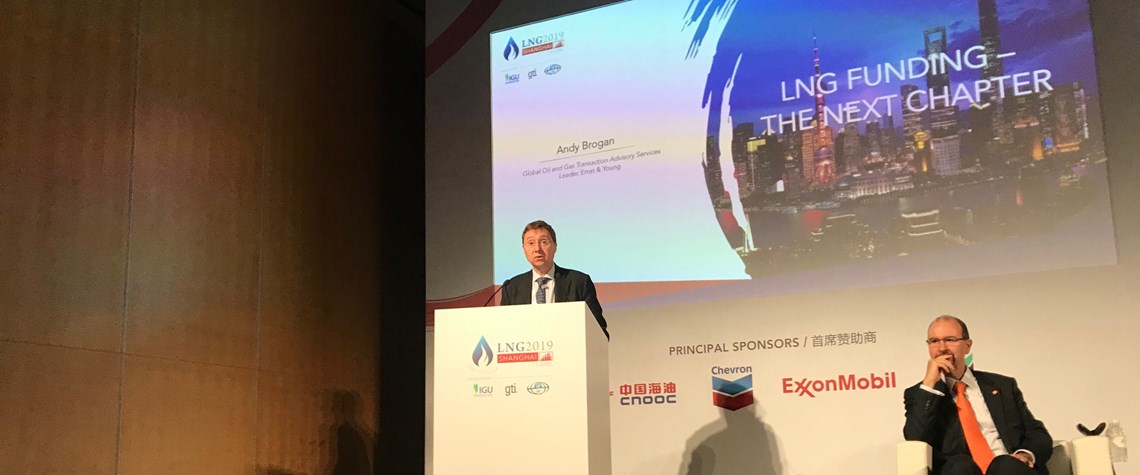
LNG producers will need to absorb more risk as trading in the market becomes more complex and dynamic, the LNG19 conference in Shanghai heard this week. What was once an almost static asset market is being forced into a rapid evolution. On the supply side of the market, there are more portfolio players to sit alongside the traditional point-to-point sellers. On the demand side, buyers are now looking beyond long-term contracts and traditional pricing. "Buyers want to benefit from spot markets through smaller contracts, flexible contracts and hub-linked pricing", says Andy Brogan, EY global oil & gas sector leader at consultancy EY. Brogan foresees new contract structures in which LNG exp

Also in this section
Outlook 2026: Grand plan for offshore leasing should give boost to US Gulf
24 December 2025
As activity in the US Gulf has stagnated at a lower level, the government is taking steps to encourage fresh exploration and bolster field development work
Outlook 2026: Revitalising Syria’s oil and gas sector – A new chapter
Outlook 2026
23 December 2025
The new government has brought stability and security to the country, with the door now open to international investment
Outlook 2026: LNG markets and the overhang
Outlook 2026
23 December 2025
A third wave of LNG supply is coming, and with it a likely oversupply of the fuel by 2028
Outlook 2026: Energy realism regains the initiative from energy idealism
Outlook 2026
22 December 2025
Weakening climate resolve in the developed world and rapidly growing demand in developing countries means peak oil is still a long way away

Share PDF with colleagues

COPYRIGHT NOTICE: PDF sharing is permitted internally for Petroleum Economist Gold Members only. Usage of this PDF is restricted by <%= If(IsLoggedIn, User.CompanyName, "")%>’s agreement with Petroleum Economist – exceeding the terms of your licence by forwarding outside of the company or placing on any external network is considered a breach of copyright. Such instances are punishable by fines of up to US$1,500 per infringement
Send

Forward article Link

Send
Sign Up For Our Newsletter
Project Data
Maps
Podcasts
Social Links
Featured Video
Home
  • About us
  • Subscribe
  • Reaching your audience
  • PE Store
  • Terms and conditions
  • Contact us
  • Privacy statement
  • Cookies
  • Sitemap
All material subject to strictly enforced copyright laws © 2025 The Petroleum Economist Ltd
Cookie Settings
;

Search
