


Newsletters | Request Trial | Log in | Advertise | Digital Issue   |   Search
  • Upstream
  • Midstream & Downstream
  • Gas & LNG
  • Trading & Markets
  • Corporate & Finance
  • Geopolitics
  • Podcasts
Search
Related Articles
HPI Market Data Book 2026: Global construction – Americas
Capex is concentrated in gas processing and LNG in the US, while in Canada the reverse is true
HPI Market Data Book 2026: Global construction – Asia-Pacific
The surge in demand for fuel and petrochemical products in Asia has led to significant expansion in refining and petrochemicals capacities, with India and China leading the way
HPI Market Data Book 2026: Global construction – EMEA
Middle Eastern countries are investing in hydrocarbon processing to diversify their economies while African countries are looking to satisfy growing domestic fuel demand
HPI Market Data Book 2026: Global construction – Overview
Latest edition of our Gulf Energy Information's Market Data Book highlights robust growth in gas processing/LNG sector, followed by petrochemicals and refining
Dangote: Big ambitions, harsh realities
Nigeria's mega-refinery is still trying to solve many challenges, all while its owner talks up expansion
Outlook 2026: Building balance – A dual-track strategy in a changing energy landscape
As global energy systems evolve to meet shifting demand and transition pressures, maintaining reliable hydrocarbon supply remains essential to energy security
Russia’s fuel crisis: Difficult but not catastrophic
International and opposition media claim that two-fifths of the country’s refining capacity is offline, but the true situation is not so dire
ADNOC’s Australia avoidance
The Middle East NOC’s decision to exit Santos signals changing rules for Australian gas investors
California refiners dreaming of heyday
US downstream sector in key state feels the pain of high costs, an environmental squeeze and the effects of broader market trends
Mars attacks US oil industry
Crude quality issues are an often understated risk to energy security, highlighted by problems at a key US refinery
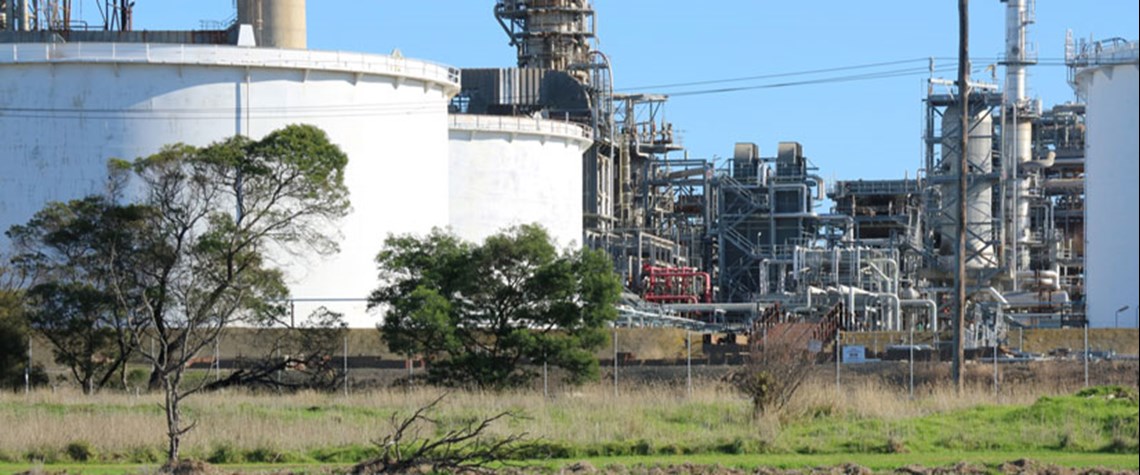
The Geelong refinery will receive government support
Australia Refining
Simon Ferrie
24 June 2021
Follow @PetroleumEcon
Forward article link
Share PDF with colleagues

Australia to subsidise remaining refineries

Concerned about supply security, Australia plans to fund its last two refineries standing for at least the next six years.

Australia has passed legislation intended to keep its remaining oil refineries open for at least another six years. The Fuel Security Bill 2021 includes fuel security services payments (FSSPs) “to support refiners during loss-making periods and enable them to continue refining until 30 June 2027”. The bill will “lock in the future of the refining sector”, make fuel supplies more secure and protect jobs, the Department of Industry, Science, Energy and Resources says. Refineries will start to receive payments for the production of key fuels from 1 July this year. The bill also includes a minimum stockholding obligation (MSO) for fuel importers and refiners to maintain reserves of petrol, diese

Also in this section
In pipelines we trust
23 April 2026
The addition of an oil pipeline to the Power of Siberia 2 gas project could ensure deliveries of Russian oil to China, materially shorten logistics lines between West Siberia and final customers, and—amid disruption in the Strait of Hormuz—offer a land-based export route that reduces exposure to maritime chokepoints
Canada’s oil and gas looks east
23 April 2026
There is a clear push to bolster exports to Asia amid uncertainty around its North American neighbour, but there are limits to the benefits from the energy crisis
Can Merlin work magic for Shell in Namibia?
23 April 2026
Shell made the play-opening discovery in Namibia’s Orange basin back in 2022, but its next well could decide whether the project can actually be commercialised
High hopes and dry wells in the Black Sea
22 April 2026
The failure of OMV Petrom’s keenly watched exploration campaign at Bulgaria’s Han Asparuh block highlights the Black Sea’s uneven track record, despite major successes like Neptun Deep and Sakarya

Share PDF with colleagues

COPYRIGHT NOTICE: PDF sharing is permitted internally for Petroleum Economist Gold Members only. Usage of this PDF is restricted by <%= If(IsLoggedIn, User.CompanyName, "")%>’s agreement with Petroleum Economist – exceeding the terms of your licence by forwarding outside of the company or placing on any external network is considered a breach of copyright. Such instances are punishable by fines of up to US$1,500 per infringement
Send

Forward article Link

Send
Sign Up For Our Newsletter
Project Data
Maps
Podcasts
Social Links
Featured Video
Home
  • About us
  • Subscribe
  • Reaching your audience
  • PE Store
  • Terms and conditions
  • Contact us
  • Privacy statement
  • Cookies
  • Sitemap
All material subject to strictly enforced copyright laws © 2025 The Petroleum Economist Ltd
Cookie Settings
;

Search
