


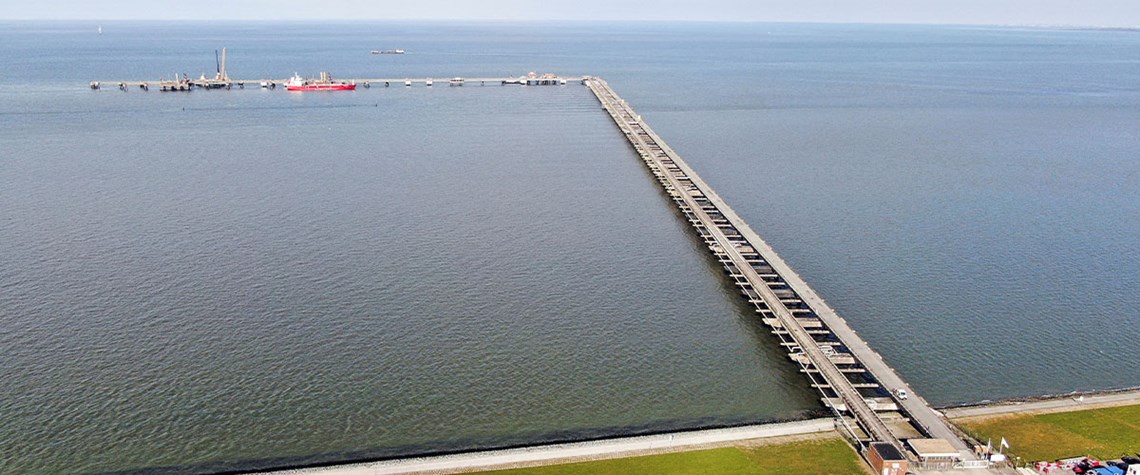
An LNG terminal is under construction at the port of Wilhelmshaven
Germany commits to four FSRUs
The government of the Russian import-dependent nation has involved itself in underwriting regasification vessel tendering
It is perhaps easy, and dangerous, for UK gas consumers, based in a country to a large extent not directly dependent on Russian molecules, to be complacent about the potential impact of Russia cutting supply to Europe—even if one understands the logic that a resultant scramble for available Norwegian pipeline and LNG import alternatives would reverberate across northwest Europe. The German government’s early May intervention into the floating regasification and storage unit (FSRU) market should serve as a wake-up call to that complacency. While two of Germany’s largest midstream gas firms, Uniper and RWE, will manage two each of the import projects, that does not deflect from the fact that f

Also in this section
2 April 2026
Alongside a rapid continued build-out of renewables, China’s latest five-year plan stresses the value of domestic hydrocarbon production for energy security and calls for increased Russian gas imports
2 April 2026
The government is taking important steps to revive domestic production, lift investment and benefit from the geopolitical crisis even if more needs to be done in the longer term
1 April 2026
Golden Pass’s startup offers QatarEnergy a timely boost but may also force a difficult choice between honouring disrupted contracts and capitalising on soaring spot LNG prices
1 April 2026
It is not a case of if or when, but the length and magnitude of economic damage from elevated oil prices


