


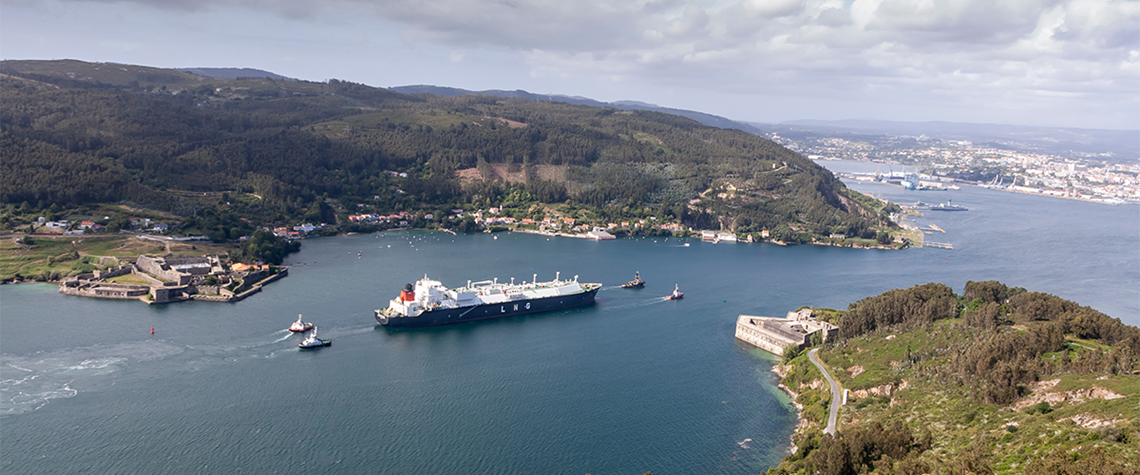
An LNG tanker approaching the terminal at Mugardos
Europe’s LNG buildout signals brave new world
The EU’s new gas strategy may have wriggled free of complacency and insularity, but demand destruction and chokepoints are just some of the key risk factors
Dust may not have had time to settle on the newly laid gas infrastructure across Europe before the region may have to think again on its gas strategy. The EU, no longer with the comfort blanket of Russian pipeline gas, is now operating in the globalised LNG world. New uncertain dynamics over price, demand and supply have come to the fore. Europe’s gas infrastructure buildout “might be both expensive and a necessary insurance policy”, says Ben McWilliams, energy policy analyst at thinktank Bruegel. “It is clear that Europe was complacent and did not respect the need for redundant supply/capacity ahead of the Russia cuts,” he adds. Before the war in Ukraine, the EU consumed more than 500bn m³/

Also in this section
24 March 2026
It is an unusual story of out with the new and in with the old, as America First Refining shows the US going back to trusted energy security developments
23 March 2026
A complex and sometimes contradictory web of factors that include unpredictable oil prices, the globalisation of LNG markets, the expansion of Middle Eastern sovereign capital and the growth of datacentre demand will shape the energy landscape beyond 2026
23 March 2026
The Strait of Hormuz crisis highlights how key waterways can become global chokepoints
20 March 2026
Attacks on key oil and LNG assets across the Gulf mean a prolonged supply disruption, with damage to Qatar’s export capacity undermining confidence in the global gas system


