


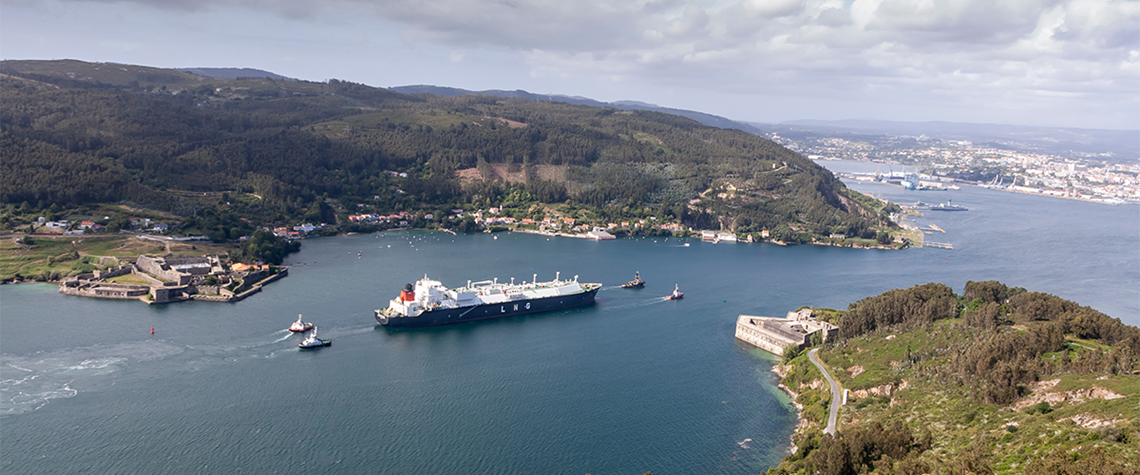
An LNG tanker approaching the terminal at Mugardos
Europe’s LNG buildout signals brave new world
The EU’s new gas strategy may have wriggled free of complacency and insularity, but demand destruction and chokepoints are just some of the key risk factors
Dust may not have had time to settle on the newly laid gas infrastructure across Europe before the region may have to think again on its gas strategy. The EU, no longer with the comfort blanket of Russian pipeline gas, is now operating in the globalised LNG world. New uncertain dynamics over price, demand and supply have come to the fore. Europe’s gas infrastructure buildout “might be both expensive and a necessary insurance policy”, says Ben McWilliams, energy policy analyst at thinktank Bruegel. “It is clear that Europe was complacent and did not respect the need for redundant supply/capacity ahead of the Russia cuts,” he adds. Before the war in Ukraine, the EU consumed more than 500bn m³/

Also in this section
14 April 2026
The GECF has warned it may revise its projections for demand this year downwards in light of conflict in the Middle East, although it maintains its forecasts for 2027 and onwards
13 April 2026
Petroleum Economist analysis highlights sharp shift from crude oversupply to market deficit, with Iraq and Kuwait badly affected and key producers Saudi Arabia and the UAE also seeing output sharply lower
13 April 2026
Turkmenistan is moving ahead with a modest expansion of the giant Galkynysh field to sustain gas deliveries abroad, but persistent delays to other key pipeline projects and geopolitical risks continue to constrain its export ambitions
13 April 2026
Expensive electricity has forced out swathes of energy-intensive industry and now threatens the country’s ability to attract future investment in datacentres and the digital economy


