


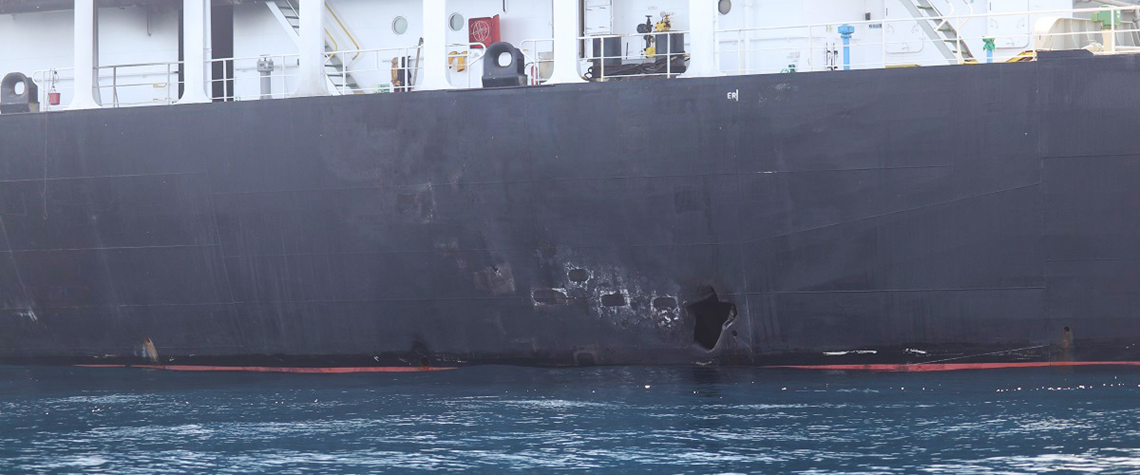
Source: US Department of Defense
Kuwait and Iraq seek to defuse Iran crisis
The states depend of the Strait of Hormuz for their oil exports and vital oil revenue
Sometimes it takes a shared crisis for neighbours who have been at loggerheads for years to put aside their differences. A one-day visit to Iraq by the Emir of Kuwait, Shaikh Sabah al-Ahmad al-Sabah, reflects a gradual thaw in relations over recent years after the trauma of Iraq's invasion of Kuwait in 1990. But, much more, it is an indication that the two states are alarmed by the rising tension in the Gulf over the Iran crisis. They have good reason to be. Both export their crude oil through the Strait of Hormuz and into the Gulf of Oman—where two tankers were recently damaged in attacks blamed on Iran. All Kuwait's exports (around 2mn bl/d) and almost all Iraq's (3.5mn bl/d, with only 100

Also in this section
14 April 2026
The GECF has warned it may revise its projections for demand this year downwards in light of conflict in the Middle East, although it maintains its forecasts for 2027 and onwards
13 April 2026
Petroleum Economist analysis highlights sharp shift from crude oversupply to market deficit, with Iraq and Kuwait badly affected and key producers Saudi Arabia and the UAE also seeing output sharply lower
13 April 2026
Turkmenistan is moving ahead with a modest expansion of the giant Galkynysh field to sustain gas deliveries abroad, but persistent delays to other key pipeline projects and geopolitical risks continue to constrain its export ambitions
13 April 2026
Expensive electricity has forced out swathes of energy-intensive industry and now threatens the country’s ability to attract future investment in datacentres and the digital economy


