


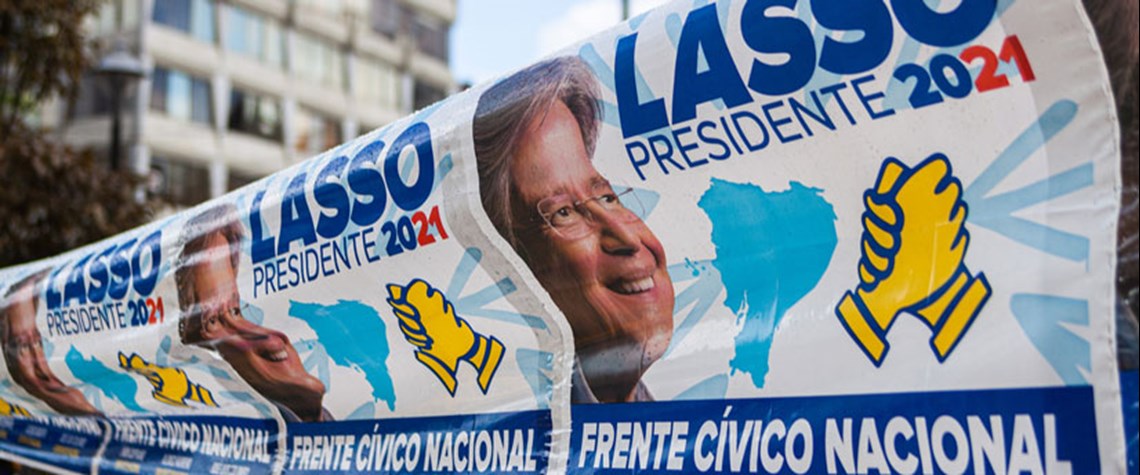
The election of Guillermo Lasso shows Ecuador's desire for a more-moderate government
Ecuador’s oil sector buoyed by new president
Former businessman has ambitious plans for domestic crude production but faces significant financial, political and ESG constraints
Ecuadorian voters have roundly rejected the leftist successor of exiled former president Rafael Correa and instead elected the conservative ex-banker Guillermo Lasso. Running in his third electoral campaign, Lasso overcame a double-digit disadvantage in the first round to defeat rival Andres Arauz by a 5pc margin. The electoral shift was dramatic but not without explanation. In early February, Lasso took barely 20pc of the vote in the first round as charismatic indigenous candidate Yaku Perez narrowly dropped out of the race. By the second round, Lasso added 12 of the 13 provinces won by Perez, as the former banker toned down his free-market rhetoric and appealed to indigenous groups and bro

Also in this section
14 April 2026
The GECF has warned it may revise its projections for demand this year downwards in light of conflict in the Middle East, although it maintains its forecasts for 2027 and onwards
13 April 2026
Petroleum Economist analysis highlights sharp shift from crude oversupply to market deficit, with Iraq and Kuwait badly affected and key producers Saudi Arabia and the UAE also seeing output sharply lower
13 April 2026
Turkmenistan is moving ahead with a modest expansion of the giant Galkynysh field to sustain gas deliveries abroad, but persistent delays to other key pipeline projects and geopolitical risks continue to constrain its export ambitions
13 April 2026
Expensive electricity has forced out swathes of energy-intensive industry and now threatens the country’s ability to attract future investment in datacentres and the digital economy


