


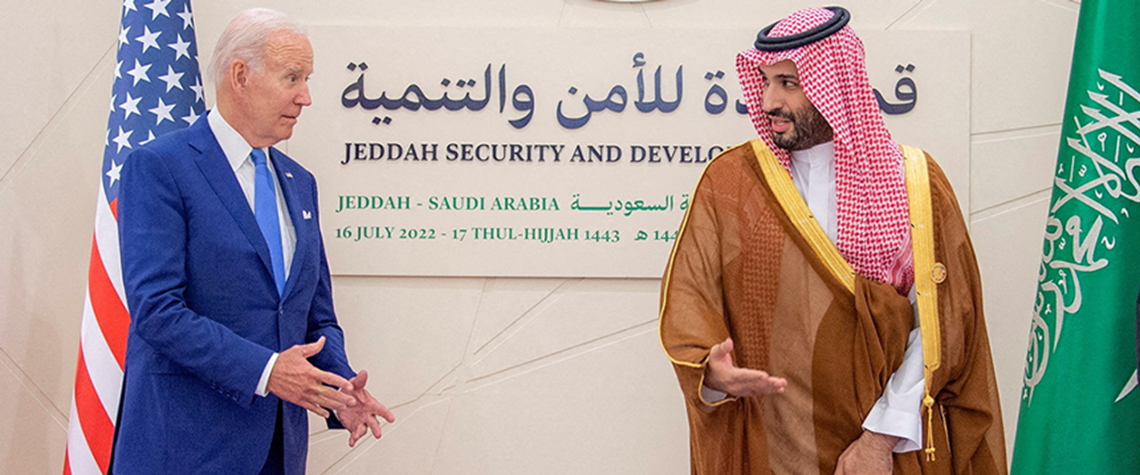
President Biden (left) with Crown Prince Mohammed bin Salman on his trip to Saudi Arabia
Letter from the Middle East: Opec balances Russia and the West
The cartel is happy to wait for further developments before committing to more drastic action
US president Joe Biden seems to have come away from his first diplomatic visit to Saudi Arabia in July empty-handed, with the Opec+ alliance in early August swiftly deciding on only a small rise in output targets from September. But the current US administration should not have expected anything different. The announced production increase by Opec+ of 100,000bl/d is so small it seems cosmetic at best and insulting at worst. And the situation is exacerbated by the fact that supply constraints mean the actual physical increment will be more like 50,000-60,000bl/d—even assuming Saudi Arabia, the UAE and Iraq make full use of their extra allowances. In contrast, a briefing by the US’s Middle Eas

Also in this section
9 April 2026
The April 2026 issue of Petroleum Economist is out now!
2 April 2026
Alongside a rapid continued build-out of renewables, China’s latest five-year plan stresses the value of domestic hydrocarbon production for energy security and calls for increased Russian gas imports
2 April 2026
The government is taking important steps to revive domestic production, lift investment and benefit from the geopolitical crisis even if more needs to be done in the longer term
1 April 2026
Golden Pass’s startup offers QatarEnergy a timely boost but may also force a difficult choice between honouring disrupted contracts and capitalising on soaring spot LNG prices


