


Newsletters | Request Trial | Log in | Advertise | Digital Issue   |   Search
  • Upstream
  • Midstream & Downstream
  • Gas & LNG
  • Trading & Markets
  • Corporate & Finance
  • Geopolitics
  • Podcasts
Search
Related Articles
Trump’s gasoline price pledge paradox
The US president has repeatedly promised to lower gasoline prices, but this ambition conflicts with his parallel aim to increase drilling and could be upended by his war against Iran
Middle East oil vulnerabilities have been exposed
The killing of Iran’s Supreme Leader Ayatollah Khamenei in US–Israeli strikes marks the most serious escalation in the region in decades and a bigger potential threat to the oil market than the start of the Russia-Ukraine crisis
HPI Market Data Book 2026: Global construction – Americas
Capex is concentrated in gas processing and LNG in the US, while in Canada the reverse is true
HPI Market Data Book 2026: Global construction – Asia-Pacific
The surge in demand for fuel and petrochemical products in Asia has led to significant expansion in refining and petrochemicals capacities, with India and China leading the way
HPI Market Data Book 2026: Global construction – EMEA
Middle Eastern countries are investing in hydrocarbon processing to diversify their economies while African countries are looking to satisfy growing domestic fuel demand
HPI Market Data Book 2026: Global construction – Overview
Latest edition of our Gulf Energy Information's Market Data Book highlights robust growth in gas processing/LNG sector, followed by petrochemicals and refining
A dual-coast LNG strategy
Sempra Infrastructure’s vice president for marketing and commercial development, Carlos de la Vega, outlines progress across the company’s US Gulf Coast and Mexico Pacific Coast LNG portfolio, including construction at Port Arthur LNG, continued strong performance at Cameron LNG and development of ECA LNG
Letter from Iran: Testing times for Tehran-Beijing crude dynamics
Growing pressure from the Trump administration continues to threaten a resilient China-Iran oil nexus
Dangote: Big ambitions, harsh realities
Nigeria's mega-refinery is still trying to solve many challenges, all while its owner talks up expansion
Letter from the US: The curse of strong energy exports
Rebuilding industry, energy dominance and lower energy costs are key goals that remain at odds in 2026
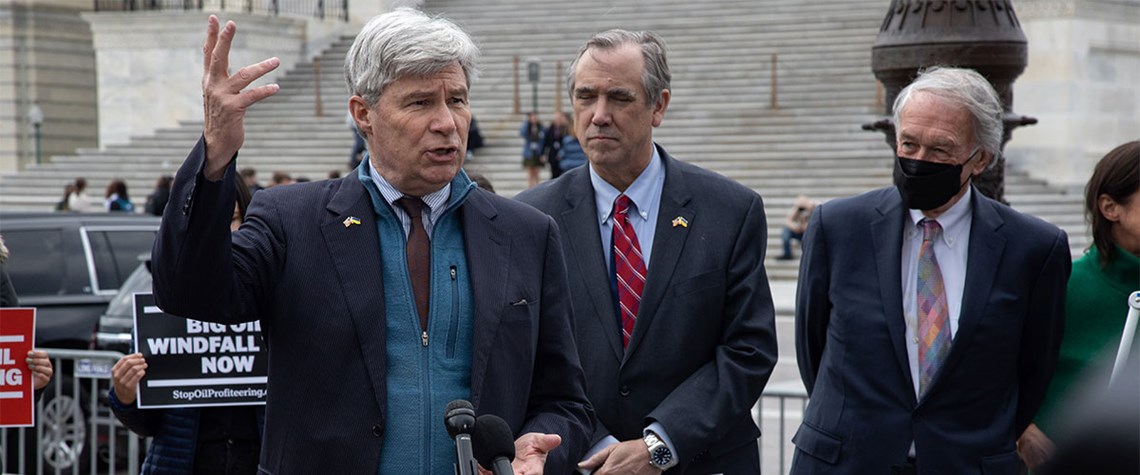
Democratic senators are calling for a windfall tax
US Refining Tax Chevron ExxonMobil
Charles Waine
4 August 2022
Follow @PetroleumEcon
Forward article link
Share PDF with colleagues

US politicians up windfall tax rhetoric ante

Surging downstream profits add fuel to the fire, but the spectre of demand destruction lurks

Calls for a windfall tax on US oil and gas companies just notched up another gear after major refiners Marathon Petroleum, Valero, Phillips 66 and PBF Energy posted more than $15bn in combined earnings across Q2, adding to the $29.5bn reported by integrated majors Chevron and ExxonMobil over the same quarter. Politicians including Democratic senator Bernie Sanders were quick to highlight billions of dollars planned in stock buybacks this year, while soaring fuel prices have left President Joe Biden fuming. Clashes with the downstream have rumbled on for months, despite the sector running at near 100pc utilisation and reduced US refining capacity partially accelerated by the pandemic-driven d

Also in this section
Trump’s gasoline price pledge paradox
4 March 2026
The US president has repeatedly promised to lower gasoline prices, but this ambition conflicts with his parallel aim to increase drilling and could be upended by his war against Iran
Explainer: Fujairah on high alert
4 March 2026
With the Strait of Hormuz effectively closed following US-Israel strikes and Iran’s retaliatory escalation, Fujairah has become the region’s critical pressure release valve—and is now under serious threat
Middle East oil vulnerabilities have been exposed
3 March 2026
The killing of Iran’s Supreme Leader Ayatollah Khamenei in US–Israeli strikes marks the most serious escalation in the region in decades and a bigger potential threat to the oil market than the start of the Russia-Ukraine crisis
How Hormuz chokehold threatens LNG buyers
2 March 2026
A potential blockade of the Strait of Hormuz following the escalating US-Iran conflict risks disrupting Qatari LNG exports that underpin global gas markets, exposing Asia and other markets to sharp price spikes, cargo shortages and renewed reliance on dirtier fuels

Share PDF with colleagues

COPYRIGHT NOTICE: PDF sharing is permitted internally for Petroleum Economist Gold Members only. Usage of this PDF is restricted by <%= If(IsLoggedIn, User.CompanyName, "")%>’s agreement with Petroleum Economist – exceeding the terms of your licence by forwarding outside of the company or placing on any external network is considered a breach of copyright. Such instances are punishable by fines of up to US$1,500 per infringement
Send

Forward article Link

Send
Sign Up For Our Newsletter
Project Data
Maps
Podcasts
Social Links
Featured Video
Home
  • About us
  • Subscribe
  • Reaching your audience
  • PE Store
  • Terms and conditions
  • Contact us
  • Privacy statement
  • Cookies
  • Sitemap
All material subject to strictly enforced copyright laws © 2025 The Petroleum Economist Ltd
Cookie Settings
;

Search
