


Newsletters | Request Trial | Log in | Advertise | Digital Issue   |   Search
  • Upstream
  • Midstream & Downstream
  • Gas & LNG
  • Trading & Markets
  • Corporate & Finance
  • Geopolitics
  • Podcasts
Search
Related Articles
Russia’s fuel crisis: Difficult but not catastrophic
International and opposition media claim that two-fifths of the country’s refining capacity is offline, but the true situation is not so dire
California refiners dreaming of heyday
US downstream sector in key state feels the pain of high costs, an environmental squeeze and the effects of broader market trends
Mars attacks US oil industry
Crude quality issues are an often understated risk to energy security, highlighted by problems at a key US refinery
The death knell for UK energy security
The end of Grangemouth and Lindsey oil refineries marks a worrying trend across Europe amid cost and transition pressures
India to help Asia spearhead global refining
Shifting demand patterns leaves most populous nation primed to become downstream leader as China and the West retreat
Asia proves a growing draw for Gulf players
A newly formed joint venture between Saudi Aramco and Sinopec signals rising Gulf interest in the Asian market
Sasol delays South Africa’s ‘gas cliff’
The company will use methane-rich gas produced from local coal to temporarily replace lost supplies from Mozambique
Dangote must face energy security home truths
Nigeria’s mega-refinery is traversing the world in search of crude for the majority of its needs and may well export large swathes of its products
Hydrocarbon Processing Refining Databook 2025: Americas
The US and Canada are boosting capacity builds for renewable diesel and biofuels, while Central and South American countries are investing heavily to upgrade and expand their domestic refining sectors
Hydrocarbon Processing Refining Databook 2025: Europe, Russia & CIS
EU net-zero polices have shifted refining investment among member states, while across the region countries and companies continue to adjust to changes in trade flows caused by the war in Ukraine
South Africa Refining
Digby Lidstone
14 July 2021
Follow @PetroleumEcon
Forward article link
Share PDF with colleagues

South African refiners struggle to compete

Most of the country’s ageing refinery capacity remains offline.

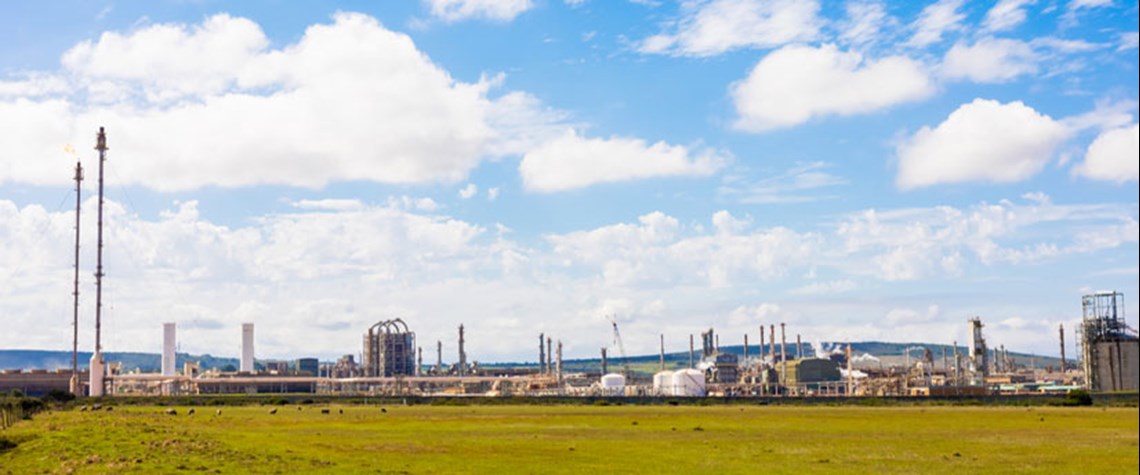
Seven months after a fire at South African fuel company Engen’s Durban refinery, much of the country’s 700,000bl/d nameplate refining capacity remains offline as a handful of ageing facilities await repairs, maintenance or investment reviews by operators. Many of these are foreign oil companies that have weathered stormy market conditions overseas in the past year and now face intense pressure from environmental lobbyists. Engen, a subsidiary of Malaysian NOC Petronas, announced in April that it had decided not to revive the 120,000bl/d plant and would instead convert it into a storage facility. The potential costs of upgrading the 67-year-old refinery to meet government demands for cleaner

Also in this section
Explainer: Iran’s indispensable energy role
16 January 2026
The country’s global energy importance and domestic political fate are interlocked, highlighting its outsized oil and gas powers, and the heightened fallout risk
Oil’s tanker transformation
16 January 2026
The global maritime oil transport sector enters 2026 facing a rare convergence of crude oversupply, record newbuild deliveries and the potential easing of several geopolitical disruptions that have shaped trade flows since 2022
Letter from the US: The curse of strong energy exports
Opinion
15 January 2026
Rebuilding industry, energy dominance and lower energy costs are key goals that remain at odds in 2026
Venezuela mismanaged its oil, and US shale benefitted
14 January 2026
Chavez’s socialist reforms boosted state control but pushed knowledge and capital out of the sector, opening the way for the US shale revolution

Share PDF with colleagues

COPYRIGHT NOTICE: PDF sharing is permitted internally for Petroleum Economist Gold Members only. Usage of this PDF is restricted by <%= If(IsLoggedIn, User.CompanyName, "")%>’s agreement with Petroleum Economist – exceeding the terms of your licence by forwarding outside of the company or placing on any external network is considered a breach of copyright. Such instances are punishable by fines of up to US$1,500 per infringement
Send

Forward article Link

Send
Sign Up For Our Newsletter
Project Data
Maps
Podcasts
Social Links
Featured Video
Home
  • About us
  • Subscribe
  • Reaching your audience
  • PE Store
  • Terms and conditions
  • Contact us
  • Privacy statement
  • Cookies
  • Sitemap
All material subject to strictly enforced copyright laws © 2025 The Petroleum Economist Ltd
Cookie Settings
;

Search
