


Newsletters | Request Trial | Log in | Advertise | Digital Issue   |   Search
  • Upstream
  • Midstream & Downstream
  • Gas & LNG
  • Trading & Markets
  • Corporate & Finance
  • Geopolitics
  • Podcasts
Search
Related Articles
Letter from Saudi Arabia: US-Saudi energy ties enter a new phase
Aramco’s pursuit of $30b in US gas partnerships marks a strategic pivot. The US gains capital and certainty; Saudi Arabia gains access, flexibility and a new export future
Letter from London: Oil’s golden triangle
The interplay between OPEC+, China and the US will define oil markets throughout 2026
The complex crude glut picture
The swelling crude supply story involves the key plot twists of reluctant buyers, limited oil stocks and refiners playing the long game
Alberta’s energy hub sees silver lining
US tariffs bolster Alberta’s Industrial Heartland exports to Asia
The curious case of oil-on-water
The market is facing being drowned in excess crude, but one caveat is that a large chunk is due to buyers reluctant to snap up sanctioned barrels
The duality of US shale
A sector beset by pessimism and pain amid price weakness contrasts with data signalling production strength and resilience
OPEC+ nears output targets amid unsolved riddles
OPEC+ has proven to be astute at bringing back oil production, but mysteries around Chinese buying, missing barrels and oil-on-water have left the group in wait-and-see mode
Nigeria charts ‘just transition’ course for NOCs
OPEC Governor Ademola Adeyemi Bero argues that only by prioritising oil and gas through partnerships with IOCs and stable OPEC market management can NOCs fulfil their pivotal global role
Oil’s fragile AI trillions
Prices risk hitting $10/bl should the tech bubble burst amid worrying economic fallout
OPEC+ exposes its producers’ limits
Saudi Arabia, the UAE and Iraq appear to be only members able to increase output as Russia approaches close to maximum capacity
A crude storage tank at the Freeport SPR facility
US Markets
Vincent Lauerman
26 March 2024
Follow @PetroleumEcon
Forward article link
Share PDF with colleagues

US SPR takes on new role

Strategic stocks have become as much a market management tool as a security of supply buffer, and this new tactic is likely to continue beyond the next election

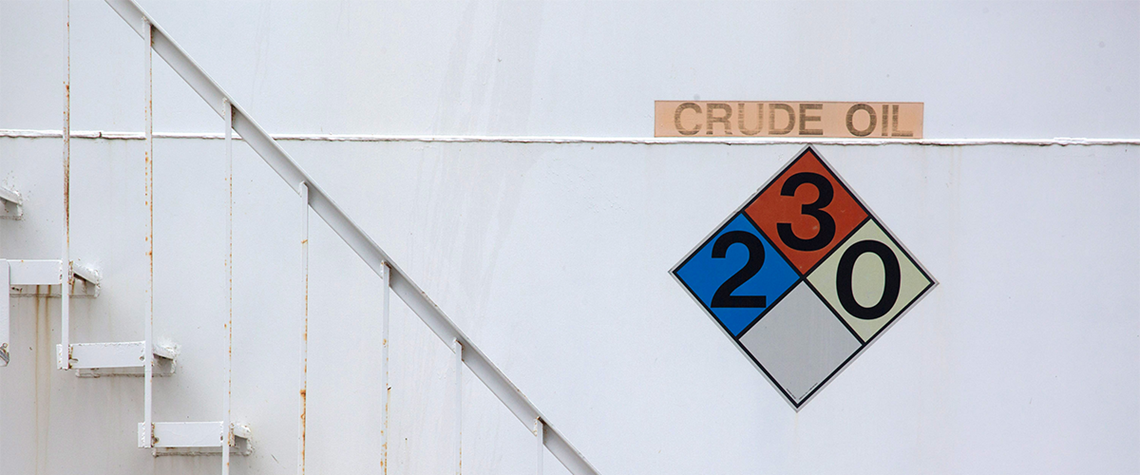
The purpose and optimal size of the US Strategic Petroleum Reserve (SPR) has become the subject of debate since the Biden administration adopted an at-least implicit price band mechanism for withdrawals from and refills of the reserve in 2022. The US Department of Energy (DOE) released more than 220m bl from the SPR in 2022 to combat a 50% jump in benchmark light crude prices—to $120/bl—due to actions associated with Russia’s invasion of Ukraine in February of that year (see Fig.1). The initial 180m bl—released under IEA obligation, unlike the remainder—fetched an average price of $95/bl, suggesting an implicit top to the price band. A

Also in this section
Explainer: What do Russia’s oil giants own overseas?
4 December 2025
Time is running out for Lukoil and Rosneft to divest international assets that will be mostly rendered useless to them when the US sanctions deadline arrives in mid-December
Letter from Saudi Arabia: US-Saudi energy ties enter a new phase
Opinion
3 December 2025
Aramco’s pursuit of $30b in US gas partnerships marks a strategic pivot. The US gains capital and certainty; Saudi Arabia gains access, flexibility and a new export future
Letter from London: Oil’s golden triangle
Opinion
2 December 2025
The interplay between OPEC+, China and the US will define oil markets throughout 2026
Libya’s upstream caught between hope and caution
1 December 2025
The North African producer’s first bidding round in almost two decades is an important milestone but the recent extension suggests a degree of trepidation

Share PDF with colleagues

COPYRIGHT NOTICE: PDF sharing is permitted internally for Petroleum Economist Gold Members only. Usage of this PDF is restricted by <%= If(IsLoggedIn, User.CompanyName, "")%>’s agreement with Petroleum Economist – exceeding the terms of your licence by forwarding outside of the company or placing on any external network is considered a breach of copyright. Such instances are punishable by fines of up to US$1,500 per infringement
Send

Forward article Link

Send
Sign Up For Our Newsletter
Project Data
Maps
Podcasts
Social Links
Featured Video
Home
  • About us
  • Subscribe
  • Reaching your audience
  • PE Store
  • Terms and conditions
  • Contact us
  • Privacy statement
  • Cookies
  • Sitemap
All material subject to strictly enforced copyright laws © 2025 The Petroleum Economist Ltd
Cookie Settings
;

Search
