


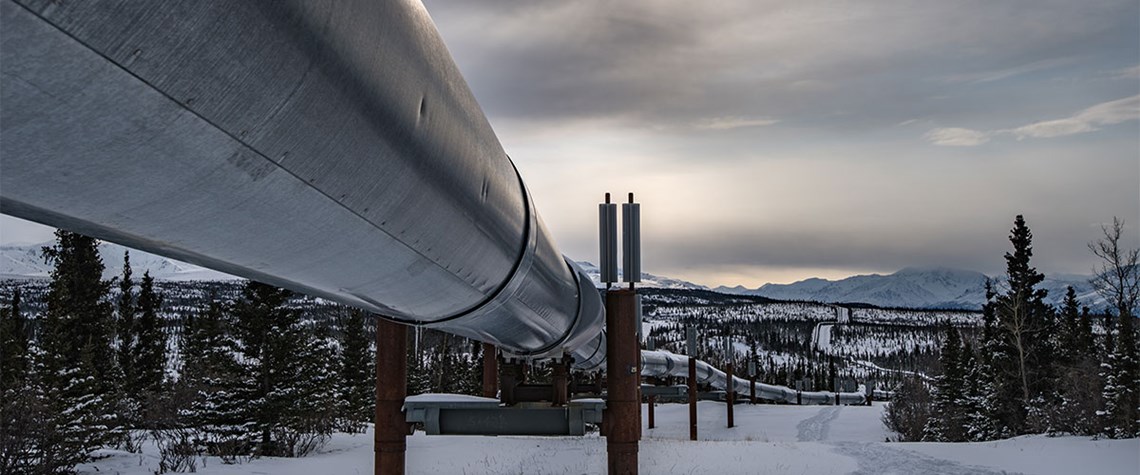
Alaska has long struggled to reverse its oil production decline
Alaska’s North Slope on cusp of potential revival
But difficulty accessing resources, particularly on federal land, is compounding the usual problems with operating in such a remote and unforgiving environment
The energy crisis of the 1970s helped propel Alaska to major oil producer status. And after over three decades of declining output despite the state having substantial resource potential, it appears the world’s latest energy crisis may contribute to an Alaskan oil revival. In August, Australian independent Santos, in partnership with Spanish energy company Repsol, announced FID to proceed with the first phase of the Pikka oil project in Alaska—a $3.7bn investment. “More carbon oil projects like Pikka Phase 1 are critical for global and US energy security,” says Santos CEO Kevin Gallagher. “We believe that this is the right project at the right time.” When Santos obtained its 51pc stake in Pi

Also in this section
24 March 2026
It is an unusual story of out with the new and in with the old, as America First Refining shows the US going back to trusted energy security developments
23 March 2026
A complex and sometimes contradictory web of factors that include unpredictable oil prices, the globalisation of LNG markets, the expansion of Middle Eastern sovereign capital and the growth of datacentre demand will shape the energy landscape beyond 2026
23 March 2026
The Strait of Hormuz crisis highlights how key waterways can become global chokepoints
20 March 2026
Attacks on key oil and LNG assets across the Gulf mean a prolonged supply disruption, with damage to Qatar’s export capacity undermining confidence in the global gas system


