


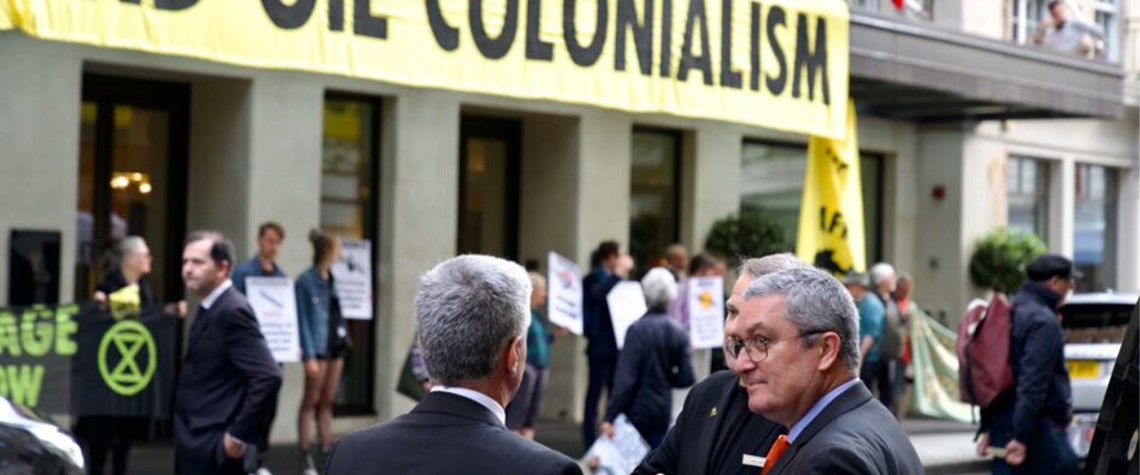
Protesters outside an African oil and gas conference in London
Letter from London: A tale of two sectors
Africa’s upstream is heavily populated by companies headquartered in London, where an increasingly positive environment for independents contrasts with the public pressure on the majors
Climate change protesters recently targeted an African oil and gas conference in London, with one of the participating groups—Extinction Rebellion—specifically citing Shell and TotalEnergies in its complaints and issuing a press release condemning the East African Crude Oil Pipeline, which the French major is developing alongside China’s Cnooc as part of the Lake Albert project. Shell and BP have long been bogeymen for British environmental groups, perhaps partially out of name recognition value, if nothing else. And now the UK popular press—itself often at odds with environmental protesters—is also keen to blame the current inflationary crisis and high petrol-pump prices on the oil majors.

Also in this section
2 April 2026
Alongside a rapid continued build-out of renewables, China’s latest five-year plan stresses the value of domestic hydrocarbon production for energy security and calls for increased Russian gas imports
2 April 2026
The government is taking important steps to revive domestic production, lift investment and benefit from the geopolitical crisis even if more needs to be done in the longer term
1 April 2026
Golden Pass’s startup offers QatarEnergy a timely boost but may also force a difficult choice between honouring disrupted contracts and capitalising on soaring spot LNG prices
1 April 2026
It is not a case of if or when, but the length and magnitude of economic damage from elevated oil prices


