


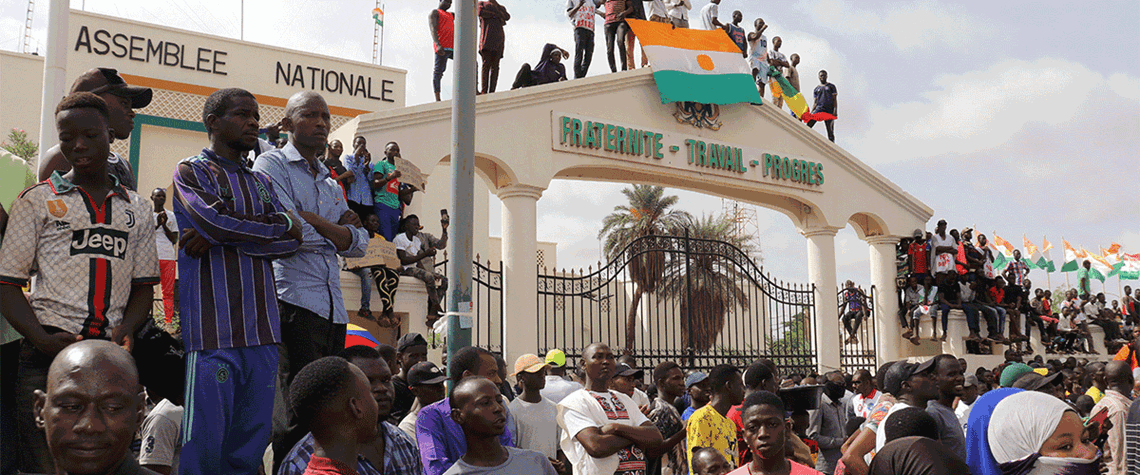
Pro-coup demonstration in Niger
Arc of instability threatens Sahel’s upstream, pipeline ambitions
Coups and geopolitical rivalries complicate energy projects in the expansive region
The Sahel is an extensive, semi-arid zone that spans the African continent south of the Sahara from the Atlantic to the Red Sea coasts. The region’s countries are poor and have been historically isolated, but growing instability in the past few years—most recently with the coup in Niger—demonstrate the Sahel’s geopolitical importance for the competing global powers of the US, Europe, China and Russia. With IOCs and oil and gas projects already impacted by ongoing events in the Sahel, Petroleum Economist looks at what the zone’s precarity might mean for the sector. Amid the panoply of armed insurgents, Islamist groups and smugglers active in the region, there is also mounting ethnic violence

Also in this section
2 April 2026
Alongside a rapid continued build-out of renewables, China’s latest five-year plan stresses the value of domestic hydrocarbon production for energy security and calls for increased Russian gas imports
2 April 2026
The government is taking important steps to revive domestic production, lift investment and benefit from the geopolitical crisis even if more needs to be done in the longer term
1 April 2026
Golden Pass’s startup offers QatarEnergy a timely boost but may also force a difficult choice between honouring disrupted contracts and capitalising on soaring spot LNG prices
1 April 2026
It is not a case of if or when, but the length and magnitude of economic damage from elevated oil prices


