


Newsletters | Request Trial | Log in | Advertise | Digital Issue   |   Search
  • Upstream
  • Midstream & Downstream
  • Gas & LNG
  • Trading & Markets
  • Corporate & Finance
  • Geopolitics
  • Podcasts
Search
Related Articles
European gas faces renewed strain after winter drawdowns
Sustained low temperatures have depleted storage levels and exposed the EU’s vulnerability to shocks even as the bloc moves ahead with phasing out all Russian imports
LNG, a strategic safeguard
Europe has transformed into a global LNG demand powerhouse over the last few years, with the fuel continuing to play a key role in safeguarding the continent’s energy security, Carsten Poppinga, chief commercial officer at Uniper, tells Petroleum Economist
A dual-coast LNG strategy
Sempra Infrastructure’s vice president for marketing and commercial development, Carlos de la Vega, outlines progress across the company’s US Gulf Coast and Mexico Pacific Coast LNG portfolio, including construction at Port Arthur LNG, continued strong performance at Cameron LNG and development of ECA LNG
Cheniere’s disciplined expansion
US LNG exporter Cheniere Energy has grown its business rapidly since exporting its first cargo a decade ago. But Chief Commercial Officer Anatol Feygin tells Petroleum Economist that, as in the past, the company’s future expansion plans are anchored by high levels of contracted offtake, supporting predictable returns on investment
The new LNG wave is finally here
Growth in LNG supply will surpass the rise in demand in 2026 for the first time in years, according to Mike Fulwood, senior research fellow at the OIES, but lower prices are likely to encourage fuel switching and could create more demand on a permanent basis
LNG trends in developing economies
Awais Ali Butt, manager for sales and business development at Pakistan LNG Ltd, discusses LNG’s role in energy security across developing, price-sensitive economies, as well as examining trade-offs between buying strategies and the impact of lower prices and policy on import behaviour 
LNG remains frontrunner among low-carbon marine fuels
LNG’s technical maturity, availability and price, as well as regulation, have driven its rapid adoption as a marine fuel, yet its future in shipping will depend on transition policies and progress in cutting methane emissions and scaling bio- and synthetic LNG, according to Carlos Guerrero at Bureau Veritas
A new force in US LNG
With Texas LNG approaching financial close, Alaska LNG advancing towards a phased buildout and Magnolia LNG positioned for future optionality, Glenfarne CEO Brendan Duval says the coming year will demonstrate how the company’s more focused, owner-operator approach is reshaping LNG infrastructure development in North America
Letter from Qatar: Greater purpose and direction for LNG
The global gas industry is no longer on the backfoot, hesitantly justifying the value of its product, but has greater confidence in gas remaining a core part of the global energy mix for decades
LNG steps in as Brazil’s gas boom masks tight marketable supply
With marketable supply unlikely to grow significantly and limited scope for pipeline imports, Brazil is expected to continue relying on LNG to cover supply shortfalls, Ieda Gomes, senior adviser of Brazilian thinktank FGV Energia, tells Petroleum Economist
There might be little or no room for increasing LNG output in Asia Pacific
LNG Natural Gas markets Australia Malaysia Indonesia Brunei Papua New Guinea
Simon Ferrie
28 September 2022
Follow @PetroleumEcon
Forward article link
Share PDF with colleagues

Pacific LNG producers prepare for crunch

There may be little spare capacity in the region

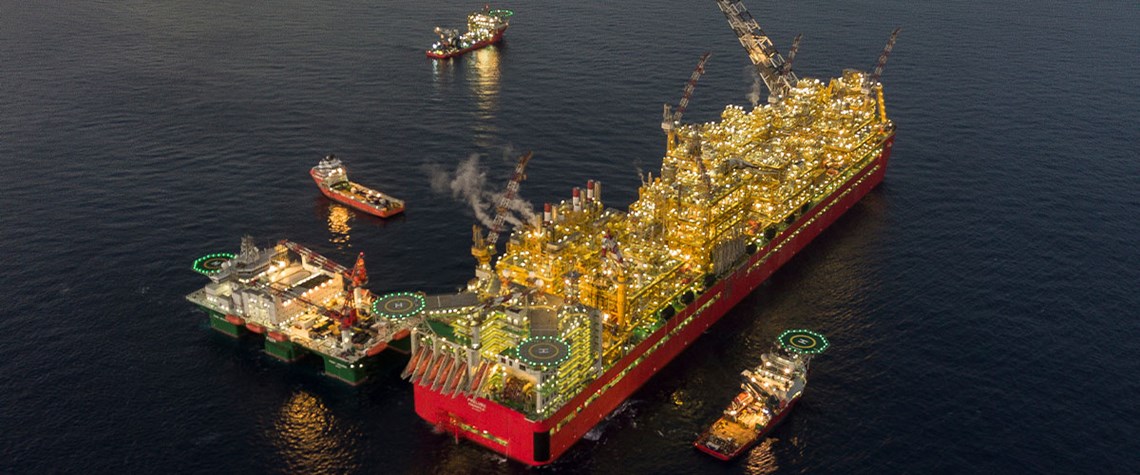
This coming northern hemisphere winter will be critical for the already tight global LNG market. High prices and widespread political pressure mean many LNG production facilities are likely to try to raise output, even above nameplate capacity levels. But in the Asia-Pacific region—which includes both the world’s top three LNG importers and major producer nations—there might be little or no room for increasing output, and there is even the risk domestic needs might eat into export volumes. Australia’s nameplate liquefaction capacity totals 88.6mn t/yr, and output in the 12 months ending 30 June this year reached 82.6mn t, giving it a utilisation rate of 93pc, data from Australian consultancy

Also in this section
Energy week in Riyadh to convene energy leaders across policy, markets and technology
27 February 2026
The 25th WPC Energy Congress to take place in tandem as part of a coordinated week of high-level ministerial, institutional and industry engagements
China’s new oil position
26 February 2026
OPEC, upstream investors and refiners all face strategic shifts now the Asian behemoth is no longer the main engine of global oil demand growth
The AI industry’s coming dominance of oil and gas
25 February 2026
Tech giants rather than oil majors could soon upend hydrocarbon markets, starting with North America
HPI Market Data Book 2026: Global construction – Americas
25 February 2026
Capex is concentrated in gas processing and LNG in the US, while in Canada the reverse is true

Share PDF with colleagues

COPYRIGHT NOTICE: PDF sharing is permitted internally for Petroleum Economist Gold Members only. Usage of this PDF is restricted by <%= If(IsLoggedIn, User.CompanyName, "")%>’s agreement with Petroleum Economist – exceeding the terms of your licence by forwarding outside of the company or placing on any external network is considered a breach of copyright. Such instances are punishable by fines of up to US$1,500 per infringement
Send

Forward article Link

Send
Sign Up For Our Newsletter
Project Data
Maps
Podcasts
Social Links
Featured Video
Home
  • About us
  • Subscribe
  • Reaching your audience
  • PE Store
  • Terms and conditions
  • Contact us
  • Privacy statement
  • Cookies
  • Sitemap
All material subject to strictly enforced copyright laws © 2025 The Petroleum Economist Ltd
Cookie Settings
;

Search
