


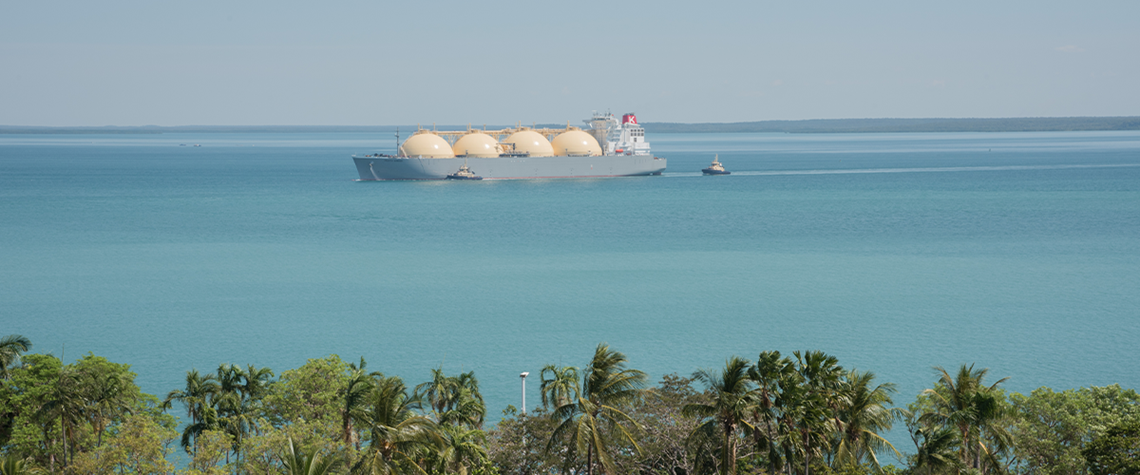
An LNG tanker in the Timor Sea
Canberra stokes Tokyo’s LNG concerns
Talks between the trading partners reveal growing tension over the potential impact on LNG flows of domestic Australian policies
Japan was the world’s largest LNG importer in 2022 and Australia the largest exporter, with the former also being the latter’s most important single market. Australia exported 80.9m t of LNG last year, of which 31.2m t, or 39%, went to Japan—accounting for 42% of Japan’s 73.6m t net imports and demonstrating the high degree of interdependence between the two Asia Pacific giants. But Canberra’s response to domestic supply concerns, combined with aggressive emission reduction efforts, has cast some doubt on Australia’s future reliability as an LNG exporter, seemingly accelerating efforts by Tokyo and Japanese utilities to ensure other potential sources of supply. Australia’s populous east co

Also in this section
2 April 2026
Alongside a rapid continued build-out of renewables, China’s latest five-year plan stresses the value of domestic hydrocarbon production for energy security and calls for increased Russian gas imports
2 April 2026
The government is taking important steps to revive domestic production, lift investment and benefit from the geopolitical crisis even if more needs to be done in the longer term
1 April 2026
Golden Pass’s startup offers QatarEnergy a timely boost but may also force a difficult choice between honouring disrupted contracts and capitalising on soaring spot LNG prices
1 April 2026
It is not a case of if or when, but the length and magnitude of economic damage from elevated oil prices


