


Newsletters | Request Trial | Log in | Advertise | Digital Issue   |   Search
  • Upstream
  • Midstream & Downstream
  • Gas & LNG
  • Trading & Markets
  • Corporate & Finance
  • Geopolitics
  • Podcasts
Search
Related Articles
Outlook 2026: Freedom gas, captive buyer
Japan once wrote the book on LNG supply diversification, but it is now looking increasingly reliant on a single major provider
Letter from London: Oil’s golden triangle
The interplay between OPEC+, China and the US will define oil markets throughout 2026
The curious case of oil-on-water
The market is facing being drowned in excess crude, but one caveat is that a large chunk is due to buyers reluctant to snap up sanctioned barrels
China’s oil plan comes together
The country’s rapid output growth is an example that other producers could learn from
China seizes oil security opportunity
A combination of geopolitical uncertainty and OPEC+ barrels has driven a renewed focus on building strategic oil stocks despite flagging demand
Arctic LNG comes in from the cold
Beijing now appears prepared to accept discounted Russian LNG, even at the cost of heightened sanctions risk
China’s role as oil buffer stock manager
The country’s intervention in global oil markets to stabilise prices could last well into 2026
Power of Siberia 2: Deal or no deal?
There is a good strategic case for China to sign a deal for gas supplies via the proposed Power of Siberia 2 pipeline, but Beijing’s concerns around over-dependence on a single supplier and desire to drive down the price make it relatively unlikely a contract will be finalised this year
China creates two-tier oil dynamic
There is a bifurcation in the global oil market as China’s stockpiling contrasts with reduced inventories elsewhere
China’s oil output to scale new heights
New discoveries and stabilisation of legacy fields’ output have helped China reverse the decline and be a top-five producer in recent years
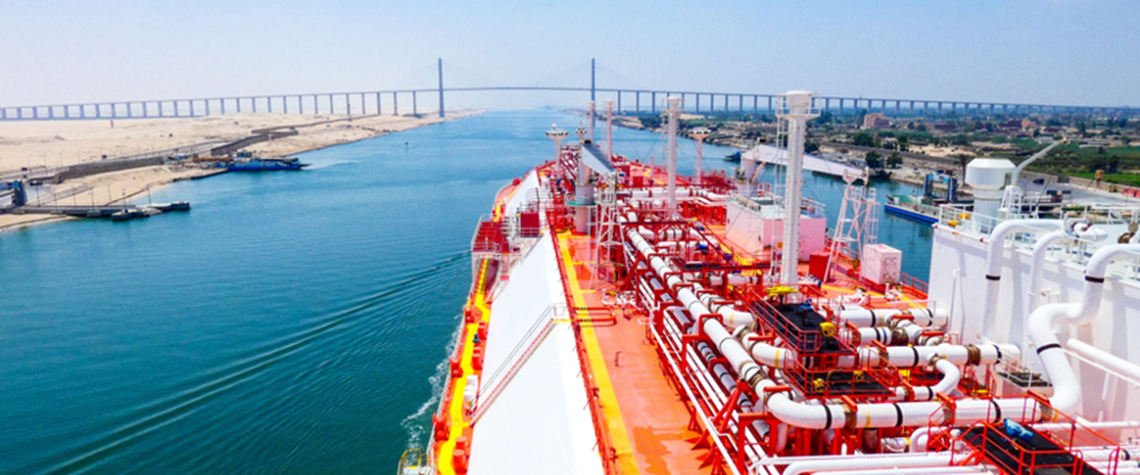
LNG carrier in the Suez Canal
Japan China South Korea
Simon Ferrie
12 July 2023
Follow @PetroleumEcon
Forward article link
Share PDF with colleagues

East Asian LNG demand may not threaten Europe

Risks persist, particularly those related to weather, which could tighten gas availability for Europe

Europe’s gas market is no longer an island. The bloc pivoted rapidly towards LNG and away from Russian pipeline supplies following the invasion of Ukraine last year. This has put European gas buyers in direct competition for cargoes with the established LNG markets of East Asia. China and Japan have jockeyed for position as the world’s largest LNG consumer in recent years, with South Korea taking third place. Altogether, that means the Northeast Asia region is vital to global LNG demand and flows. And so, in this increasingly global context, East Asian demand will prove a critical factor in how much LNG is available to supply Europe this winter. “One of the biggest questions the market is fa

Also in this section
Letter from Saudi Arabia: Big oil meets big shovel
Opinion
22 January 2026
As Saudi Arabia pushes mining as a new pillar of its economy, Saudi Aramco is positioning itself at the intersection of hydrocarbons, minerals and industrial policy
Turkey locks in more Azeri gas
22 January 2026
New long-term deal is latest addition to country’s rapidly evolving supply portfolio as it eyes role as regional gas hub
Oil in 2026: Five factors to watch
21 January 2026
Petroleum Economist takes a look at the critical developments that look set to govern the course of the market for this year
Venezuela upends global heavy crude market
20 January 2026
The ripple effects of US refiners switching to Venezuela grades will be felt from Canada to China and everywhere in between

Share PDF with colleagues

COPYRIGHT NOTICE: PDF sharing is permitted internally for Petroleum Economist Gold Members only. Usage of this PDF is restricted by <%= If(IsLoggedIn, User.CompanyName, "")%>’s agreement with Petroleum Economist – exceeding the terms of your licence by forwarding outside of the company or placing on any external network is considered a breach of copyright. Such instances are punishable by fines of up to US$1,500 per infringement
Send

Forward article Link

Send
Sign Up For Our Newsletter
Project Data
Maps
Podcasts
Social Links
Featured Video
Home
  • About us
  • Subscribe
  • Reaching your audience
  • PE Store
  • Terms and conditions
  • Contact us
  • Privacy statement
  • Cookies
  • Sitemap
All material subject to strictly enforced copyright laws © 2025 The Petroleum Economist Ltd
Cookie Settings
;

Search
