


Newsletters | Request Trial | Log in | Advertise | Digital Issue   |   Search
  • Upstream
  • Midstream & Downstream
  • Gas & LNG
  • Trading & Markets
  • Corporate & Finance
  • Geopolitics
  • Podcasts
Search
Related Articles
China’s secure energy transition
Alongside a rapid continued build-out of renewables, China’s latest five-year plan stresses the value of domestic hydrocarbon production for energy security and calls for increased Russian gas imports
China’s new oil position
OPEC, upstream investors and refiners all face strategic shifts now the Asian behemoth is no longer the main engine of global oil demand growth
Explainer: Inside China’s crude oil stockpiling black box
Energy security continues to evolve as a strategic priority amid growing geopolitical tensions highlighted by increased volumes, a new energy law and persistent secrecy
Outlook 2026: Freedom gas, captive buyer
Japan once wrote the book on LNG supply diversification, but it is now looking increasingly reliant on a single major provider
Letter from London: Oil’s golden triangle
The interplay between OPEC+, China and the US will define oil markets throughout 2026
The curious case of oil-on-water
The market is facing being drowned in excess crude, but one caveat is that a large chunk is due to buyers reluctant to snap up sanctioned barrels
China’s oil plan comes together
The country’s rapid output growth is an example that other producers could learn from
China seizes oil security opportunity
A combination of geopolitical uncertainty and OPEC+ barrels has driven a renewed focus on building strategic oil stocks despite flagging demand
Arctic LNG comes in from the cold
Beijing now appears prepared to accept discounted Russian LNG, even at the cost of heightened sanctions risk
China’s role as oil buffer stock manager
The country’s intervention in global oil markets to stabilise prices could last well into 2026
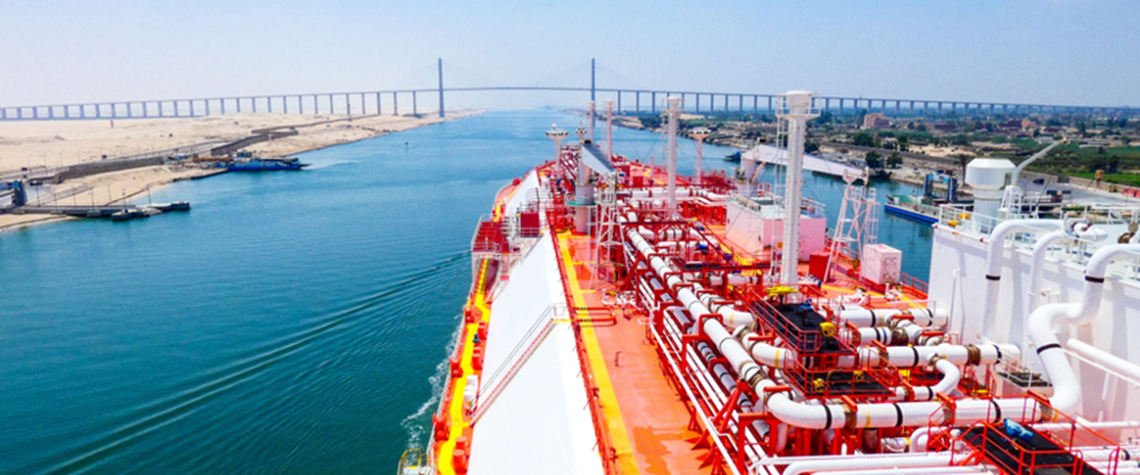
LNG carrier in the Suez Canal
Japan China South Korea
Simon Ferrie
12 July 2023
Follow @PetroleumEcon
Forward article link
Share PDF with colleagues

East Asian LNG demand may not threaten Europe

Risks persist, particularly those related to weather, which could tighten gas availability for Europe

Europe’s gas market is no longer an island. The bloc pivoted rapidly towards LNG and away from Russian pipeline supplies following the invasion of Ukraine last year. This has put European gas buyers in direct competition for cargoes with the established LNG markets of East Asia. China and Japan have jockeyed for position as the world’s largest LNG consumer in recent years, with South Korea taking third place. Altogether, that means the Northeast Asia region is vital to global LNG demand and flows. And so, in this increasingly global context, East Asian demand will prove a critical factor in how much LNG is available to supply Europe this winter. “One of the biggest questions the market is fa

Also in this section
Gas growth cools in 2025
14 April 2026
The GECF has warned it may revise its projections for demand this year downwards in light of conflict in the Middle East, although it maintains its forecasts for 2027 and onwards
OPEC+’s 11m b/d March production collapse
13 April 2026
Petroleum Economist analysis highlights sharp shift from crude oversupply to market deficit, with Iraq and Kuwait badly affected and key producers Saudi Arabia and the UAE also seeing output sharply lower
Galkynysh goes fourth
13 April 2026
Turkmenistan is moving ahead with a modest expansion of the giant Galkynysh field to sustain gas deliveries abroad, but persistent delays to other key pipeline projects and geopolitical risks continue to constrain its export ambitions
The UK’s problematic power price
13 April 2026
Expensive electricity has forced out swathes of energy-intensive industry and now threatens the country’s ability to attract future investment in datacentres and the digital economy

Share PDF with colleagues

COPYRIGHT NOTICE: PDF sharing is permitted internally for Petroleum Economist Gold Members only. Usage of this PDF is restricted by <%= If(IsLoggedIn, User.CompanyName, "")%>’s agreement with Petroleum Economist – exceeding the terms of your licence by forwarding outside of the company or placing on any external network is considered a breach of copyright. Such instances are punishable by fines of up to US$1,500 per infringement
Send

Forward article Link

Send
Sign Up For Our Newsletter
Project Data
Maps
Podcasts
Social Links
Featured Video
Home
  • About us
  • Subscribe
  • Reaching your audience
  • PE Store
  • Terms and conditions
  • Contact us
  • Privacy statement
  • Cookies
  • Sitemap
All material subject to strictly enforced copyright laws © 2025 The Petroleum Economist Ltd
Cookie Settings
;

Search
