


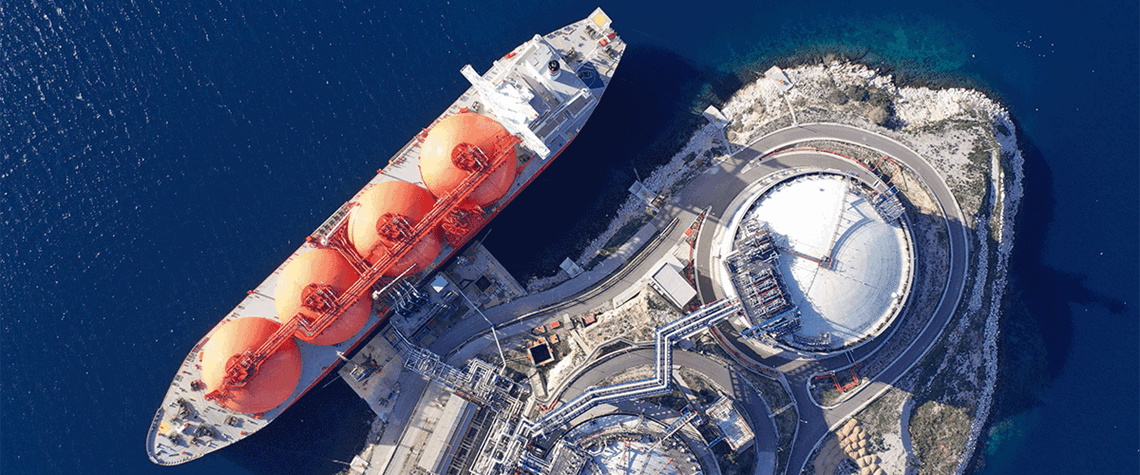
LNG market stress to persist for years
But a supply glut could be coming later this decade
Europe’s attempts to substitute Russian pipeline gas with seaborne LNG upended the whole sector in 2022, resulting in record price spikes and significant uncertainty ahead of the heating season. Europe prepared by filling gas storage sites, reducing demand and aggressively rolling out new LNG import infrastructure. Nevertheless, there were fears the bloc would find itself short of energy, and that would likely have caused another surge in LNG prices, with knock-on effects for competing Asian buyers. Instead, the global gas markets narrowly avoided a serious supply crunch this winter, aided by milder-than-usual temperatures across the northern hemisphere and muted Chinese demand. But the gas

Also in this section
13 April 2026
Petroleum Economist analysis highlights sharp shift from crude oversupply to market deficit, with Iraq and Kuwait badly affected and key producers Saudi Arabia and the UAE also seeing output sharply lower
13 April 2026
Turkmenistan is moving ahead with a modest expansion of the giant Galkynysh field to sustain gas deliveries abroad, but persistent delays to other key pipeline projects and geopolitical risks continue to constrain its export ambitions
13 April 2026
Expensive electricity has forced out swathes of energy-intensive industry and now threatens the country’s ability to attract future investment in datacentres and the digital economy
13 April 2026
For GCC producers, the ceasefire may prove more destabilising than the war itself: exports remain constrained, and control over Hormuz has shifted in ways that could endure


