


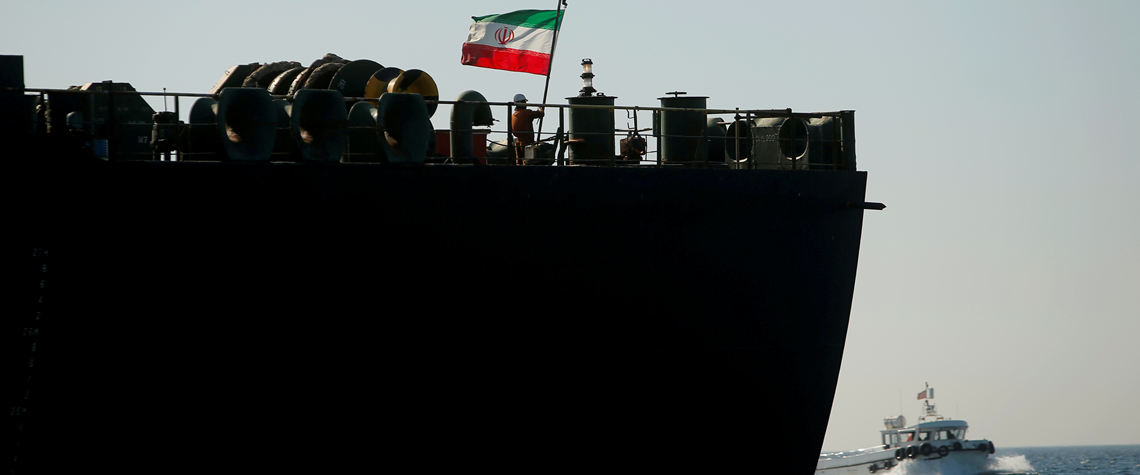
A crew member raises the Iranian flag on the Adrian Darya 1 oil tanker
Iran makes the best of it
Sanctions are constraining Iran’s output and straining oil storage capacity
The latest round of sanctions on Iran have confronted its petroleum industry with a new set of challenges. For at least two decades, it has struggled to sustain production at its ageing oil fields. Now, as under the Obama-era confrontation, sanctions pose a different problem: how to keep oil exports going as best as possible. When the Joint Comprehensive Plan of Action (JCPOA) came into force in January 2016, a new Iran Petroleum Contract was being defined to cover a range of fields for foreign investment. But this process made little progress, with the most advanced deal, with France’s Total and China’s CNPC for development of Phase 11 of the South Pars gas field, ending with Total’s exit i

Also in this section
24 March 2026
It is an unusual story of out with the new and in with the old, as America First Refining shows the US going back to trusted energy security developments
23 March 2026
A complex and sometimes contradictory web of factors that include unpredictable oil prices, the globalisation of LNG markets, the expansion of Middle Eastern sovereign capital and the growth of datacentre demand will shape the energy landscape beyond 2026
23 March 2026
The Strait of Hormuz crisis highlights how key waterways can become global chokepoints
20 March 2026
Attacks on key oil and LNG assets across the Gulf mean a prolonged supply disruption, with damage to Qatar’s export capacity undermining confidence in the global gas system


