


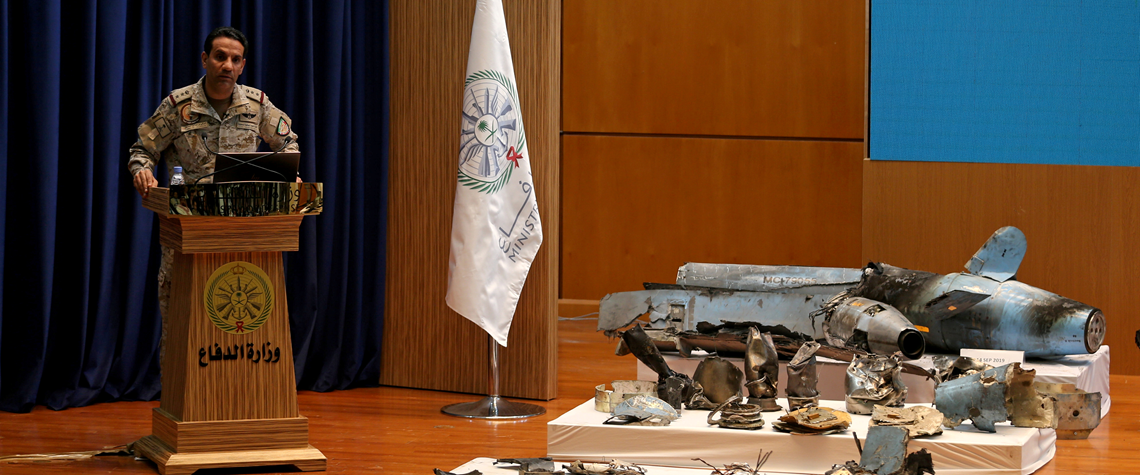
Saudi defence ministry spokesman displays missiles allegedly used to attack an Aramco oil facility
Saudi Arabia in the firing line
The oil facility attacks highlight potentially fatal vulnerabilities in Saudi Arabia’s critical infrastructure
Oil prices retrenched as the prospect of a full-blown war with Iran—blamed by both Saudi Arabia and a sanctions expanding Trump administration in Washington for the c.25 armed drones and cruise missiles assault on the world’s largest oil stabilisation plant at Abqaiq and Khurais, the kingdom’s second-largest oilfield situated about 200km (124 miles) southwest of Abqaiq—receded. Some analysts hail Saudi Aramco’s ability to restore calm in the aftermath of the incident. “Despite the damaging attacks, it is remarkable how resilient the Saudi infrastructure is proving to be,” says Jan Kalicki, an energy security expert at the Wilson Center, a Washington-based thinktank. “About half is to be r

Also in this section
2 April 2026
Alongside a rapid continued build-out of renewables, China’s latest five-year plan stresses the value of domestic hydrocarbon production for energy security and calls for increased Russian gas imports
2 April 2026
The government is taking important steps to revive domestic production, lift investment and benefit from the geopolitical crisis even if more needs to be done in the longer term
1 April 2026
Golden Pass’s startup offers QatarEnergy a timely boost but may also force a difficult choice between honouring disrupted contracts and capitalising on soaring spot LNG prices
1 April 2026
It is not a case of if or when, but the length and magnitude of economic damage from elevated oil prices


