


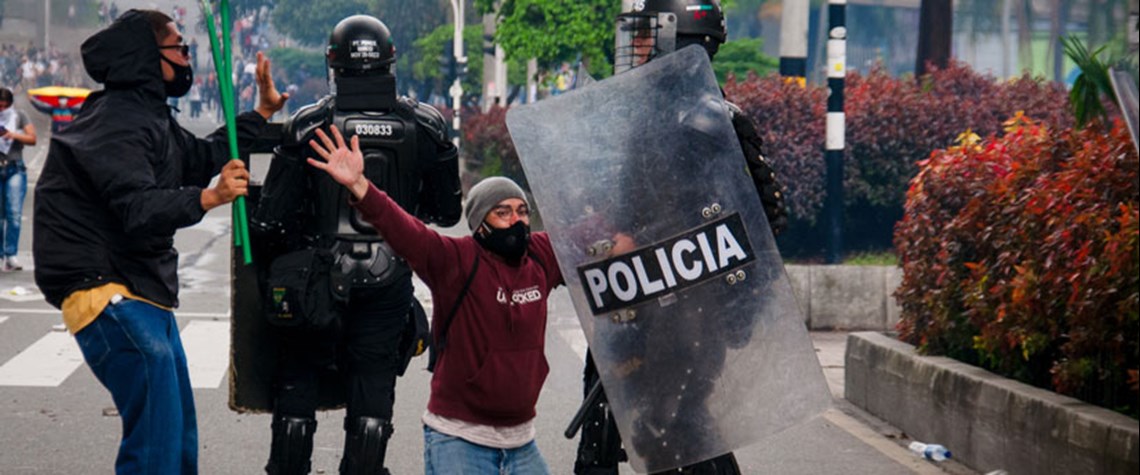
Colombia has been rocked by deadly protests
Colombian protests threaten output
Demonstrations against proposed tax reform have spread across the country, with an impact on oil and gas
Colombia’s ailing economy—not helped by falling oil production and Covid-19—has mobilised deadly protests against a proposed government tax hike and raised concerns the country could descend into further violence and unrest. It is far cry from the 2016 peace accord that ended a 50-year armed conflict between the government and revolutionary paramilitary group Farc, and promised to instil lasting change in the country. “Initially, the protest was in response to the tax reform proposal presented by President Ivan Duque,” says Jose Zapata, partner at law firm Holland & Knight. “This initial mobilisation resulted in the withdrawal of the reform. But protests continue to reject rising poverty

Also in this section
2 April 2026
Alongside a rapid continued build-out of renewables, China’s latest five-year plan stresses the value of domestic hydrocarbon production for energy security and calls for increased Russian gas imports
2 April 2026
The government is taking important steps to revive domestic production, lift investment and benefit from the geopolitical crisis even if more needs to be done in the longer term
1 April 2026
Golden Pass’s startup offers QatarEnergy a timely boost but may also force a difficult choice between honouring disrupted contracts and capitalising on soaring spot LNG prices
1 April 2026
It is not a case of if or when, but the length and magnitude of economic damage from elevated oil prices


