


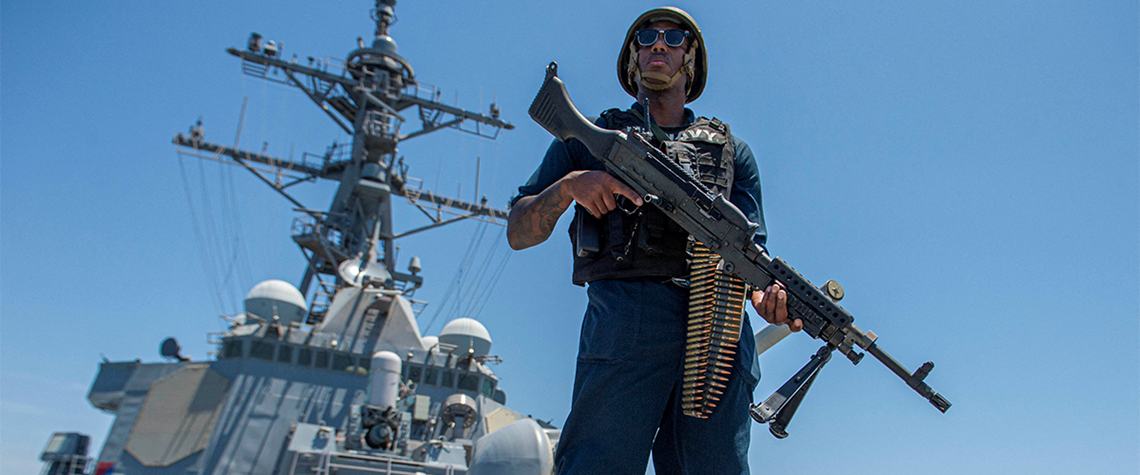
A soldier stands on the guided-missile destroyer USS Paul Hamilton in the Strait of Hormuz
Shipping shrugs off Hormuz Strait incidents
Despite contradictory claims of increased tensions in Mideast Gulf waters and possible rapprochement between the US and Iran, the situation appears business as usual for freight
Washington and Tehran are once again in talks. The discussions are not public but likely address issues such as prisoners, regional conflicts and tensions, the US-led sanctions on Iran and the Islamic Republic’s a ambitions. And while the enmity between the two countries might seem impossible to bridge, the two parties were able to reach a wide-ranging accommodation relatively recently. The 2015 JCPOA deal loosened sanctions in exchange for Iran halting its nuclear projects, although of course that deal was subsequently scrapped when the Republicans retook the White House. But for a brief window while the JCPOA was in place, Iranian crude flowed into the market, including deliveries to Europ

Also in this section
28 April 2026
Oil traders warning of $200/bl oil are wrong, and the market should be wary of proclamations that the impact of the oil shortage has only begun to be felt and a that a ‘harsh adjustment’ is coming—even for industrialised nations
28 April 2026
Restoring supply from Saudi Arabia, the UAE, Kuwait, Qatar, Bahrain and Iraq involves complexities far beyond simply adjusting operational controls
28 April 2026
Datacentres will guzzle power at a ferocious rate, but the impact on wider energy markets will be far more complex than previously thought
28 April 2026
The key energy player faces balancing regional routes, political complexities, and creating a clear strategic vision for energy security


