


Newsletters | Request Trial | Log in | Advertise | Digital Issue   |   Search
  • Upstream
  • Midstream & Downstream
  • Gas & LNG
  • Trading & Markets
  • Corporate & Finance
  • Geopolitics
  • Podcasts
Search
Related Articles
Trump’s gasoline price pledge paradox
The US president has repeatedly promised to lower gasoline prices, but this ambition conflicts with his parallel aim to increase drilling and could be upended by his war against Iran
Explainer: Fujairah on high alert
With the Strait of Hormuz effectively closed following US-Israel strikes and Iran’s retaliatory escalation, Fujairah has become the region’s critical pressure release valve—and is now under serious threat
Middle East oil vulnerabilities have been exposed
The killing of Iran’s Supreme Leader Ayatollah Khamenei in US–Israeli strikes marks the most serious escalation in the region in decades and a bigger potential threat to the oil market than the start of the Russia-Ukraine crisis
HPI Market Data Book 2026: Global construction – Americas
Capex is concentrated in gas processing and LNG in the US, while in Canada the reverse is true
EU sanctions push stalls ahead of fourth anniversary of Russian invasion
As Europe marks the fourth anniversary of the Russia-Ukraine conflict, EU efforts to tighten sanctions on Moscow have stalled
A dual-coast LNG strategy
Sempra Infrastructure’s vice president for marketing and commercial development, Carlos de la Vega, outlines progress across the company’s US Gulf Coast and Mexico Pacific Coast LNG portfolio, including construction at Port Arthur LNG, continued strong performance at Cameron LNG and development of ECA LNG
Letter from Iran: Testing times for Tehran-Beijing crude dynamics
Growing pressure from the Trump administration continues to threaten a resilient China-Iran oil nexus
Venezuela upends global heavy crude market
The ripple effects of US refiners switching to Venezuela grades will be felt from Canada to China and everywhere in between
Explainer: Iran’s indispensable energy role
The country’s global energy importance and domestic political fate are interlocked, highlighting its outsized oil and gas powers, and the heightened fallout risk
Letter from the US: The curse of strong energy exports
Rebuilding industry, energy dominance and lower energy costs are key goals that remain at odds in 2026
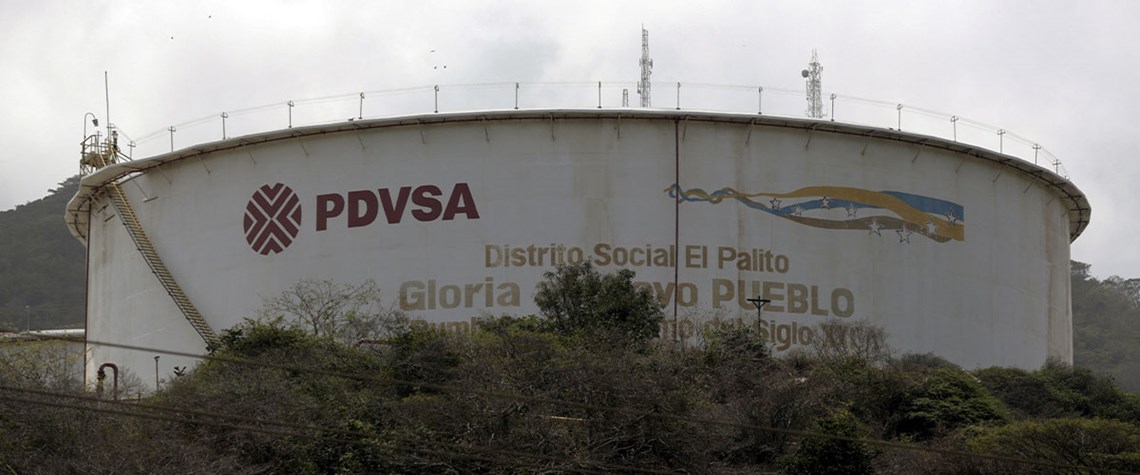
PDVSA’s El Palito refinery in Puerto Cabell
Venezuela US Politics
Simon Ferrie
Paul Hickin,
Editor-in-chief
1 November 2023
Follow @PetroleumEcon
Forward article link
Share PDF with colleagues

Venezuela’s limited oil sanctions relief

Washington’s move to ease restrictions on Caracas will likely have a more meaningful impact on US refiners than global crude markets

The US suspended selected sanctions on Venezuela on 18 October in response to the signing of an “electoral roadmap” between the Maduro government and the political opposition. Most observers are sceptical over how much of an impact the apparent rapprochement might have on the global oil markets, given the temporary nature of the sanctions relief and Venezuela’s degraded production capabilities. That is not to say the step will not move the dial for the US oil industry itself, which relies on heavier, sourer grades—typically from Canada—to blend with lighter, sweeter home-grown grades. So any extra flows from Venezuela—a traditional supplier of crude to its North American neighbour—will certa

Also in this section
Trump’s gasoline price pledge paradox
4 March 2026
The US president has repeatedly promised to lower gasoline prices, but this ambition conflicts with his parallel aim to increase drilling and could be upended by his war against Iran
Explainer: Fujairah on high alert
4 March 2026
With the Strait of Hormuz effectively closed following US-Israel strikes and Iran’s retaliatory escalation, Fujairah has become the region’s critical pressure release valve—and is now under serious threat
Middle East oil vulnerabilities have been exposed
3 March 2026
The killing of Iran’s Supreme Leader Ayatollah Khamenei in US–Israeli strikes marks the most serious escalation in the region in decades and a bigger potential threat to the oil market than the start of the Russia-Ukraine crisis
How Hormuz chokehold threatens LNG buyers
2 March 2026
A potential blockade of the Strait of Hormuz following the escalating US-Iran conflict risks disrupting Qatari LNG exports that underpin global gas markets, exposing Asia and other markets to sharp price spikes, cargo shortages and renewed reliance on dirtier fuels

Share PDF with colleagues

COPYRIGHT NOTICE: PDF sharing is permitted internally for Petroleum Economist Gold Members only. Usage of this PDF is restricted by <%= If(IsLoggedIn, User.CompanyName, "")%>’s agreement with Petroleum Economist – exceeding the terms of your licence by forwarding outside of the company or placing on any external network is considered a breach of copyright. Such instances are punishable by fines of up to US$1,500 per infringement
Send

Forward article Link

Send
Sign Up For Our Newsletter
Project Data
Maps
Podcasts
Social Links
Featured Video
Home
  • About us
  • Subscribe
  • Reaching your audience
  • PE Store
  • Terms and conditions
  • Contact us
  • Privacy statement
  • Cookies
  • Sitemap
All material subject to strictly enforced copyright laws © 2025 The Petroleum Economist Ltd
Cookie Settings
;

Search
