


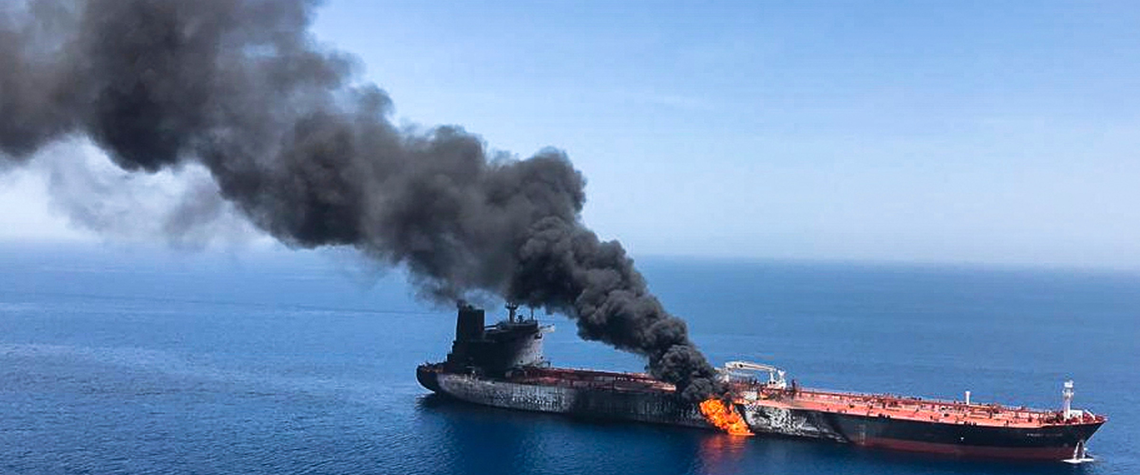
Tankers improvise to avoid Gulf tensions
Tankers are crossing sea-lanes and hugging the coasts to avoid high-risk areas in the Strait of Hormuz
About 20pc of the world's oil passes through the Strait of Hormuz, 21 miles wide at its narrowest point, and tanker owners are trying ingenious—or reckless, depending on your point of view—ways of navigating through it. Intertanko, representing the world's independent tanker operators, has issued rigorous advisory guidelines to cope with possible attacks. Operators are advised to post additional lookouts with night-vision binoculars, backed by searchlights, to watch for attackers after a string of mine and missile strikes in recent months. The guide, issued in July, advises tankers in the Strait of Hormuz to consider transiting at full speed, advice given this week by Norway to its flag-carr

Also in this section
29 April 2026
The UAE’s exit from the alliance marks a decisive step towards a world in which oil markets are shaped less by collective management and more by national strategy
29 April 2026
Trafigura’s $1b prepayment agreement confirms African resource holders’ renewed interest in oil-backed financing deals as they look to capitalise on high oil prices
29 April 2026
The UAE’s departure from the oil producers’ group was a surprise to many, but the move can be traced back to a single point five years ago
28 April 2026
Oil traders warning of $200/bl oil are wrong, and the market should be wary of proclamations that the impact of the oil shortage has only begun to be felt and a that a ‘harsh adjustment’ is coming—even for industrialised nations


