


Newsletters | Request Trial | Log in | Advertise | Digital Issue   |   Search
  • Upstream
  • Midstream & Downstream
  • Gas & LNG
  • Trading & Markets
  • Corporate & Finance
  • Geopolitics
  • Podcasts
Search
Related Articles
Letter from Canada: Federal government attempts emissions strategy
Federal carbon pricing options may allow the central government to outflank provincial opposition
Letter from Australia: Labor victory positive for CCS
Australia’s upstream industry could be poised to benefit from the election of a Labor government for the first time in almost a decade
Tide turns for middle distillates
Strong prices for middle distillates might persist due to a range of supply and demand factors
CO2 shrugs off the Covid-19 slump
Future policy assumptions support the EU ETS after initial hit
Preparing the US for the energy transition
Former President Obama special assistant Jason Bordoff says that government and industry need to work together to tackle climate change
Canada divided by carbon conundrum
Canada’s plans for raising carbon tax face mounting political and popular opposition
WGC 2018: gas faces political, environmental risks
Natural gas may be the best solution to emissions goals, but the world needs to be convinced, say industry heads
Carbon permits: The burning issue
Carbon floor price or free market? Europe's debate shows no signs of calming
Carbon permits
Alessandro Vitelli
23 November 2017
Follow @PetroleumEcon
Forward article link
Share PDF with colleagues

Carbon permits: The burning issue

Carbon floor price or free market? Europe's debate shows no signs of calming

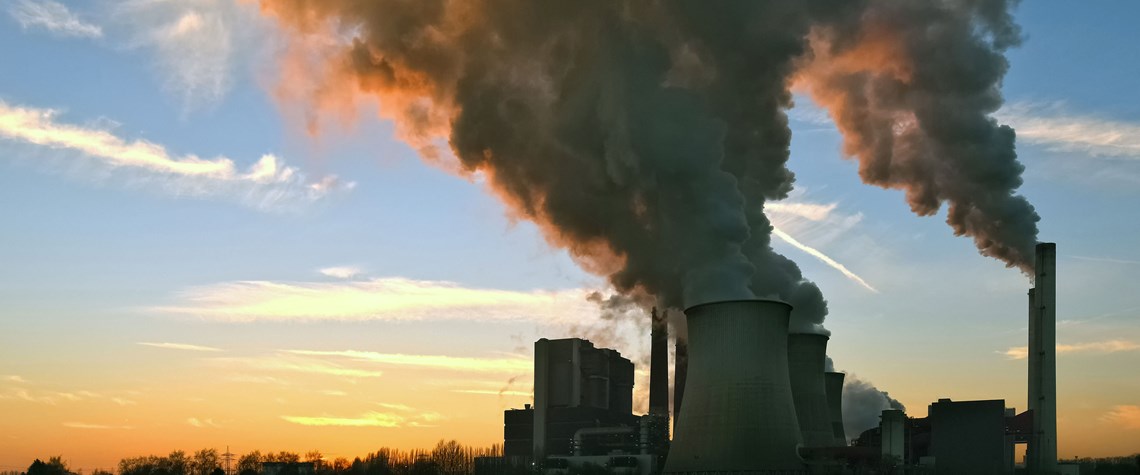
For more than a decade Europe's carbon market has been at the centre of a debate on whether a trading emissions system is more effective than taxation. Even as ambitious efforts to reform the EU Emissions Trading System (EU ETS) near completion, critics say setting a floor price for carbon would lead to greater reductions. Since 2007, the EU ETS built up an oversupply of EU allowances (EUAs) that at its peak was around 2bn tonnes, or the equivalent of a year's worth of emissions from the entire market. Prices plunged from nearly €30 ($/35.39) per tonne in 2008 to €2.46/tonne in April 2013, leading many critics to claim that low prices had removed all incentives to cut climate pollution. The

Also in this section
Lukoil loses its growth prospects
10 November 2025
The Russian firm made a significant attempt to expand overseas over the past two decades but is now trying to divest its global operations
OPEC+ nears output targets amid unsolved riddles
10 November 2025
OPEC+ has proven to be astute at bringing back oil production, but mysteries around Chinese buying, missing barrels and oil-on-water have left the group in wait-and-see mode
Germany under pressure to solve Rosneft refinery problem
7 November 2025
The Russian company’s German assets are under Berlin’s management and are exempt from sanctions, for now, but a permanent solution still needs to be found
Letter from Europe: Western retreat raises doubts over climate leadership
Opinion
6 November 2025
After years of pursuing ideologically driven climate leadership, Western powers are now stepping back under mounting political pressure and rising populist opposition—prompting concern essential climate action could be sidelined

Share PDF with colleagues

COPYRIGHT NOTICE: PDF sharing is permitted internally for Petroleum Economist Gold Members only. Usage of this PDF is restricted by <%= If(IsLoggedIn, User.CompanyName, "")%>’s agreement with Petroleum Economist – exceeding the terms of your licence by forwarding outside of the company or placing on any external network is considered a breach of copyright. Such instances are punishable by fines of up to US$1,500 per infringement
Send

Forward article Link

Send
Sign Up For Our Newsletter
Project Data
Maps
Podcasts
Social Links
Featured Video
Home
  • About us
  • Subscribe
  • Reaching your audience
  • PE Store
  • Terms and conditions
  • Contact us
  • Privacy statement
  • Cookies
  • Sitemap
All material subject to strictly enforced copyright laws © 2025 The Petroleum Economist Ltd
Cookie Settings
;

Search
