


Newsletters | Request Trial | Log in | Advertise | Digital Issue   |   Search
  • Upstream
  • Midstream & Downstream
  • Gas & LNG
  • Trading & Markets
  • Corporate & Finance
  • Geopolitics
  • Podcasts
Search
Related Articles
Trump not curbing US momentum on methane emissions
There has been a flourishing of non-governmental initiatives aimed at incentivising voluntary action on emissions over the past five years, and momentum is not slowing down
LNG optimisation in the spotlight
The growing prominence of LNG makes it vital to maximise production and energy efficiency at liquefaction facilities
Gas future hangs on emissions data transparency
Monitoring, certification and data science can sustain the fuel’s licence to operate
Beyond buzzwords
Industry pioneer Cognite warns that digitalisation’s track record of over-promising and under-delivering threatens to overshadow its huge potential to transform oil and gas
Data-based decisions require AI at enterprise scale
Operational data is generated on a vast scale across the value chain every day but has yet to be fully exploited by predictive, analytical digital technologies
Outlook 2022: Digitalisation holds the key
Decarbonising existing and future energy production can be achieved only through technological innovation
Digitalisation the new normal
Covid-19 has accelerated the shift towards greater digital maturity for oil and gas operators
Accelerating clean hydrogen
Digital transformation will enable a greener shade of grey hydrogen from oil and gas facilities
Repsol trusts in AI
The company’s upstream digital strategy is increasingly turning to machine-learning and AI capabilities
Driving digital innovation at a global scale
Adoption of proactive technologies will be crucial for the oil and gas sector to meet its decarbonisation goals while staying financially competitive
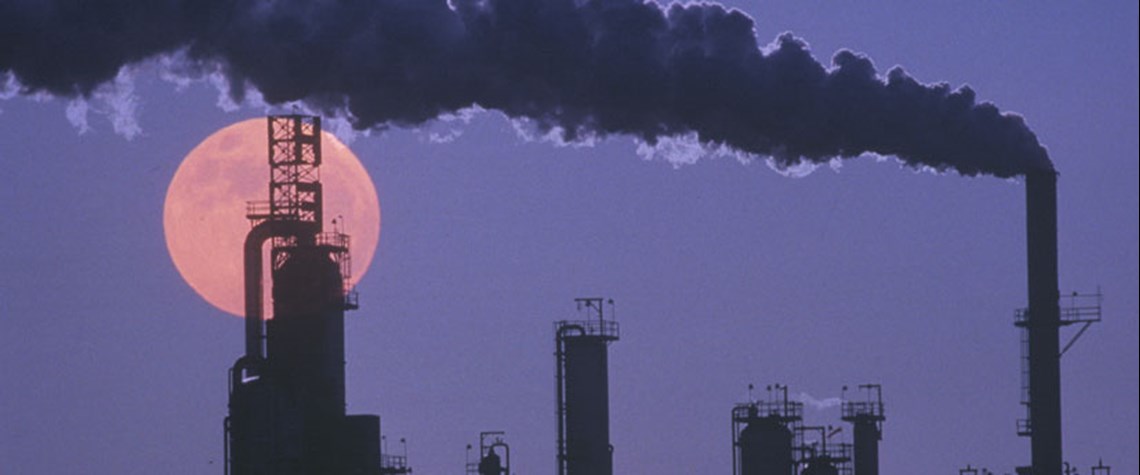
Methane's 20-year global warming potential is about 84 times that of CO₂
Methane AI Digitalisation
Charles Waine
22 June 2021
Follow @PetroleumEcon
Forward article link
Share PDF with colleagues

Methane emissions face digital disruption

A range of available tools and scalable technologies is helping drive the hydrocarbons industry towards a low methane future

Operators may have woken up to the potential of automation to reshape business efficiencies and cut costs throughout the past pandemic year. But the next digital frontier will be harnessing technologies to confront emissions and pivot the oil and gas sector towards net zero. A methane mitigation strategy will be at the top of the agenda for many on the path to greater digital maturity and portfolio decarbonisation. “Methane emissions are particularly important because it is a more potent greenhouse gas than CO2,” says Samantha Gross, director of energy security & climate initiative at US thinktank Brookings Institution. “Its 20-year global warming potential is about 84 times that of CO2,

Also in this section
Saudi Arabia’s WPC Energy Congress: Convening the global energy future
20 January 2026
As the global energy system undergoes its most profound transformation in a century, the need for credible leadership, practical solutions and inclusive dialogue has never been greater. In 2026, the Kingdom of Saudi Arabia will stand at the centre of this conversation as host of the 25th WPC Energy Congress in Riyadh.
Saudi Arabia focuses on 'energy future for all' as it hosts WPC Energy Congress for first time
20 January 2026
The Kingdom of Saudi Arabia is the host of the 25th WPC Energy Congress on 26-30 April 2026. The Ministry of Energy spoke with Petroleum Economist about the key messages and opportunities for the global energy community.
Awakening Greece’s gas prospects
19 January 2026
Newfound optimism is emerging that a dormant exploration frontier could become a strategic energy play and—whisper it quietly—Europe’s next offshore opportunity
Explainer: Iran’s indispensable energy role
16 January 2026
The country’s global energy importance and domestic political fate are interlocked, highlighting its outsized oil and gas powers, and the heightened fallout risk

Share PDF with colleagues

COPYRIGHT NOTICE: PDF sharing is permitted internally for Petroleum Economist Gold Members only. Usage of this PDF is restricted by <%= If(IsLoggedIn, User.CompanyName, "")%>’s agreement with Petroleum Economist – exceeding the terms of your licence by forwarding outside of the company or placing on any external network is considered a breach of copyright. Such instances are punishable by fines of up to US$1,500 per infringement
Send

Forward article Link

Send
Sign Up For Our Newsletter
Project Data
Maps
Podcasts
Social Links
Featured Video
Home
  • About us
  • Subscribe
  • Reaching your audience
  • PE Store
  • Terms and conditions
  • Contact us
  • Privacy statement
  • Cookies
  • Sitemap
All material subject to strictly enforced copyright laws © 2025 The Petroleum Economist Ltd
Cookie Settings
;

Search
