


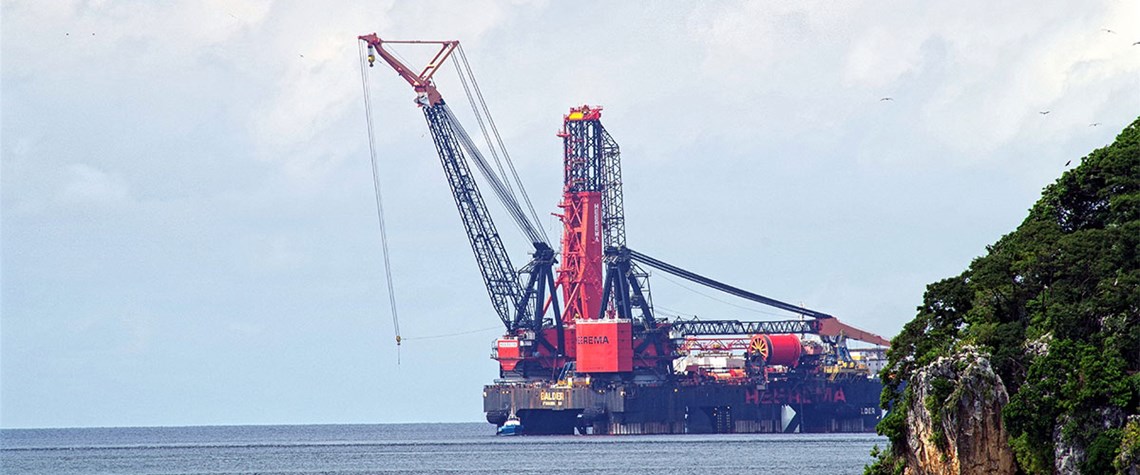
Rig awaits deployment off the coast of Trinidad
Trinidad’s tax reforms receive mixed reviews
The measures appear to have produced some results, but may not go far enough
Trinidad and Tobago’s recent tax reforms appear to have already spurred—or at least been timed in conjunction with—announcements of renewed investment in the country’s upstream. But some argue the government could take further measures to help reverse the impact of underinvestment seen in recent years. In his late-September budget statement, finance minister Colm Imbert said that “to maintain our revenue and growth, we must make every effort to boost oil and gas production in the short-to-medium term.” The budget announced the adjustment of the Supplemental Petroleum Tax (SPT) regime “to incentivise new production, particularly new oil production”. The minister also confirmed that “over the

Also in this section
2 April 2026
Alongside a rapid continued build-out of renewables, China’s latest five-year plan stresses the value of domestic hydrocarbon production for energy security and calls for increased Russian gas imports
2 April 2026
The government is taking important steps to revive domestic production, lift investment and benefit from the geopolitical crisis even if more needs to be done in the longer term
1 April 2026
Golden Pass’s startup offers QatarEnergy a timely boost but may also force a difficult choice between honouring disrupted contracts and capitalising on soaring spot LNG prices
1 April 2026
It is not a case of if or when, but the length and magnitude of economic damage from elevated oil prices


