


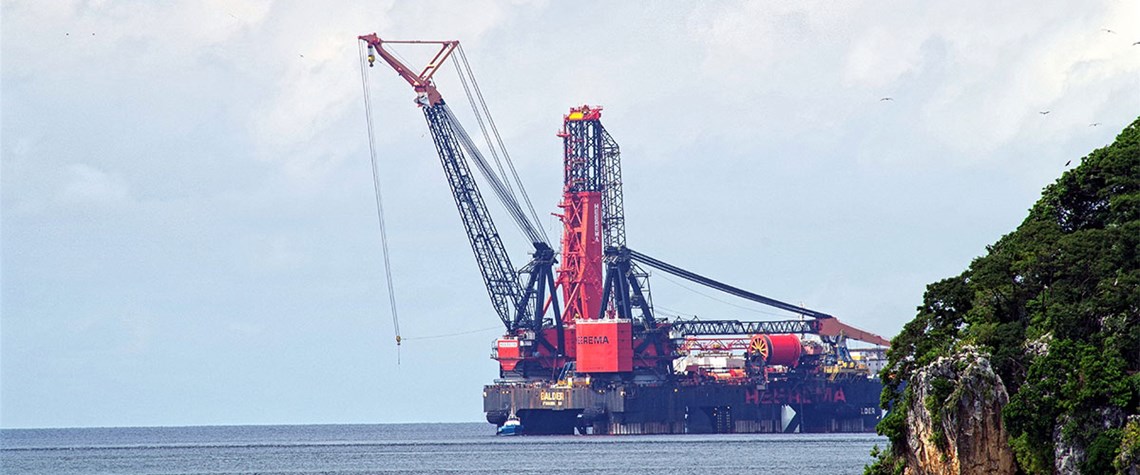
Rig awaits deployment off the coast of Trinidad
Trinidad’s tax reforms receive mixed reviews
The measures appear to have produced some results, but may not go far enough
Trinidad and Tobago’s recent tax reforms appear to have already spurred—or at least been timed in conjunction with—announcements of renewed investment in the country’s upstream. But some argue the government could take further measures to help reverse the impact of underinvestment seen in recent years. In his late-September budget statement, finance minister Colm Imbert said that “to maintain our revenue and growth, we must make every effort to boost oil and gas production in the short-to-medium term.” The budget announced the adjustment of the Supplemental Petroleum Tax (SPT) regime “to incentivise new production, particularly new oil production”. The minister also confirmed that “over the

Also in this section
28 April 2026
Oil traders warning of $200/bl oil are wrong, and the market should be wary of proclamations that the impact of the oil shortage has only begun to be felt and a that a ‘harsh adjustment’ is coming—even for industrialised nations
28 April 2026
Restoring supply from Saudi Arabia, the UAE, Kuwait, Qatar, Bahrain and Iraq involves complexities far beyond simply adjusting operational controls
28 April 2026
Datacentres will guzzle power at a ferocious rate, but the impact on wider energy markets will be far more complex than previously thought
28 April 2026
The key energy player faces balancing regional routes, political complexities, and creating a clear strategic vision for energy security


